
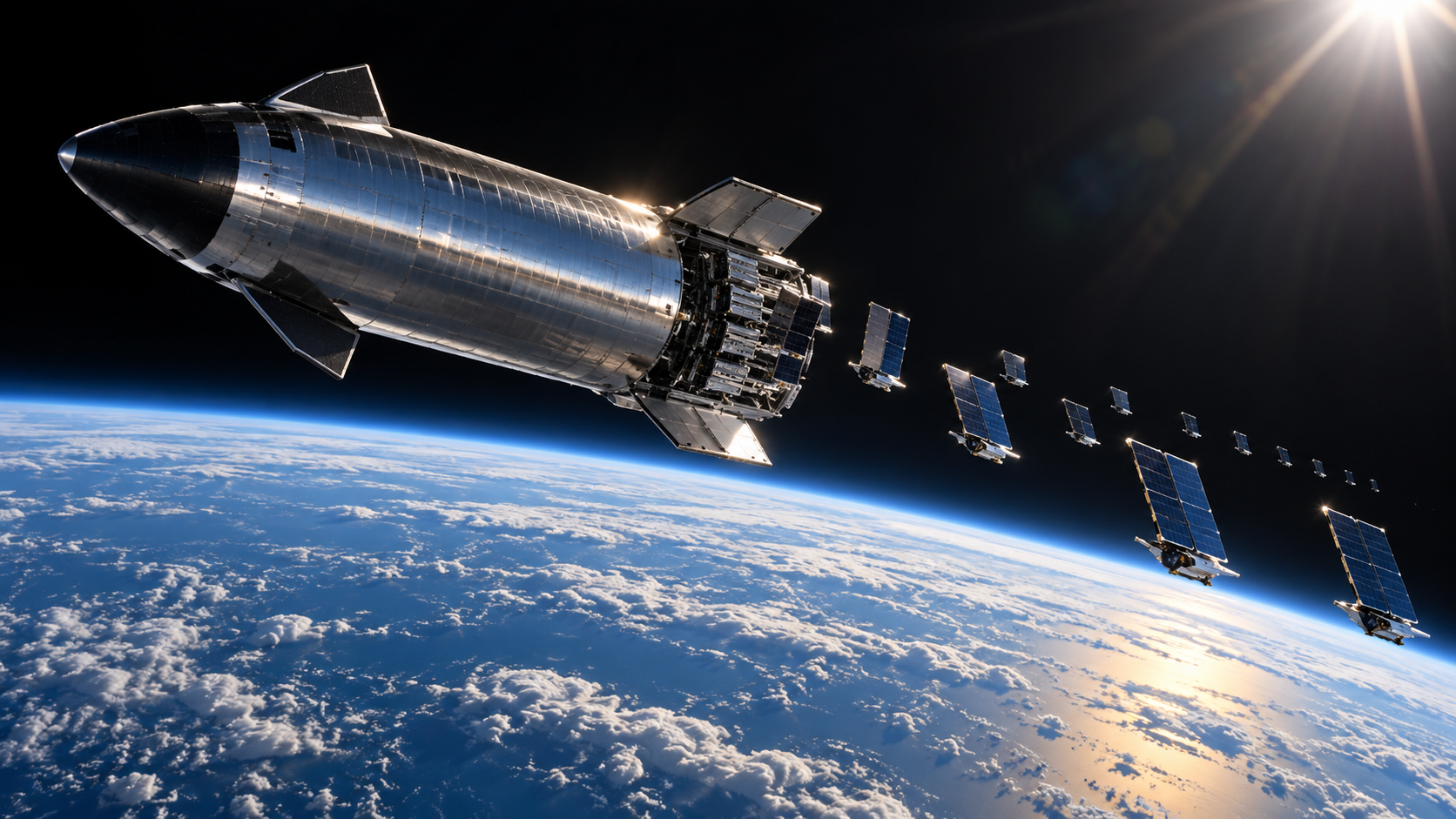
Historic Flight 14 marks a major milestone for SpaceX’s next-generation rocket program and future missions to the Moon, Mars and beyond.
STARBASE, Texas — Sept. 28, 2026 — SpaceX’s massive Starship rocket reached Earth orbit for the first time Monday, marking one of the most important milestones yet in the development of the company’s next-generation reusable launch system.
Starship Flight 14 lifted off from SpaceX’s Starbase facility in South Texas aboard the Super Heavy booster before continuing toward low Earth orbit. Roughly 26 minutes after launch, the spacecraft successfully achieved orbit. Reuters
The mission was particularly significant because previous integrated Starship tests had followed suborbital trajectories. Flight 14 demonstrated for the first time that the complete Starship system could reach and operate in a stable Earth orbit. SpaceX identifies Starship and Super Heavy as a transportation system intended to eventually carry cargo and people to Earth orbit, the Moon, Mars and other destinations. SpaceX
26 Starlink V3 Satellites Deployed
Once Starship reached orbit, it began releasing 26 operational Starlink V3 satellites at an altitude of roughly 269 kilometers, or 161 miles.
All 26 satellites were reported operating normally following deployment. The mission marked Starship’s first orbital satellite deployment and represents an important step toward SpaceX using the much larger rocket for future Starlink missions. Reuters
The next-generation V3 satellites are considerably more capable than previous Starlink spacecraft. SpaceX has said a future Starship mission could carry as many as 60 V3 satellites, providing roughly 20 times the Starlink downlink capacity deployed by a Falcon 9 mission. SpaceX Content
That capacity could make Starship central to the next phase of SpaceX’s global satellite-internet expansion.
Engine Problem During Ascent

The historic flight was not trouble-free.
One of Starship’s engines shut down unexpectedly during ascent, forcing flight controllers to reassess whether the spacecraft should proceed with its planned orbital insertion.
After evaluating the spacecraft’s condition, controllers ultimately approved the maneuver. Starship successfully reignited another engine and entered orbit. Reuters
The Super Heavy booster also completed the planned portion of its flight before returning to the ocean rather than attempting a tower catch.
For an experimental vehicle, the ability to continue the mission despite an engine problem provided SpaceX engineers with valuable data about redundancy and vehicle performance.
Mission Ended Earlier Than Planned
SpaceX initially planned a substantially longer orbital mission, but after collecting key flight data and completing satellite deployment, controllers decided to bring Starship home earlier.
The spacecraft reentered Earth’s atmosphere and completed a controlled splashdown in the Pacific Ocean roughly three hours after launch. Reuters
Although shorter than originally planned, Flight 14 accomplished two of its most consequential objectives:
reaching orbit and deploying operational satellites.
Why This Flight Matters
Starship is designed to be a fully and rapidly reusable transportation system, unlike most traditional launch vehicles in which significant components are discarded after flight.
SpaceX ultimately intends the vehicle to transport satellites, cargo and people to destinations ranging from low Earth orbit to the Moon and Mars. SpaceX
NASA also has a major stake in Starship’s development.
A lunar version of Starship is being developed as a Human Landing System for NASA’s Artemis program, which aims to return astronauts to the lunar surface.
Achieving stable orbit therefore represents far more than another rocket test. It demonstrates one of the fundamental capabilities required before Starship can perform more ambitious missions involving orbital refueling, lunar operations and eventually deep-space transportation.
A New Chapter for Starship
Starship Flight 14 was the 14th integrated test flight of the giant Starship-Super Heavy system.
Earlier missions helped SpaceX test launch operations, stage separation, atmospheric reentry and vehicle control. Monday’s flight pushed the program into a new phase: actual orbital operations and satellite delivery. Reuters
Further testing will still be required before Starship becomes routinely reusable or carries astronauts.
But September 28, 2026, now marks a major milestone in the program:
the day Starship finally became an orbital spacecraft.