




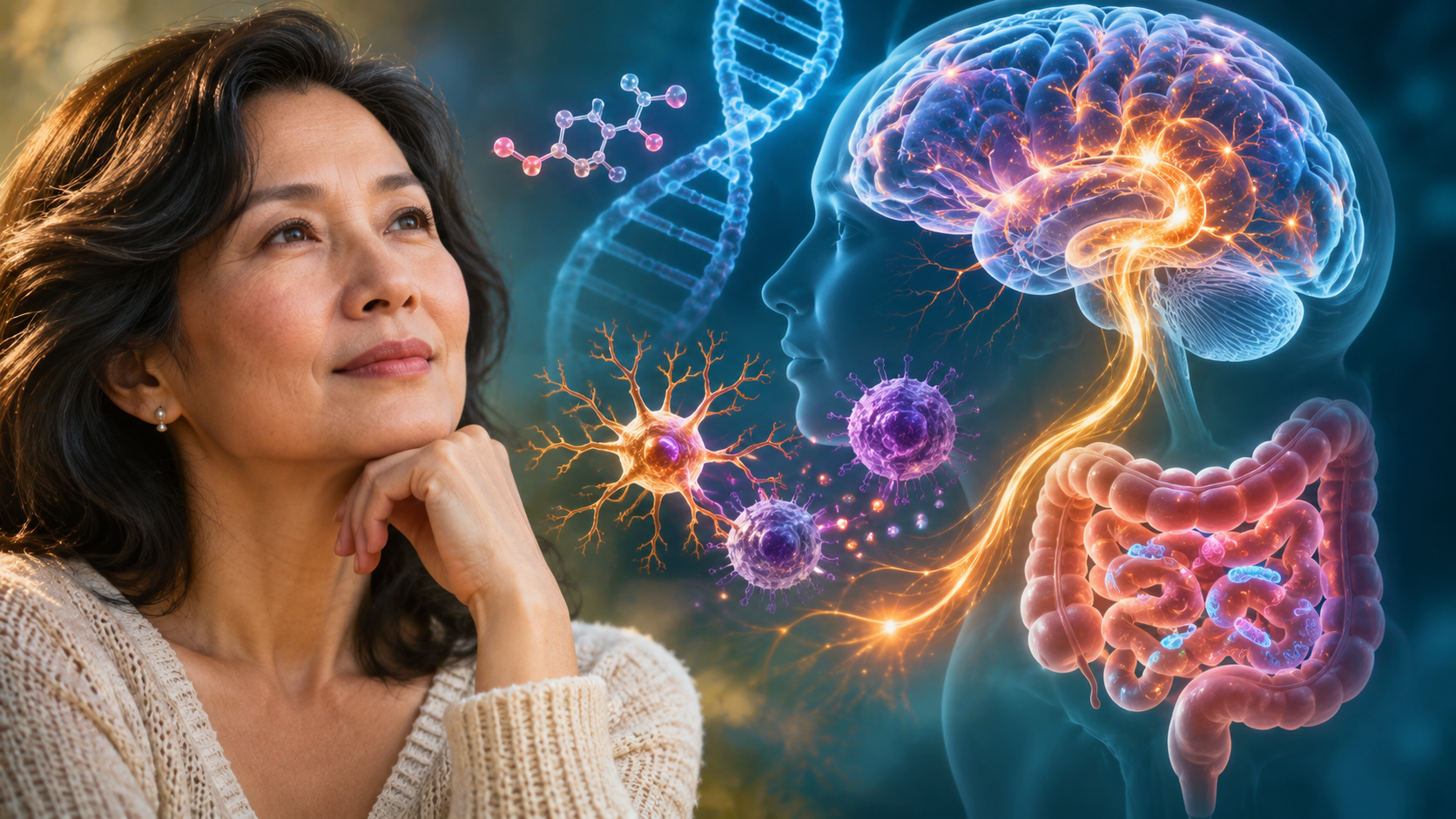
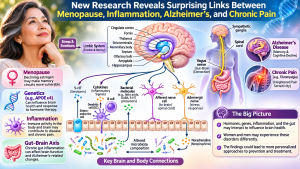
New neuroscience research suggests that hormones, genetics, and biological differences between men and women may help explain why certain brain disorders develop differently—and why future treatments may need to be more personalized.
VietEcho Health | November 16, 2026
Introduction: Why Do Some People Develop Alzheimer’s While Others Don’t?
Why do some people develop Alzheimer’s disease while others remain mentally sharp well into their 80s or 90s?
Why are certain chronic pain disorders more common in women?
And could inflammation occurring in the intestines influence what happens inside the brain?
These questions are at the center of four research projects highlighted by the Society for Neuroscience at Neuroscience 2026.
The emerging findings suggest that biological sex, inherited genetic variations, hormonal changes, and immune activity may influence how neurological disorders develop and progress.
Two conditions receiving particular attention are Alzheimer’s disease, a progressive disorder that damages memory and cognitive abilities, and fibromyalgia, a chronic condition associated with widespread pain, fatigue, and heightened pain sensitivity.
Although these studies do not provide definitive answers, they reveal several biological connections that could eventually help scientists develop more individualized approaches to treatment.
1. Menopause May Be an Important Turning Point for Brain Health
Menopause is commonly associated with hot flashes, sleep disturbances, and changes in mood.
However, the transition also involves significant hormonal changes that may influence the brain.
Estrogen, particularly estradiol, participates in several processes important for normal neurological function, including communication between nerve cells, synaptic plasticity, and regulation of cellular energy metabolism.
As estrogen levels decline during menopause, these processes may change.
Researchers are investigating whether these hormonal changes interact with inherited risk factors to influence vulnerability to Alzheimer’s disease.
One study led by Stephanie M. Perez at the University of Texas Health Science Center at San Antonio examined rodents undergoing a menopause-like transition that also carried genetic risk factors for Alzheimer’s.
The researchers found that brain circuits involved in memory became particularly vulnerable under these conditions.
This suggests that hormonal changes and genetic susceptibility may interact during a critical period of brain aging.
What does this mean for women?
The findings raise the possibility that menopause may represent an important period for understanding future cognitive health, particularly among women with inherited Alzheimer’s risk factors.
However, the study involved animals. Researchers still need to determine how closely these observations apply to humans.
Menopause does not mean that a woman will develop Alzheimer’s disease, and these findings do not establish that hormone treatment prevents dementia.
2. Genetics May Influence How the Brain Responds to Menopause Hormone Therapy
Another investigation, led by Mateja Perović at the University of Toronto, examined the relationship between genetic risk factors for Alzheimer’s disease and responses to menopause hormone therapy.
Menopause hormone therapy may involve estrogen alone or estrogen combined with a progestogen, depending on the patient’s medical circumstances.
The researchers reported that responses differed according to inherited Alzheimer’s risk factors and the particular hormonal formulation used.
These findings suggest that the effects of hormone therapy on brain-related outcomes may not be identical for everyone.
Why do genes matter?
One well-known genetic factor associated with Alzheimer’s disease is the APOE ε4 allele.

APOE is involved in lipid transport and metabolism, including processes important for brain health.
People who inherit APOE ε4 have an increased statistical risk of developing Alzheimer’s disease, although many carriers never develop the condition.
Researchers have long investigated whether APOE-related biological differences influence inflammation, amyloid processing, and the brain’s response to hormonal changes.
The new research adds to the broader question of whether genetic background should be considered when evaluating the neurological effects of hormone therapy.
However, the reported findings do not establish that a particular hormone formulation prevents Alzheimer’s disease in APOE ε4 carriers.
Decisions about menopause hormone therapy should continue to be individualized based on established indications, symptoms, age, medical history, and potential risks.
3. Why Might Women Experience Chronic Pain Differently?
Fibromyalgia is a chronic condition characterized by widespread pain, fatigue, sleep disturbances, and difficulties with concentration or memory.
The condition is diagnosed more frequently in women than in men.
Scientists are investigating whether differences in nervous-system signaling, immune responses, and hormonal regulation contribute to this pattern.
A research team led by Yasmin Sahlloul at the University of Cincinnati examined biological differences in a mouse model of fibromyalgia.
Female mice continued to demonstrate greater sensitivity to touch and stronger immune activation than male mice.
These observations suggest that biological sex may influence the mechanisms involved in persistent pain.
The connection between immunity and pain
Pain is not simply a signal traveling from an injured body part to the brain.
The nervous system continually processes and modifies pain signals.
Immune cells and inflammatory signaling molecules can influence this process.
For example, certain cytokines can alter the sensitivity of pain pathways, potentially contributing to heightened pain responses.
In some chronic pain conditions, the nervous system may become unusually sensitive, a process known as central sensitization.
Central sensitization can cause normally mild sensations to become painful or make existing pain feel more intense.
The new mouse findings raise questions about whether immune activity contributes differently to chronic pain in males and females.
However, fibromyalgia is a complex disorder, and the study does not prove that systemic inflammation is its sole cause.
Understanding these differences may eventually help researchers identify more targeted approaches to pain management.
4. Could Inflammation in the Gut Affect the Brain?
One of the most intriguing findings concerns the relationship between intestinal inflammation and neurological disease.
The digestive system and brain communicate through a complex network involving nerves, hormones, immune signaling, and substances produced by intestinal microorganisms.
This relationship is commonly called the gut-brain axis.
A study led by Nurcan Kilic at the University of North Dakota investigated how prolonged intestinal inflammation affected the brain in mice.
Researchers observed that chronic gut inflammation influenced brain function and Alzheimer’s-related disease changes differently in males and females.
These findings suggest that biological sex may modify how inflammatory processes outside the brain affect neurological health.
How might inflammation travel from the gut to the brain?
Several biological mechanisms are being investigated.
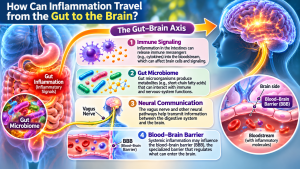
Immune signaling: Inflammatory processes in the intestines can alter circulating immune signals that may influence cells and signaling pathways associated with the brain.
Gut microbiome: Intestinal microorganisms produce metabolites that can interact with immune and nervous-system functions.
Neural communication: The vagus nerve and other neural pathways help transmit information between the digestive system and the central nervous system.
Blood-brain barrier: Researchers are investigating how systemic inflammation may influence the specialized barrier that regulates the movement of substances between the bloodstream and brain tissue.
These mechanisms provide plausible pathways for communication between intestinal inflammation and neurological function.
However, the new animal study does not establish that intestinal inflammation directly causes Alzheimer’s disease in humans.
It also does not show that treating gut inflammation can prevent or reverse dementia.
Further research is necessary to determine which mechanisms are clinically meaningful.
5. Inflammation: A Common Thread, but Not the Whole Explanation
Inflammation is a normal biological response that helps the body defend against infection and repair damaged tissue.
Problems may arise when inflammatory activity becomes excessive, persistent, or poorly regulated.
Chronic inflammation has been investigated in numerous conditions, including cardiovascular disease, metabolic disorders, autoimmune diseases, and neurodegenerative disorders.
Within the brain, specialized immune cells called microglia help maintain the neural environment.
Microglia remove cellular debris, respond to injury, and participate in immune surveillance.
In Alzheimer’s disease, researchers have observed changes in microglial activity alongside the accumulation of amyloid-beta plaques and abnormal tau proteins.
Some inflammatory responses may initially help protect brain tissue, while prolonged or dysregulated responses may contribute to neuronal damage.
This relationship is complicated because inflammation can be both a response to disease and a potential contributor to disease progression.
The four research projects highlighted at Neuroscience 2026 suggest that immune activity may interact with hormones, genetics, and biological sex in different ways.
Rather than identifying one universal cause, the findings point toward several interacting biological processes.
6. Could These Discoveries Lead to Personalized Treatments?
Modern medicine increasingly recognizes that patients with the same diagnosis may have different underlying biological characteristics.
Two individuals with Alzheimer’s disease may differ in their genetic susceptibility, hormonal history, inflammatory responses, and other health conditions.
Similarly, people with fibromyalgia may experience different combinations of pain sensitivity, sleep disruption, fatigue, and associated symptoms.
Researchers hope that understanding these differences will eventually support more personalized treatment strategies.
For example, future investigations might examine whether particular genetic profiles influence responses to hormone-based interventions or whether specific immune pathways contribute to chronic pain in different patient groups.
These possibilities remain research goals rather than established clinical treatments.
Liisa Galea, a neuroscientist associated with the Centre for Addiction and Mental Health, emphasized the importance of investigating female-specific biology and potential sex differences in Alzheimer’s-related symptoms and risk factors.
The broader message is that biological diversity may help explain why one treatment works well for some patients but less effectively for others.
7. What Can People Do to Protect Their Brain Health Today?
Although the new findings are promising, they should not be interpreted as instructions to begin hormone therapy, take anti-inflammatory supplements, or pursue genetic testing without appropriate medical guidance.
Current approaches to supporting long-term brain health focus on managing established risk factors and maintaining overall health.
Regular physical activity, adequate sleep, a balanced diet, blood-pressure management, diabetes care, and avoidance of smoking are important components of general health and may also support cognitive health.
Maintaining social connections and addressing hearing impairment, when present, are additional considerations in dementia-risk reduction.
People experiencing persistent memory difficulties, widespread chronic pain, or significant menopause symptoms should discuss their concerns with a qualified healthcare professional.
For individuals considering menopause hormone therapy, treatment decisions should be based on a personalized evaluation of potential benefits and risks—not on preliminary findings about Alzheimer’s disease.
8. What Scientists Still Need to Discover
Several important questions remain unanswered.
Can the neurological changes observed in animal models be reproduced in humans?
Which genetic variations most strongly influence responses to hormonal changes?
Do immune-system differences contribute directly to persistent pain, or are they partly consequences of the condition?
Could identifying particular inflammatory pathways eventually lead to more effective treatments?
And most importantly, can researchers translate these biological observations into interventions that meaningfully improve patients’ lives?
Answering these questions will require larger human studies, careful clinical testing, and independent replication.
Conclusion: A New Direction in Understanding Brain Disorders
The research highlighted at Neuroscience 2026 suggests that Alzheimer’s disease and chronic pain cannot always be understood through a single biological mechanism.
Hormones, genetics, immune activity, and communication between the gut and brain may interact in ways that differ between individuals.
The findings are especially important because women and men may experience some neurological conditions differently.
By investigating these differences, scientists hope to identify more precise approaches to prevention, diagnosis, and treatment.
For now, the research offers promising clues rather than definitive solutions.
The central message is that understanding individual biological differences may be essential to developing better treatments for complex neurological diseases.
Source and Research Notes
Primary news source: Society for Neuroscience, A Hidden Biological Divide May Help Explain Alzheimer’s and Chronic Pain, published November 16, 2026, via ScienceDaily.
https://www.sciencedaily.com/releases/2026/11/261115085535.htm
Research highlighted:
- Mateja Perović, University of Toronto — Alzheimer’s genetic risk and menopause hormone therapy.
- Stephanie M. Perez, University of Texas Health Science Center at San Antonio — Menopause-related changes in memory circuits in a rodent model.
- Yasmin Sahlloul, University of Cincinnati — Biological sex differences in a mouse model of fibromyalgia.
- Nurcan Kilic, University of North Dakota — Intestinal inflammation and Alzheimer’s-related changes in mice.
Editorial note: The source summarizes emerging conference research. Detailed methodologies, sample sizes, and complete results were not provided in the news release. Background explanations in this article are intended to help readers understand the science and should not be mistaken for additional findings from the four studies.
Medical disclaimer: This article is for educational and informational purposes only. It is not intended to replace professional medical advice, diagnosis, or treatment.