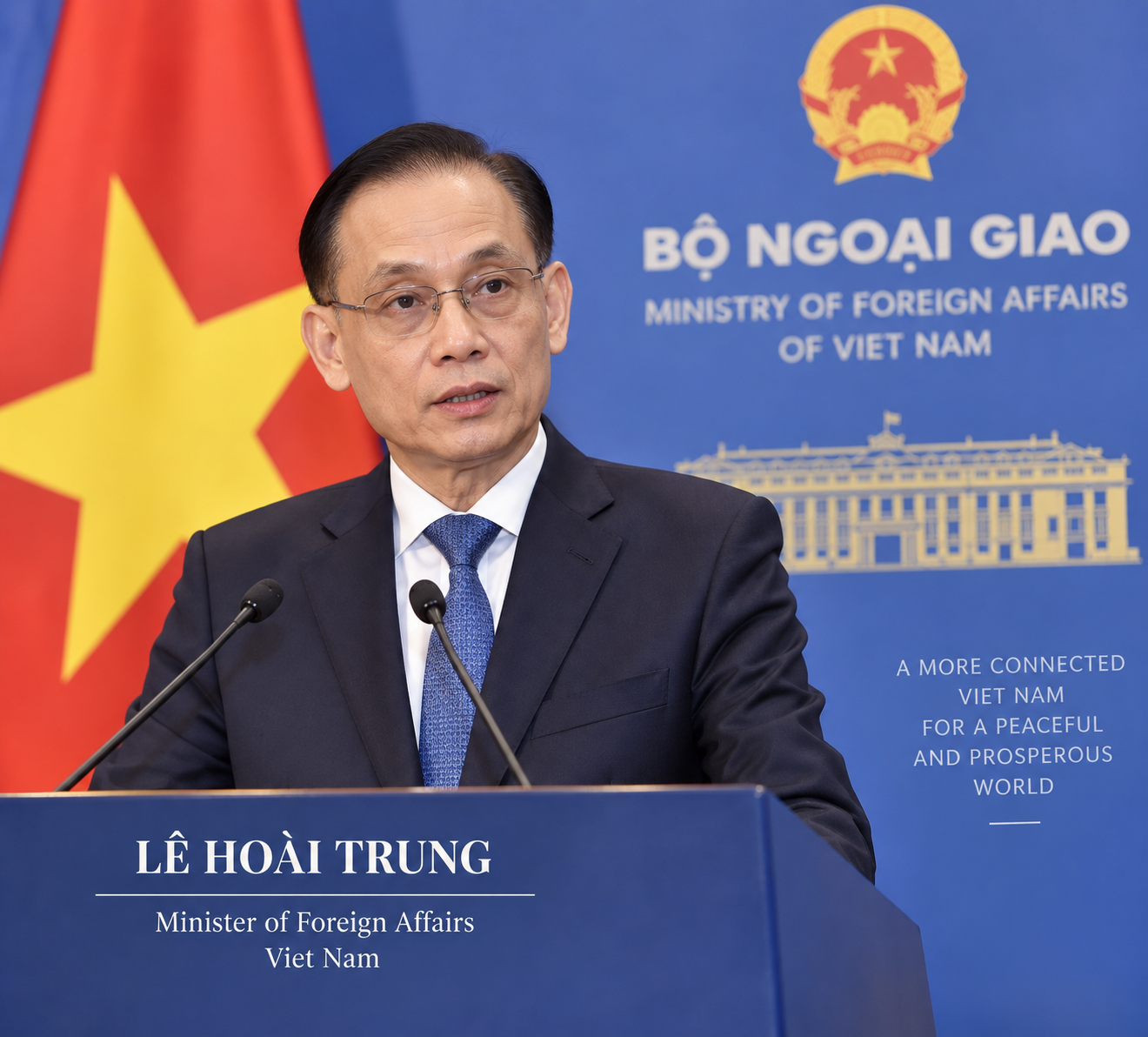
HÀ NỘI — General Secretary of the Communist Party of Việt Nam Central Committee and President Tô Lâm concluded a series of high-level engagements in Russia and France from September 7–12, with Foreign Minister Lê Hoài Trung describing the trip as comprehensive, substantive and important for Việt Nam’s development priorities.
The programme included a state visit to Russia, an official visit to France and participation in the International Space Summit. According to Trung, the engagements achieved their planned objectives while strengthening Việt Nam’s relations with two important international partners.
The visits were particularly significant as they were among Lâm’s first major overseas engagements following the 14th National Party Congress and political developments associated with the 2026–2031 term.
In both Russia and France, the Vietnamese leader received high-level welcomes and held discussions with senior leaders, political representatives, businesses, academics and experts in science and technology. He also met members of Vietnamese communities living in the two countries.
Political trust supports broader cooperation
According to the foreign minister, discussions demonstrated a high degree of agreement between Việt Nam and its Russian and French partners on the development of bilateral relations and future areas of cooperation.
The meetings also allowed the sides to exchange views on regional and international developments while strengthening political trust built through previous high-level contacts.
Attention, however, extended well beyond diplomatic relations.
A central focus of the visits was how to turn existing commitments into tangible economic, technological and development outcomes.
The three sides discussed cooperation across trade, investment, science and technology, education and training, with agreements and potential initiatives reflected in joint statements, business meetings, technology forums and cooperation documents.
Trade and investment expected to play larger role
Việt Nam, Russia and France see considerable room for expanding bilateral trade and investment.
Officials highlighted the importance of developing economic relationships that better reflect the scope of Việt Nam’s partnerships with the two countries and their respective economic strengths.
Rather than focusing primarily on conventional trade and technology-transfer models, Việt Nam is seeking deeper forms of collaboration involving joint research, production, product development and supply-chain connectivity.
According to Trung, this approach could help shape the next phase of Việt Nam’s economic cooperation with both Russia and France.
Science and technology emerge as major priority
Science and technology featured prominently throughout the visits and were identified as areas with substantial potential for future cooperation.
Both Russia and France expressed support for strengthening technological collaboration with Việt Nam.
Tô Lâm called for new approaches that move beyond traditional technology transfers toward partnerships in which Vietnamese and international researchers, companies and institutions jointly develop technologies and products.
Such cooperation could also support Việt Nam’s ambitions to strengthen its scientific capabilities, develop skilled workers and participate more deeply in international technology and manufacturing networks.
From agreements to concrete projects
Following the high-level visits, attention is expected to shift toward implementation.
Trung said Vietnamese ministries, local authorities, agencies and businesses should coordinate closely with their Russian and French counterparts to develop action plans based on agreements reached by the countries’ leaders.
These plans should clearly establish responsibilities, timelines and expected outcomes, while ensuring that cooperation delivers practical benefits for businesses and citizens.
Existing bilateral mechanisms could also be used to monitor implementation, address obstacles and improve legal and regulatory conditions for strategic projects.
Energy, nuclear power and infrastructure cooperation with Russia
Several major sectors have been identified as priorities for Việt Nam–Russia cooperation.
These include the Ninh Thuận 1 nuclear power project, oil and gas, energy, railways and logistics, alongside joint scientific research, technology cooperation and workforce development.
Moving these initiatives forward would require continued coordination between government agencies, businesses and technical institutions in both countries.
The emphasis on strategic infrastructure reflects Việt Nam’s broader effort to secure energy resources, modernise transportation and logistics systems and strengthen its technological capabilities.
Việt Nam and France target trade, technology and supply chains
With France, Việt Nam is seeking to further utilise opportunities created by the EU–Việt Nam Free Trade Agreement (EVFTA) while addressing remaining barriers affecting trade and investment.
The two countries are also looking at stronger cooperation in logistics, supply chains, market connectivity and technology.
Creating favourable conditions for Vietnamese and French businesses to participate in specific investment and development projects is expected to remain an important priority.
Science, innovation and advanced technology could become increasingly important pillars of the Việt Nam–France relationship as the two countries look beyond traditional areas of cooperation.
Việt Nam raises its profile in international space cooperation
Tô Lâm’s participation in the International Space Summit in France added another dimension to the trip.
According to Trung, international representatives welcomed Việt Nam’s participation and contribution to discussions on the future of space cooperation.
As a member of the United Nations Committee on the Peaceful Uses of Outer Space, Việt Nam is seeking stronger cooperation with countries including Russia and France in the peaceful application of space technologies.
Such cooperation could support sustainable development and expand Việt Nam’s scientific and technological capabilities.
Strengthening Việt Nam’s international partnerships
Russia and France are both permanent members of the United Nations Security Council, giving Việt Nam’s relationships with the two countries broader diplomatic significance.
Stronger cooperation could support Việt Nam’s economic and technological development while expanding its engagement in international and regional institutions, including the United Nations and ASEAN.
The next challenge will be converting the political momentum created by the visits into measurable results.
According to Trung, continued coordination among governments, agencies, businesses and research institutions will be crucial to ensuring that agreements become operational projects.
With trade, investment, energy, science, technology, education and strategic infrastructure increasingly at the centre of cooperation, Việt Nam’s relationships with Russia and France are entering a phase focused more strongly on implementation, joint development and practical outcomes.