
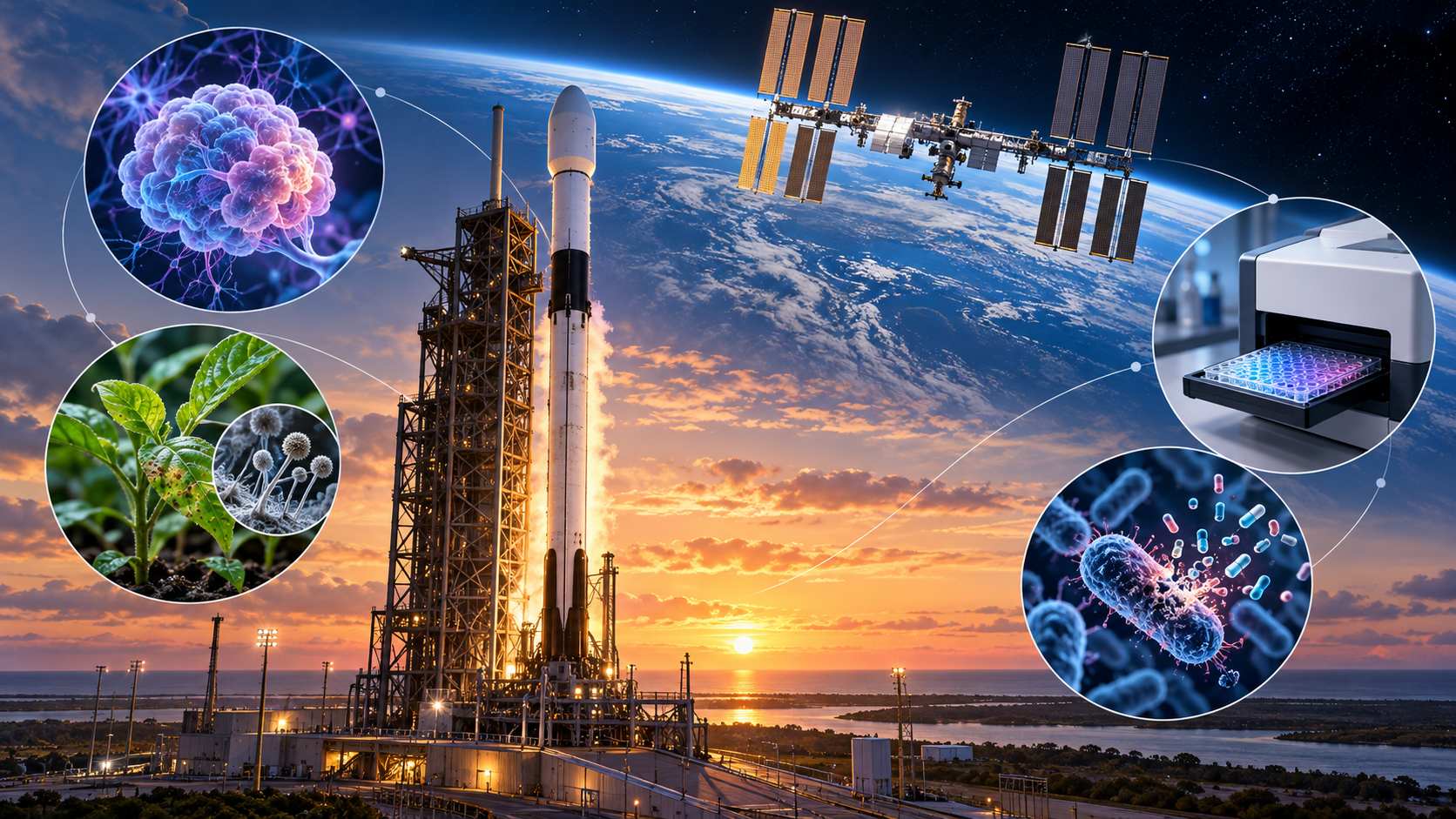
NASA’s Upcoming SpaceX CRS-35 Mission Will Advance Health Research Aboard the ISS
NASA’s 35th Commercial Resupply Services (CRS-35) mission is scheduled to launch on October 13, 2026, at 6:33 a.m. Eastern Time from Cape Canaveral Space Force Station in Florida, subject to schedule changes. The mission will deliver scientific experiments to the International Space Station (ISS), including investigations into human brain health, plant diseases, and antibiotic-resistant bacteria.
Key Investigations Addressing Spaceflight Health Challenges
The CRS-35 payload includes four major investigations conducted by NASA’s Biological and Physical Sciences division:
1. Brain Health in Space: A Novel Precision Health Experiment
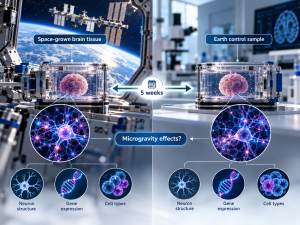
This investigation will send small, lab-grown models of the human brain to the ISS for five weeks. Identical tissue samples remain on Earth as controls. Comparing these will help researchers analyze cellular-level effects of short-term spaceflight on brain tissue. Such understanding may inform methods to mitigate neurological risks faced by astronauts on future missions to the Moon or Mars. This experiment highlights the scientific effort to understand how microgravity and spaceflight stressors affect brain function.
2. Disease Development in Space-Grown Crops
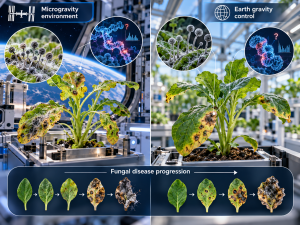
Another experiment tests whether crop diseases caused by fungi progress differently in the microgravity environment aboard the ISS compared to Earth-grown plants. By studying molecular and structural variations in infected plants, researchers aim to identify mechanisms influencing disease severity and progression in space. Insights from this research could enhance Earth-based plant breeding for disease resistance and support cultivation of resilient crops for space agriculture. Space-grown crops not only provide essential nutrition and psychological benefits for astronauts but also contribute to oxygen production, carbon dioxide absorption, and water recycling, all crucial for prolonged human presence beyond Earth.
3. Onboard Biomarker Detection Using a Compact Microplate Reader
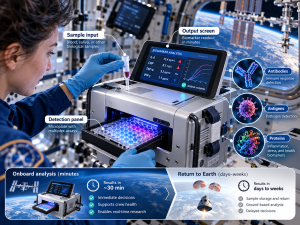
The mission will carry the first test of a compact microplate reader—a device that can detect and quantify biomarkers such as antibodies, antigens, and proteins directly aboard the ISS. This technology was delivered earlier this year as part of the Commercially Enabled Rapid Space Science initiative. If successful, in-situ analysis using the plate reader could allow faster identification of infections or other health issues in astronauts without waiting for samples to return to Earth, significantly improving health monitoring during deep-space missions where resupply and medical intervention are limited.
4. Monitoring Antibiotic-Resistant Bacteria on the ISS
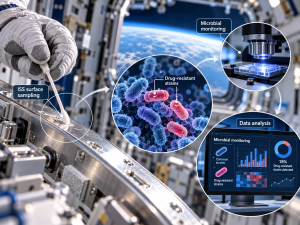
Returning for its fourth and concluding mission stay, this long-running investigation examines how antibiotic-resistant bacteria survive and evolve in the space station’s microgravity environment. Astronauts collect samples from station surfaces to monitor drug-resistant organisms’ presence and behavior over time. Understanding these patterns could support development of countermeasures to prevent bacterial infections—a critical concern for crew health on extended missions—and provide insights applicable to combating antibiotic resistance on Earth, where overuse of antibiotics drives superbug emergence.
Why This Matters for Space Exploration and Earth
Together, these experiments exemplify how space-based biological research addresses the dual goals of safeguarding astronaut health and advancing Earthly science. The brain model study tackles cognitive and neurological questions vital for human missions venturing farther and longer from Earth’s protective environment. The crop disease research is a key step toward sustainable space farming, which will be necessary for food security on future Moon bases or Mars habitats. Rapid biomarker detection technology could help researchers analyze samples and monitor astronaut health more quickly, although its performance aboard the ISS still requires evaluation. Finally, tracking antibiotic-resistant bacteria contributes to global health knowledge about evolving microbial threats.
Limitations and Future Outlook
While these investigations hold promise, their controlled findings on small tissue samples and limited plant types must be complemented by additional studies to confirm applicability to human physiology and agricultural systems in space. The microplate reader’s performance and the extent to which rapid onboard analysis can replace comprehensive Earth-based lab tests remain to be validated. Furthermore, the complexity of microbial ecosystems aboard the ISS means that bacterial studies require ongoing monitoring over multiple missions to identify consistent patterns.
Nevertheless, CRS-35’s research portfolio exemplifies a forward-looking approach to leveraging unique space environments for scientific discovery not possible on Earth. The Biological and Physical Sciences Division continues to pioneer this nexus of exploration and life sciences research, striving to make extended human presence in space safer and more sustainable while driving innovation with tangible terrestrial benefits.