
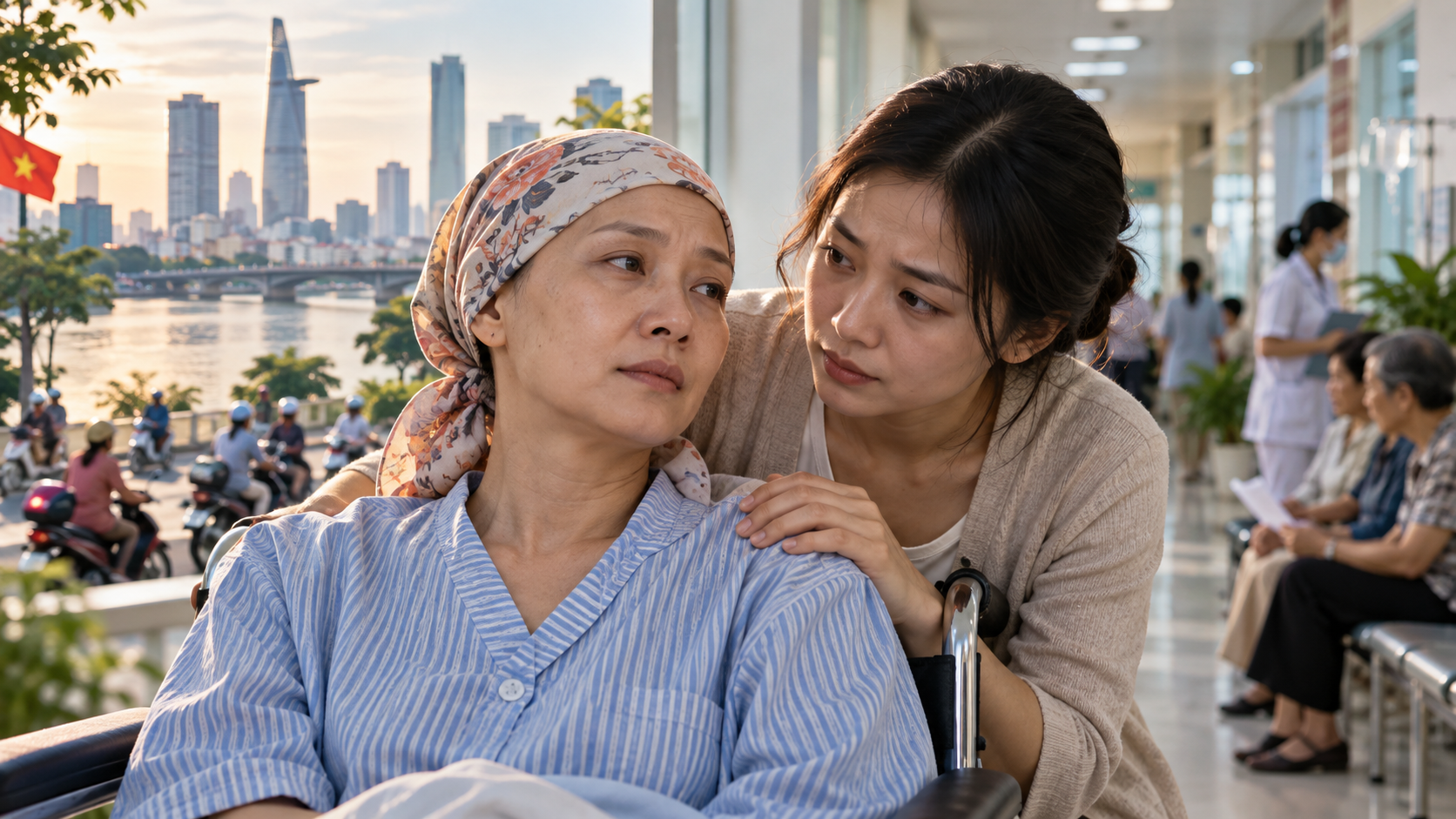
Vietnam’s Cancer Challenge: Are Pollution, Pesticides, Changing Diets and Rising Obesity Putting More Lives at Risk?
Vietnam faces a substantial cancer burden as its population ages and its economy transforms. Scientists point to tobacco, infections, air pollution, excess body weight and other risk factors, while questions remain about the effects of agricultural chemicals and food contamination.
By Thuy Phan, MD | Health & Wellbeing | October 8, 2026
A growing concern for Vietnamese families
Across Vietnam, cancer has become an increasingly serious concern for families who have watched relatives, neighbors or friends receive diagnoses.
Many people wonder whether changes in everyday life are contributing to the problem.
Has commercial agriculture increased pesticide exposure? Is polluted air harming residents in major cities? Have processed foods, sugary beverages and less physically active lifestyles increased chronic disease risks?
And are too many people discovering cancer only after it has advanced?
These are important public-health questions. But answering them requires distinguishing established causes from suspected risks—and separating real changes in cancer incidence from the effects of population growth, aging and improvements in diagnosis.
Vietnam’s cancer burden in numbers
The International Agency for Research on Cancer (IARC), part of the World Health Organization, estimated that Vietnam experienced 180,480 new cancer cases and 120,184 cancer deaths in 2022, according to GLOBOCAN 2022.
The age-standardized incidence rate was 150.8 new cases per 100,000 people.
These figures illustrate the scale of Vietnam’s cancer challenge. They are estimates for one year, not proof that cancer incidence increased by a particular percentage over the preceding decade.
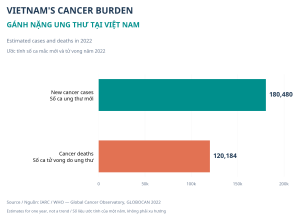
Figure 1. Estimated new cancer cases and cancer deaths in Vietnam, 2022. Source: International Agency for Research on Cancer, Global Cancer Observatory, GLOBOCAN 2022.
Which cancers are most common?
Breast, liver and lung cancers were the three most frequently diagnosed cancers nationwide in 2022.
The five leading types were:
| Cancer type | Estimated new cases |
|---|---|
| Breast | 24,563 |
| Liver | 24,502 |
| Lung | 24,426 |
| Colorectal | 16,835 |
| Stomach | 16,277 |
These five cancer types accounted for more than half of Vietnam’s estimated new cancer diagnoses that year.
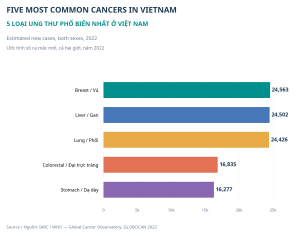
Figure 2. Five most frequently diagnosed cancer types in Vietnam, both sexes, 2022. Source: International Agency for Research on Cancer, Global Cancer Observatory.
The distribution is important because different cancers have different risk factors. Liver cancer is strongly associated with chronic hepatitis infections and other liver diseases. Lung cancer is linked to tobacco and air pollution. Excess body weight, alcohol use and dietary factors contribute to the risk of certain other cancers.
Understanding national trends therefore requires examining each major cancer type separately.
1. Population aging: An essential part of the explanation
Cancer risk generally increases with age.
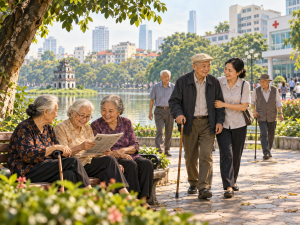
As Vietnam’s population grows older, the absolute number of diagnoses may rise even without a corresponding increase in age-adjusted cancer risk.
This distinction matters when interpreting headlines about cancer increases.
Researchers use age-standardized incidence rates to help compare populations or time periods with different age structures. Such comparisons are more informative than case counts alone.
Changes in cancer registration and diagnosis can also affect how many cases are recorded.
2. Pesticides and commercial agriculture
Agriculture remains essential to Vietnam’s economy and food supply.
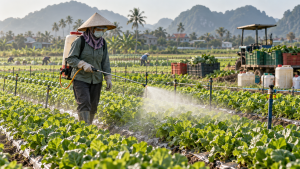
Modern intensive farming may involve pesticides, fertilizers and other chemicals to improve crop production and reduce losses.
Some agricultural chemicals present significant health hazards, particularly to workers who handle concentrated products or experience repeated exposure without adequate protection.
Certain pesticide exposures have also been studied for associations with specific cancers.
However, scientific evidence does not establish that pesticide use is the principal cause of Vietnam’s cancer burden.
The risk depends on the chemical involved, dose, exposure route, duration and other factors.
Vietnam would benefit from continued improvements in pesticide regulation, worker protection, food-residue testing and public reporting of contamination results.
Imported agricultural products should be assessed by the same evidence-based safety standards as domestic products, rather than being judged solely by their country of origin.
3. Food contamination and drinking-water safety
Several food and water contaminants are established cancer hazards.
Aflatoxins, which may develop in improperly stored grains and nuts, can increase liver-cancer risk.
Long-term exposure to inorganic arsenic in contaminated drinking water can increase the risk of several cancers.
These hazards justify careful food storage, reliable water-quality monitoring and strong food-safety oversight.
But there is an important scientific distinction between identifying a carcinogen and proving how much cancer it causes in a particular country.
Determining Vietnam’s attributable cancer burden requires exposure measurements and population-level research.
4. Air pollution and rapid urbanization
Rapid economic growth has transformed Vietnamese cities, industry and transportation.
Air pollution is a recognized cause of lung cancer, particularly with prolonged exposure to fine particulate matter.
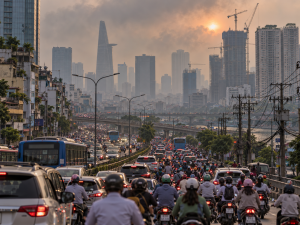
Traffic emissions, industrial activities, energy production and other combustion sources can contribute to poor air quality.
Urbanization can also change commuting patterns, physical activity and occupational exposures.
City crowding itself is not an established direct cause of cancer; the relevant issues are the environmental and behavioral exposures associated with urban living.
Reducing air pollution would benefit public health far beyond cancer prevention, including cardiovascular and respiratory health.
5. Rising obesity and Vietnam’s changing diet
One of Vietnam’s clearest measurable health trends is the rise in overweight and obesity.

According to the Vietnam Ministry of Health and World Health Organization’s STEPS surveys, the proportion of adults aged 18–69 with a body mass index above 25 increased from 15.6% in 2015 to 19.5% in 2021.
The 2021 survey also reported a higher prevalence in urban areas than rural areas: 24.2% versus 16.7%.
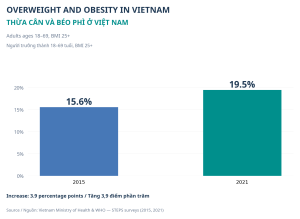
Figure 3. Percentage of Vietnamese adults aged 18–69 classified as overweight or obese using BMI above 25. Sources: Vietnam Ministry of Health and WHO, national STEPS surveys, 2015 and 2021. The increase is 3.9 percentage points.
This development coincides with changing food environments, greater access to calorie-dense foods and beverages, and shifts toward less physically demanding employment in some communities.
However, national surveys cannot by themselves identify one particular food category as the cause.
Excess body fat is an established risk factor for multiple cancers, including colorectal, postmenopausal breast, endometrial, kidney, liver and pancreatic cancers.
Biological mechanisms include changes in insulin signaling, chronic inflammation and hormone regulation.
These links make metabolic health an important part of cancer prevention, but rising obesity alone cannot explain all changes in Vietnam’s cancer burden.
6. Diabetes and metabolic health
The same changes associated with overweight and obesity can also contribute to type 2 diabetes, cardiovascular disease and other metabolic conditions.
People with diabetes may also have additional cancer risks associated with shared factors such as excess body fat, inactivity and metabolic disturbances.
However, diabetes should not be presented as an inevitable cause of cancer.
Nor should cancer risk be judged only by someone’s appearance or body weight.
Vietnam needs preventive strategies that consider nutrition, physical activity, metabolic health and access to appropriate screening together.
7. Tobacco, alcohol and infectious diseases
Several of Vietnam’s important cancer risks are already well established.
Tobacco smoke causes multiple cancers, including lung cancer.

Alcohol increases the risk of cancers involving the mouth, throat, esophagus, liver, breast and colorectum.
Infections are especially important.
Chronic hepatitis B and C infections increase the risk of liver cancer.
Human papillomavirus causes nearly all cervical cancers and contributes to other malignancies.
Helicobacter pylori is an established risk factor for stomach cancer.
Unlike many suspected environmental exposures, these relationships are supported by extensive scientific evidence.
Vaccination against hepatitis B and HPV, appropriate infection testing and treatment, tobacco cessation and alcohol-harm reduction are therefore major prevention opportunities.
8. Cancer screening and late diagnosis
Cancer outcomes depend not only on the causes of disease but also on when it is detected and whether effective treatment is available.
In Vietnam, differences in healthcare access may create delays in screening, diagnostic evaluation and specialist treatment.
Families living far from major hospitals may face additional travel costs and logistical difficulties.
Expanding evidence-based screening services, improving referral systems and ensuring timely treatment can help reduce preventable deaths.
Screening recommendations should consider age, family history and individual risk. Not every cancer has an effective screening test for the general population.
9. What about chronic stress?
Rapid modernization can bring job pressures, financial demands and changing family routines.
Chronic stress can affect sleep and health-related behaviors, including diet, alcohol consumption and physical activity.

However, stress has not been established as a principal direct cause of Vietnam’s cancer burden.
It deserves attention for overall health, but should not displace prevention measures supported by stronger evidence.
10. What can Vietnam do?
A comprehensive cancer-prevention strategy should address both established risks and emerging concerns.
Priority actions include:
- Strengthening tobacco-control and alcohol-harm-reduction policies.
- Expanding hepatitis B and HPV vaccination.
- Improving diagnosis and treatment of cancer-causing infections.
- Monitoring pesticide exposure, drinking water and food contaminants.
- Reducing air pollution and unsafe occupational exposures.
- Supporting affordable nutritious diets and regular physical activity.
- Expanding appropriate screening, early diagnosis and timely treatment.
- Strengthening population-based cancer registries and long-term research.
For families, practical steps include avoiding tobacco, limiting alcohol, maintaining a healthy weight, staying physically active, following recommended vaccination schedules and discussing suitable cancer screening with healthcare professionals.
Persistent, unexplained symptoms should be evaluated rather than ignored.
Conclusion: Modernization must include better health protection
Vietnam has experienced remarkable economic and social transformation.
Yet progress also creates challenges involving the environment, food systems, chronic disease and healthcare access.
The country’s cancer burden cannot be attributed to one product, one country of origin, one chemical or one generation’s lifestyle.
The evidence points toward a complex combination of aging, cancer-causing infections, tobacco, alcohol, excess body weight, environmental exposures and healthcare-system challenges.
By strengthening prevention, environmental oversight, reliable research and access to timely care, Vietnam can work toward a healthier future while continuing its economic development.
Sources
- International Agency for Research on Cancer (IARC/WHO) — Global Cancer Observatory, Viet Nam Fact Sheet, GLOBOCAN 2022: https://gco.iarc.who.int/media/globocan/factsheets/populations/704-viet-nam-fact-sheet.pdf
- World Health Organization and Vietnam Ministry of Health — National Survey on the Risk Factors of Noncommunicable Diseases in Viet Nam, 2021, especially Table 55: https://www.who.int/westernpacific/publications/i/item/9789290620266
- World Health Organization — Cancer fact sheet: https://www.who.int/news-room/fact-sheets/detail/cancer
- U.S. National Cancer Institute — Obesity and Cancer Fact Sheet: https://www.cancer.gov/about-cancer/causes-prevention/risk/obesity/obesity-fact-sheet
- World Health Organization — Pesticide Residues in Food: https://www.who.int/news-room/fact-sheets/detail/pesticide-residues-in-food
Medical information disclaimer: This article provides general public-health information and is not a substitute for individualized medical care, diagnosis or treatment.