
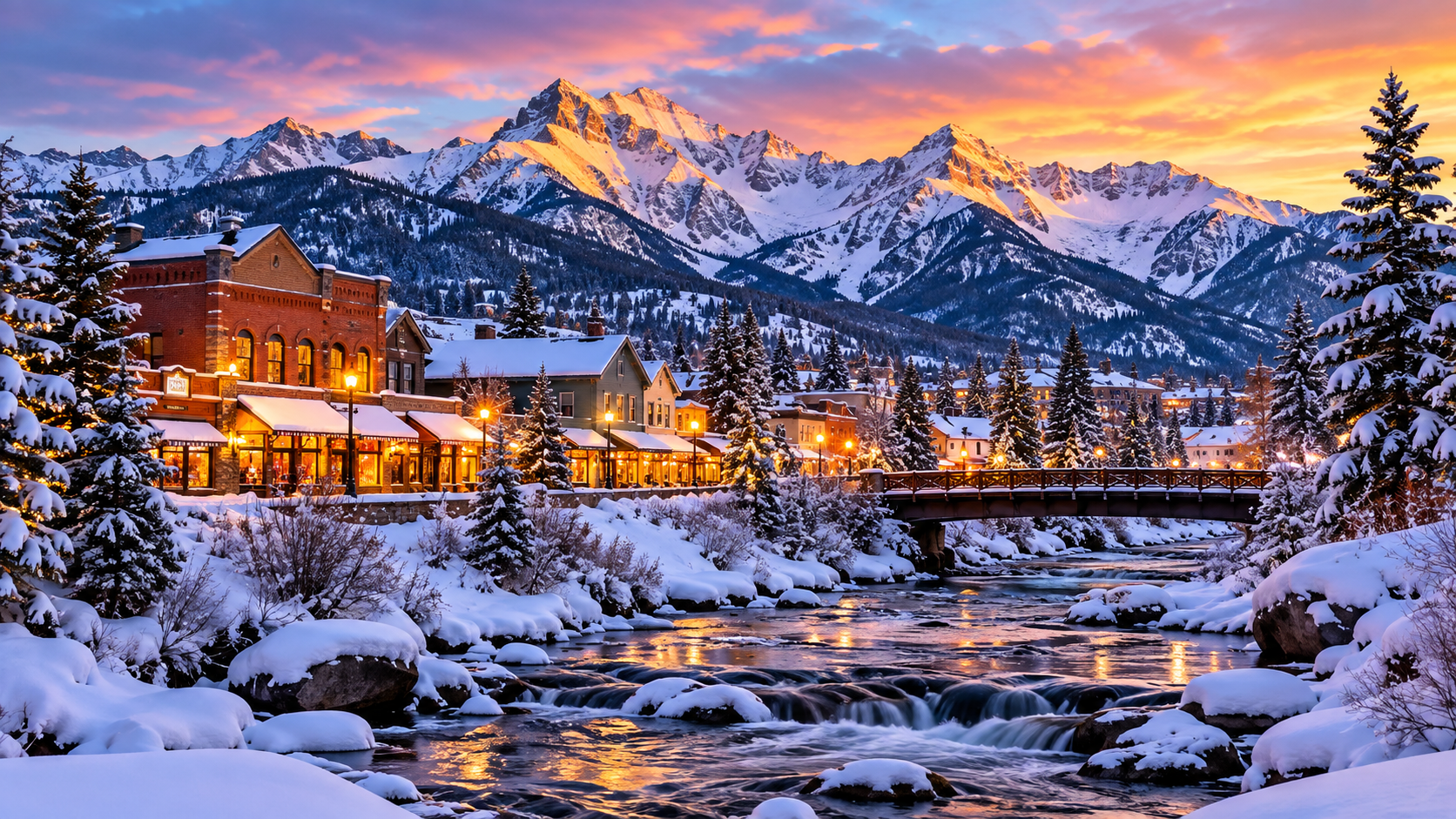
There is something unforgettable about Colorado in winter.
Fresh snow settles across the Rocky Mountains. Pine forests turn white overnight. Historic mountain towns glow beneath strings of lights, while fireplaces crackle inside cafés, lodges and cabins. On clear mornings, brilliant blue skies rise above snow-covered peaks that seem almost impossibly sharp against the horizon.
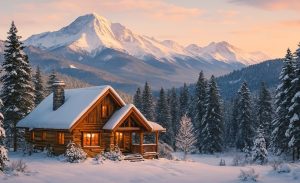
A Colorado winter vacation can include hot springs beneath falling snow, scenic train rides through mountain valleys, snowshoeing among evergreens, frozen waterfalls, sleigh rides, charming downtowns and long evenings beside a fire.
Here are some of the best places and experiences to consider.
Aspen: Iconic Mountains With a Sophisticated Side
Aspen is one of Colorado’s most famous winter destinations, but there is much more here than luxury shopping and celebrity sightings.
Four nearby ski areas provide enormous variety for winter sports, while the town itself offers restaurants, galleries and a wonderfully walkable downtown.
Even travelers who don’t ski can enjoy gondola rides, snowshoeing, winter scenery and day trips into the surrounding mountains.
For one of Colorado’s most recognizable landscapes, look toward the Maroon Bells area. Access changes considerably with winter conditions, so check current road and trail information before planning a visit.
Breckenridge: A Classic Colorado Winter Town
Breckenridge combines a major ski destination with one of the state’s most charming historic downtowns.
Colorful Victorian-era buildings line Main Street beneath snowy mountains, making Breckenridge particularly appealing to groups in which not everyone wants to ski.
Spend the morning on the mountain and the afternoon exploring shops and cafés—or skip skiing entirely and look for snowshoeing, sledding and other winter activities.
The town sits at roughly 9,600 feet above sea level, however, so visitors arriving from lower elevations should give themselves time to acclimate.
Vail: A European-Inspired Winter Escape
Vail was designed with an Alpine-village atmosphere, complete with pedestrian streets and mountain architecture.
Its enormous ski terrain is the obvious attraction, but walking through Vail Village on a snowy evening can be an experience of its own.
This is a particularly good destination for travelers seeking a resort-style vacation where restaurants, lodging, shopping and winter activities are concentrated close together.
Telluride: Dramatic Scenery and a Remote-Mountain Feeling
Telluride sits in a spectacular box canyon surrounded by steep peaks.
The setting feels dramatically different from many of Colorado’s Interstate 70 resorts. Historic buildings, towering mountains and the connection between Telluride and Mountain Village give the area an especially memorable winter atmosphere.
It’s farther from Denver and requires more planning, but that remoteness is part of the appeal.
Steamboat Springs: Snow by Day, Hot Springs by Night
Steamboat Springs offers one of the most satisfying combinations for a winter vacation: snow and hot water.
After a day outdoors, soaking in naturally heated mineral water while cold air surrounds you can be magical.
The area is also known for skiing, snowshoeing, snowmobiling and a strong Western identity that gives Steamboat a different personality from Colorado’s more European-inspired resorts.
Glenwood Springs: Make Winter About the Hot Springs
Glenwood Springs is an excellent choice for travelers who want mountain scenery without making skiing the center of the trip.
The city’s hot-springs tradition makes winter especially appealing. Imagine soaking outdoors in warm mineral water while snow-covered mountains rise around you.
Glenwood Springs can also work beautifully as part of a Colorado road trip rather than as a single-destination vacation.
Take a Winter Train Ride
One of the most relaxing ways to experience Colorado’s winter landscape is aboard a train.
Durango & Silverton Narrow Gauge Railroad operates seasonal experiences through the spectacular San Juan Mountain region. Winter schedules and routes can differ from summer operations, so travelers should check the railroad’s current schedule before building an itinerary around it.
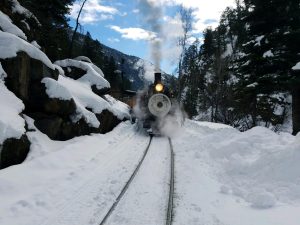
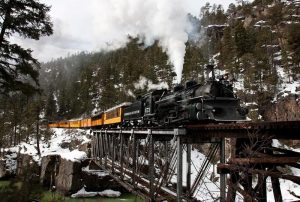
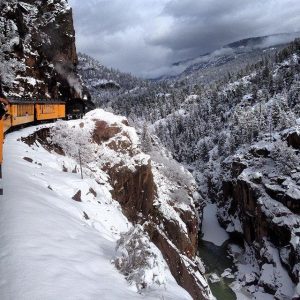
There is something wonderfully old-fashioned about watching snowy forests and mountains pass outside a train window while you’re warm inside.
Try Snowshoeing
You don’t need skiing experience to explore Colorado’s snowy forests.
Snowshoeing can be one of the easiest introductions to winter recreation. Many mountain communities have beginner-friendly trails, rentals and guided excursions.
On a quiet trail after fresh snowfall, Colorado can feel completely different from a busy ski resort: muffled, peaceful and almost impossibly still.
Chase Frozen Waterfalls
Colorado’s waterfalls transform during the coldest months. Water freezes into enormous curtains, pillars and blue-white formations along canyon walls.
One particularly dramatic winter destination is Ouray Ice Park, famous among ice climbers.
Even if climbing isn’t on your itinerary, the town of Ouray—surrounded by steep mountains—is beautiful in winter and has earned the nickname “Switzerland of America.”
Soak in a Hot Spring While Snow Falls
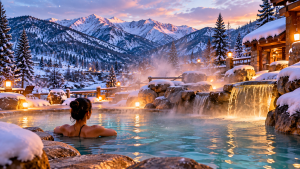
This deserves its own Colorado winter bucket-list entry.
Imagine sitting neck-deep in naturally warm water as snowflakes land around the pool and disappear.
Colorado has numerous hot-spring destinations, including areas around Glenwood Springs, Steamboat Springs, Ouray and Pagosa Springs.
Check individual facilities before traveling because reservations, operating hours, age restrictions and winter access can vary.
Winter Driving Requires Respect
Colorado’s winter beauty comes with serious mountain weather.
A sunny morning can become a snowstorm later in the day, and conditions on high mountain passes can be very different from conditions in Denver.
Before driving into the mountains:
- Check the weather and Colorado road conditions before departure.
- Understand Colorado’s traction and chain requirements.
- Don’t assume an all-wheel-drive vehicle makes icy roads harmless.
- Carry warm clothing, water and basic emergency supplies.
- Keep adequate fuel or EV charge, particularly before entering remote areas.
- Allow significantly more travel time during storms and busy ski weekends.
If you’re uncomfortable driving through snow and mountain passes, consider shuttles or staying somewhere that allows you to minimize driving.
Don’t Underestimate the Altitude
This is one of the easiest mistakes for first-time Colorado visitors to make.
Denver is already approximately a mile above sea level, and many mountain destinations are considerably higher. Breckenridge, for example, sits around 9,600 feet.
Some visitors may experience headache, fatigue, dizziness, nausea or shortness of breath after rapidly ascending to higher elevations.
Take the first day relatively easily, stay adequately hydrated, limit alcohol—particularly shortly after arrival—and don’t ignore significant or worsening symptoms.
What Should You Pack?
Colorado winter weather can change quickly, and mountain temperatures vary considerably between sunshine, shade, daytime and nighttime.
Think in layers.
A practical winter packing list includes a moisture-managing base layer, insulating middle layer, waterproof or weather-resistant outer layer, warm socks, gloves or mittens, hat, sunglasses, sunscreen and footwear with good traction.
And yes—sunscreen belongs on a winter packing list. High elevation and reflection from snow can make sun exposure surprisingly intense.
When Should You Visit?
December brings holiday atmosphere and beautifully decorated mountain towns, although holiday periods can be expensive and crowded.
January and February are prime winter months for travelers seeking a classic snow-covered Colorado experience.
March can bring longer days and plenty of mountain snow, with wonderfully sunny conditions between storms.
Weather and snowfall vary substantially from year to year, so travelers should check current conditions rather than planning around historical averages alone.
Colorado Winter Isn’t Just for Skiers
Perhaps that’s the biggest misconception about visiting Colorado during winter.
You can ski from sunrise to afternoon if that’s your dream—but you can also spend the morning walking through a snowy town, ride a scenic train, snowshoe through quiet woods, soak in a hot spring and finish the evening beside a fireplace.
Colorado offers something increasingly difficult to find in everyday life:
a reason to slow down and simply look around.
When fresh snow blankets the Rockies and the evening light turns the mountains pink and gold, even a familiar landscape can feel completely new.
And sometimes the best Colorado winter memory isn’t racing down a mountain.
It’s simply standing quietly beneath it. ENJOY!