



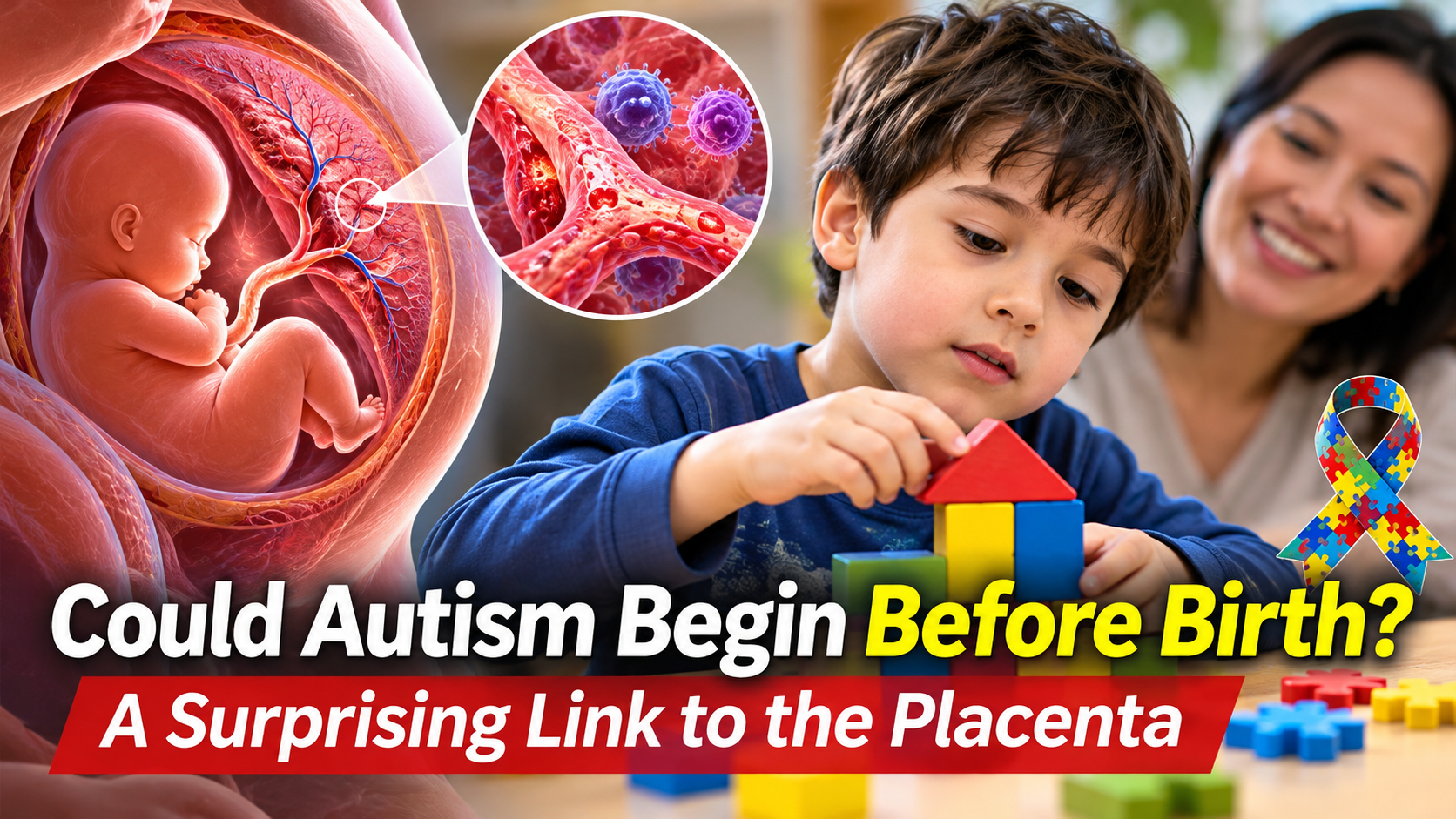
New research suggests that inflammation during pregnancy may disrupt the placenta and affect early development in male mice, offering clues about autism’s biological origins.
VietEcho Health | November 3, 2026
For decades, scientists have studied the brain to understand autism spectrum disorder (ASD). But a new discovery suggests that some important clues may lie somewhere unexpected: the placenta, the organ that connects a developing baby to its mother during pregnancy.
Researchers at Cold Spring Harbor Laboratory in New York have identified a possible connection between maternal inflammation, damage to specialized placental cells, and developmental abnormalities in male mice.
The findings, published in the scientific journal Science Advances, could help researchers better understand why autism is diagnosed more frequently in boys than girls.
However, scientists emphasize that the experiments were conducted in mice. The findings do not prove that placental inflammation causes autism in humans.
1. Why Is the Placenta So Important?
The placenta is a remarkable temporary organ that develops during pregnancy.
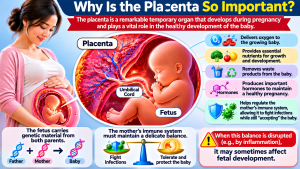
It delivers oxygen and nutrients to the growing fetus, removes waste products, produces important hormones, and helps regulate interactions between the mother’s immune system and the developing baby.
The fetus carries genetic material from both parents. Consequently, the mother’s immune system must maintain a carefully regulated balance that allows it to fight infections while tolerating the developing fetus.
Scientists believe that disruptions to this delicate balance may sometimes affect fetal development.
The new study suggests that the placenta may be an important part of this process.
2. What Did Scientists Discover?
The research team, led by Associate Professor Lucas Cheadle, investigated what happens when the immune system becomes activated during pregnancy.

Instead of infecting pregnant mice with an actual virus, researchers administered a substance that mimics certain immune responses to viral infection.
They tested this response at different stages of pregnancy.
One particularly sensitive period occurred approximately 12.5 days into mouse gestation.
Within 24 hours of immune activation, approximately 30% of the embryos developed significant abnormalities, including reduced fetal weight and changes in sensory-organ development.
The remaining 70% developed without those abnormalities.
These findings suggest that even during the same pregnancy, some developing embryos may be more vulnerable to inflammatory stress than others.
Importantly, these early physical abnormalities are not themselves an autism diagnosis.
3. Why Were Male Fetuses More Vulnerable?
One of the most surprising findings involved differences between male and female embryos.
In the experiments, the observed developmental abnormalities occurred in a subset of male embryos, while female embryos did not show the same effects.
This is particularly interesting because autism is diagnosed considerably more frequently in boys than girls.
Scientists have long investigated whether genetic, hormonal, immune, or other biological factors contribute to this difference. Differences in how autism is recognized and diagnosed may also play a role.
What makes the new discovery remarkable is its timing.
The male-specific vulnerability appeared before several major stages of sexual differentiation, suggesting that biological differences between male and female embryos may influence development earlier than previously appreciated.
Researchers are now investigating whether female embryos possess protective mechanisms or whether male embryos have characteristics that make them more susceptible to certain immune responses.
Neither possibility has been conclusively established.
4. A Surprising Discovery Inside the Placenta
To understand why some embryos were affected, scientists examined a specialized group of placental cells called spongiotrophoblasts.
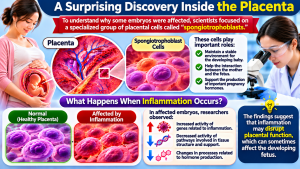
These cells are found in a region of the mouse placenta involved in interactions between maternal and fetal tissues.
Under normal circumstances, they help maintain the environment needed for healthy development.
However, in affected male embryos, researchers observed substantial inflammatory changes and disruption of placental structure.
The affected placentas showed increased activity of inflammation-related genes, alongside reduced activity of pathways involved in tissue structure and hormone production.
Researchers also identified increased inflammatory signals in the amniotic fluid surrounding affected embryos.
These findings suggest that maternal immune activation may sometimes disturb the protective environment between mother and fetus.
5. The Role of an Inflammatory Molecule Called IL-6
The study also identified an important inflammatory signaling molecule known as interleukin-6 (IL-6).
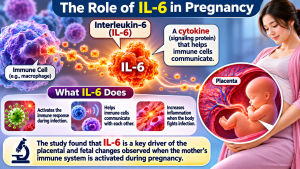
IL-6 is a cytokine, a protein that helps immune cells communicate during inflammation and infection.
In the mouse experiments, IL-6 was necessary for the observed developmental abnormalities to occur following maternal immune activation.
This finding provides researchers with a potential biological pathway to investigate further.
However, IL-6 is also involved in normal immune functions. The results do not mean that pregnant women should attempt to suppress IL-6 or take anti-inflammatory medications to prevent autism.
No such preventive treatment has been established from this research.
6. Does This Mean Infection During Pregnancy Causes Autism?
No. That conclusion would go far beyond what the study demonstrated.
Autism is a complex neurodevelopmental condition influenced by many factors, including genetics.
Although researchers have identified associations between certain maternal infections or inflammatory conditions and later neurodevelopmental outcomes, these associations do not establish that an infection causes autism in an individual child.
Many women experience infections during pregnancy and give birth to children who develop typically.
Likewise, many autistic children are born following pregnancies without any recognized infection or inflammatory complication.
The new research identifies a possible biological mechanism in mice. It does not establish that the same mechanism causes autism in humans.
Parents should not interpret these findings as evidence that they caused their child’s autism.
7. Could This Discovery Lead to Earlier Prevention or Treatment?
Potentially, but considerably more research is needed.
Scientists hope to determine why certain male embryos appear especially vulnerable and whether protective mechanisms exist in females.
Future studies may investigate whether specific placental changes could eventually serve as indicators of developmental vulnerability.
Researchers may also explore ways to protect the maternal-fetal environment from harmful inflammatory responses.
However, these possibilities remain experimental.
There is currently no validated placental test based on this study that can predict whether a baby will develop autism, and no proven treatment arising from these findings can prevent it.
8. What Should Expectant Mothers Know?
The most important message is not to fear pregnancy-related inflammation but to maintain appropriate prenatal care.
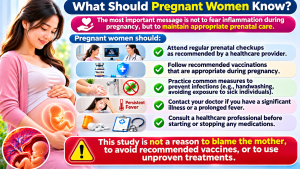
- Pregnant women should continue attending prenatal appointments.
- Follow recommended vaccination guidance
- Practice reasonable infection prevention
- and contact their healthcare professionals when experiencing significant illness or persistent fever.
Medications during pregnancy should be discussed with a qualified healthcare professional rather than started or stopped based on preliminary animal research.
This study does not justify blaming mothers, avoiding recommended vaccinations, or attempting unproven treatments.
A New Direction in Understanding Autism
The human brain remains central to understanding autism, but its development is influenced by a complex biological environment long before birth.
This study adds to growing evidence that the placenta and maternal-fetal immune interactions deserve greater scientific attention.
Although researchers are still far from establishing whether these findings apply directly to human autism, the discovery offers an intriguing new direction for understanding early neurodevelopment.
Sometimes, understanding the brain requires looking beyond the brain itself.
Research source: Sanchez-Martin I. et al. Maternal-fetal immune conflict contributes to male-specific impairments in a mouse model of neurodevelopmental disorders. Science Advances, September 2026.
DOI: https://doi.org/10.1126/sciadv.aeg0779
Research institution: Cold Spring Harbor Laboratory, New York.
VietEcho Health — Making science understandable for everyone.