




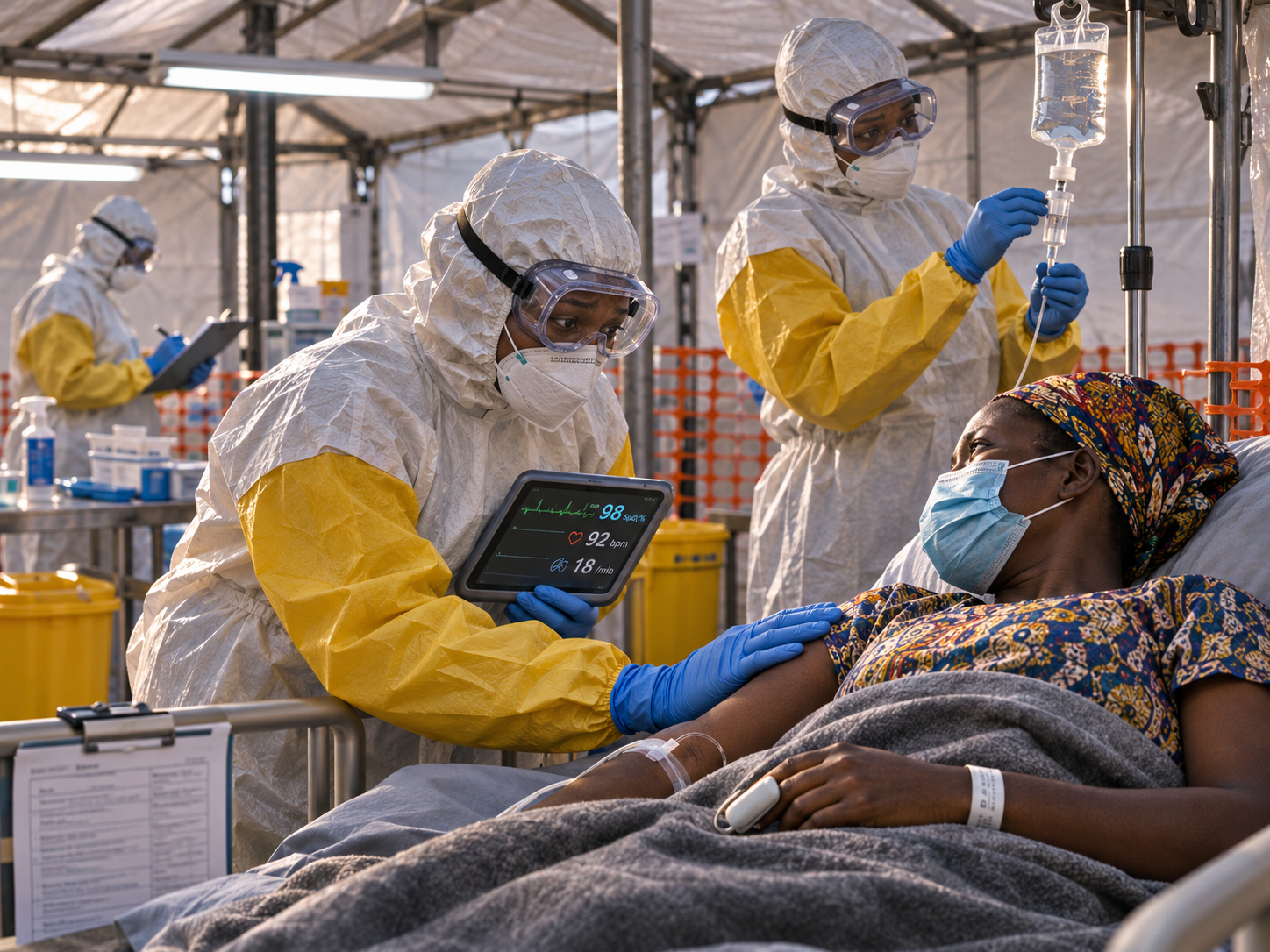
More than 10,000 people have been infected in one of the deadliest Ebola outbreaks in history. As the virus reaches other African countries, health officials face enormous challenges containing the epidemic.
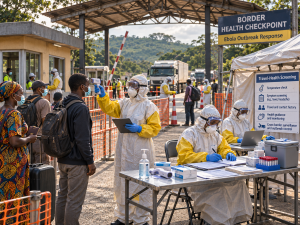
November 1, 2026 | VietEcho Health & World News
The Democratic Republic of the Congo (DR Congo) is facing a devastating Ebola epidemic that has claimed more than 5,000 lives, making it the deadliest outbreak ever recorded in the country.
According to figures released by Congolese health authorities and reported by the Associated Press on October 31, the outbreak had caused 10,351 infections and 5,026 deaths, representing a reported case-fatality ratio of approximately 48.6%.
The outbreak, which began in May 2026, has spread across multiple provinces, with the eastern regions of Ituri and North Kivu among the hardest hit.
Cases linked to the outbreak have also been recorded in other countries, including Uganda, Kenya, and Nigeria, raising concerns about further international transmission.
Health officials are particularly worried about the combination of ongoing infections, armed conflict, strained healthcare systems, and the lack of an approved vaccine specifically targeting the Bundibugyo virus responsible for the epidemic.
What Is Ebola, and Why Is It So Deadly?
Ebola is a severe viral illness that can damage blood vessels, disrupt the body’s immune response, and lead to life-threatening complications.
The disease is caused by viruses belonging to the group known as orthoebolaviruses.
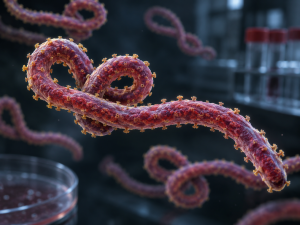
Different Ebola-causing viruses exist, and they do not all respond to the same vaccines or treatments.
The current outbreak involves Bundibugyo virus, which differs from the Ebola virus responsible for the major West African epidemic of 2014–2016.
Once infected, some patients develop rapidly worsening illness involving dehydration, abnormal blood clotting, shock, and failure of major organs.
Although Ebola is often called a hemorrhagic fever, not every patient experiences visible bleeding.
Many patients initially develop symptoms that resemble influenza, malaria, or other common infections.
This can make early diagnosis difficult, especially in regions where diagnostic laboratories and healthcare facilities are limited.
How Does Ebola Spread?
Unlike measles or other highly contagious airborne infections, Ebola generally spreads through direct contact with infected bodily fluids.
Transmission can occur when blood, vomit, diarrhea, saliva, or other infectious fluids enter another person’s body through broken skin or mucous membranes.
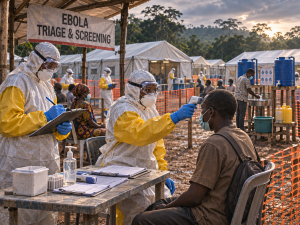
People may become infected through:
- Direct contact with a symptomatic infected patient
- Contact with contaminated needles or medical equipment
- Handling bedding or other objects contaminated with infectious fluids
- Contact with the body of someone who died from Ebola
- Certain exposures to infected animals
An important distinction is that people generally do not spread Ebola before developing symptoms.
However, once symptoms appear, close contact with infected bodily fluids can become extremely dangerous.
This is why healthcare workers need appropriate protective equipment and strict infection-control procedures.
What Are the Symptoms?
Ebola symptoms usually appear 2 to 21 days after exposure.
Early symptoms often include sudden fever, severe headache, muscle pain, weakness, and fatigue.
As the disease progresses, patients may develop nausea, vomiting, diarrhea, abdominal pain, and severe dehydration.
More advanced cases may involve low blood pressure, confusion, abnormal bleeding, liver injury, kidney failure, and shock.
Because these symptoms overlap with those of many other infections, laboratory testing is essential for confirming Ebola.
Anyone who develops compatible symptoms after a possible Ebola exposure should immediately contact a healthcare professional and explain their travel and exposure history before visiting a clinic or hospital.
Why Has This Outbreak Been So Difficult to Control?
Several factors have contributed to the unusually high number of infections and deaths.
1. Armed Conflict and Insecurity
Eastern DR Congo has experienced prolonged armed conflict and population displacement.
Insecurity makes it difficult for medical teams to reach remote communities, transport patients, deliver supplies, and follow up with people who may have been exposed.
Health facilities and humanitarian workers may also face threats that interrupt treatment and disease surveillance.
2. Patients Are Not Reaching Hospitals Early Enough
Ebola treatment is more effective when patients receive medical care promptly.
However, many people live far from specialized treatment facilities or face obstacles traveling to them.
Some patients die before receiving appropriate medical care.
Late diagnosis also creates additional opportunities for the virus to spread within families and communities.
3. Healthcare Resources Are Limited
Controlling Ebola requires trained healthcare personnel, protective clothing, laboratory testing, isolation facilities, and reliable medical supplies.
An outbreak involving thousands of patients can overwhelm even a well-organized healthcare system.
Shortages of personnel and interruptions in medical services make the situation even more challenging.
4. Community Mistrust and Misinformation
Fear and misinformation can discourage people from reporting symptoms or cooperating with health authorities.
Some families may avoid treatment centers because they fear isolation or separation from loved ones.
Community education and the involvement of trusted local leaders are essential for encouraging early treatment and safe practices.
Is There a Vaccine for This Ebola Outbreak?
Vaccines and antibody treatments have been developed for Ebola disease caused by certain viruses, particularly Ebola virus, formerly known as Zaire ebolavirus.
However, these products have not been established as effective against Bundibugyo virus.
There is currently no licensed vaccine or virus-specific treatment for Bundibugyo Ebola disease.
Researchers continue to investigate potential vaccines and therapies.
For now, treatment primarily involves intensive supportive medical care.
This includes replacing lost fluids, correcting electrolyte abnormalities, monitoring oxygen levels and blood pressure, and treating complications as they develop.
Prompt supportive treatment may substantially improve the chance of survival.
Has the Virus Spread Outside DR Congo?
Yes.
Cases connected with the outbreak have been reported in Uganda, Kenya, and Nigeria. A travel-related case was also previously documented in France.
However, an imported case does not necessarily indicate sustained transmission within the country where it is detected.
Public-health teams use contact tracing, testing, isolation, and infection-prevention measures to identify and interrupt chains of transmission.
As infections cross national borders, international coordination becomes increasingly important.
Should People in the United States Be Concerned?
For most people living in the United States who have not traveled to affected areas or had direct contact with an infected individual, the risk of Ebola infection remains very low.
Ebola does not spread through ordinary casual contact with people who are not infected.
It is also not transmitted through the air in the same manner as measles.
Nevertheless, international health authorities continue to monitor the outbreak because international travel can occasionally bring infected individuals into countries far from the original outbreak.
Travelers visiting affected regions should follow official health advisories and avoid contact with potentially infectious bodily fluids.
Anyone developing symptoms after a possible exposure should contact healthcare services promptly.
How Does This Outbreak Compare With Previous Ebola Epidemics?
The deadliest Ebola outbreak in recorded history occurred in West Africa between 2014 and 2016.
That epidemic caused more than 28,000 reported cases and approximately 11,300 deaths, primarily in Guinea, Liberia, and Sierra Leone.
The current outbreak in DR Congo has already surpassed previous Congolese Ebola epidemics in the number of reported deaths.
With more than 5,000 lives lost, it has become the second-deadliest Ebola outbreak recorded worldwide, behind the 2014–2016 West African epidemic.
The comparison underscores how dangerous the disease can become when healthcare systems struggle to identify infections early and interrupt transmission.
What Must Happen Next?
Health authorities are focusing on identifying new infections, isolating and treating patients, tracing exposed individuals, and preventing transmission in healthcare facilities.
Safe and dignified burial practices are also essential because Ebola can remain infectious in the body after death.
International assistance, reliable medical supplies, protection for healthcare workers, and cooperation with affected communities will remain critical.
Scientists are also working to develop vaccines and treatments that could provide better protection against Bundibugyo virus in future outbreaks.
The Bottom Line
The deaths of more than 5,000 people from Ebola in DR Congo represent a major public-health tragedy.
Although the immediate danger is concentrated in affected African communities, the outbreak illustrates the importance of disease surveillance, strong healthcare infrastructure, scientific research, and international cooperation.
For the general public, understanding how Ebola spreads is essential.
Accurate information can help prevent unnecessary fear while encouraging timely medical care and appropriate protective measures.
Ebola is a dangerous disease, but early detection, effective infection control, and supportive medical treatment can save lives.
Sources
- Associated Press — October 31, 2026: Congo’s Ebola deaths top 5,000
- World Health Organization — Ebola disease caused by Bundibugyo virus
- CDC — Ebola Outbreak: Current Situation
- CDC — First 100 Days of the 2026 Ebola Outbreak
This article provides educational health information and does not replace professional medical evaluation.