
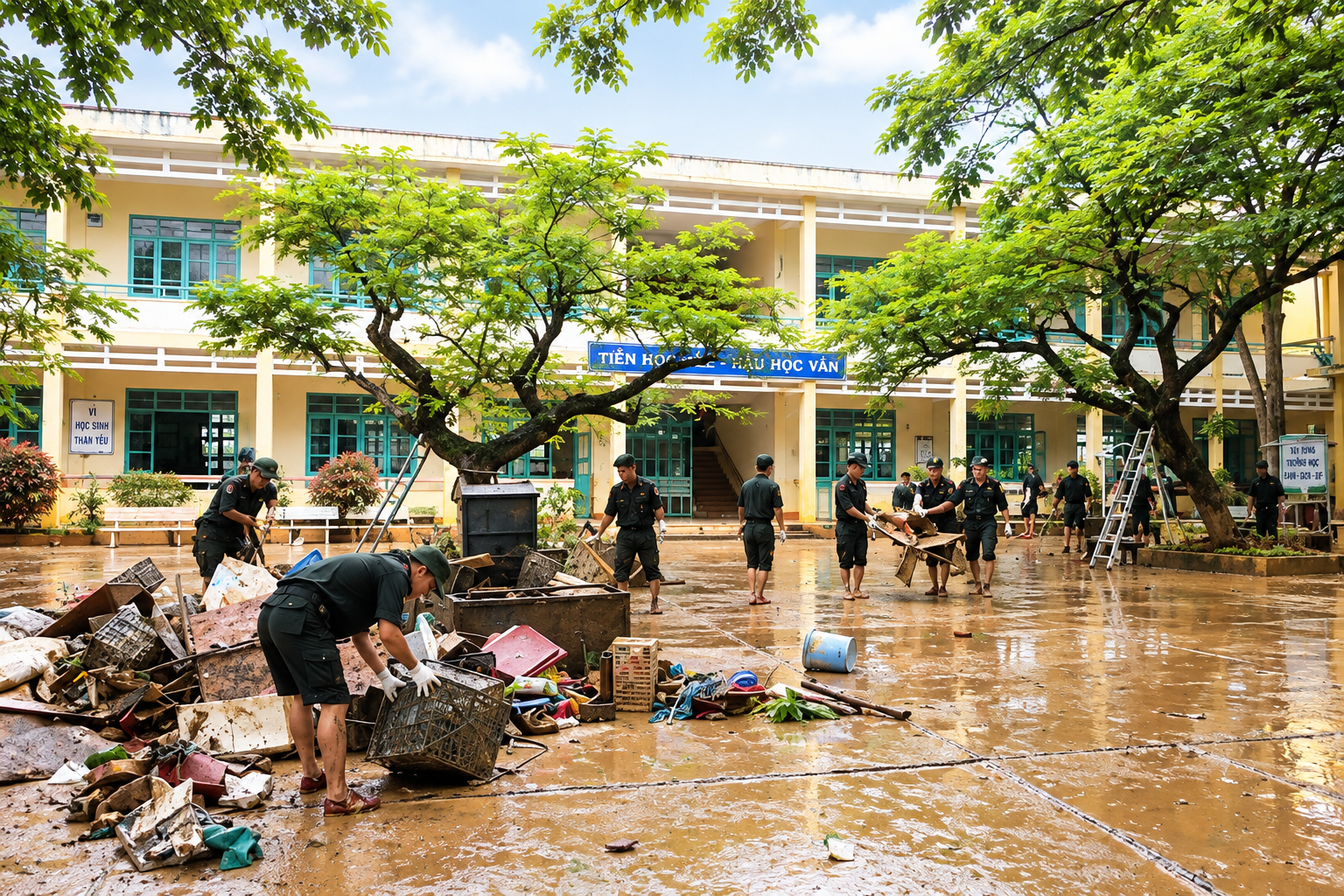
HÀ NỘI — Climate-related disasters disrupted the education of 3,098,500 students in Việt Nam in 2025, underscoring the increasing need to make schools and education systems more resilient to extreme weather, according to UNICEF.
The findings are contained in UNICEF’s Learning Interrupted: Global Snapshot of Climate-Related School Disruptions in 2025, which examined climate-related interruptions to education across 106 countries and territories.
Globally, an estimated 171 million students — roughly one in every 10 — experienced disruptions to their schooling because of climate hazards during the year. The affected students ranged from pre-primary children to those attending upper-secondary school.
Storms and floods hit Vietnamese schools
Storms and floods were the leading climate-related causes of education disruption in Việt Nam during 2025, affecting schools, students and communities across the country.
Extreme weather can force schools to suspend classes, damage buildings and educational infrastructure, and require temporary transitions to remote learning.
Beyond complete school closures, climate events can reduce instructional time and attendance and, in severe cases, increase the likelihood that vulnerable students will leave school altogether.
Globally, storms were the most widespread source of disruption identified in the UNICEF analysis, affecting around 109 million students. Flooding affected at least 70 million, while heatwaves disrupted education for approximately 50 million students.
Climate change becoming an education challenge
UNICEF Representative in Việt Nam Silvia Danailov warned that climate-related emergencies increasingly have consequences extending beyond physical damage to schools.
When schools close because of floods and storms, children can lose valuable learning time and experience interruptions to the routines and supportive environments that schools provide.
The impact can be particularly serious for children who are already vulnerable because of poverty, displacement or other social and economic disadvantages.
UNICEF is therefore calling for schools to become safer and better prepared to maintain education when climate emergencies occur.
Disrupted education carries long-term costs
The consequences of climate-related school closures may continue long after classrooms reopen.
According to UNICEF, learning losses and an increased risk of dropping out can ultimately affect workforce productivity, economic growth and efforts to reduce poverty.
The organisation estimates that failure to adequately address climate-related education disruption could contribute to at least US$200 billion in lost lifetime earnings among affected students.
This makes climate resilience in education not only a child welfare issue but also a long-term economic and development concern.
Girls can face additional risks
UNICEF also highlighted the disproportionate pressures climate emergencies can place on girls.
When extreme weather damages schools, displaces families or reduces household income, girls may take on additional responsibilities such as caring for family members or collecting water.
Such pressures can make it more difficult for them to return to school after a disruption and, in some circumstances, may increase their vulnerability to child marriage.
Ensuring education continues during emergencies is therefore particularly important for children already facing social or economic disadvantages.
UNICEF calls for climate-resilient schools
UNICEF is urging Việt Nam and other governments to strengthen the ability of education systems to withstand increasingly frequent climate shocks.
Among the priorities identified are incorporating climate resilience into national education planning, strengthening school infrastructure and establishing effective systems to maintain learning during and after emergencies.
Schools in areas vulnerable to flooding and storms may require stronger buildings, improved drainage and disaster-preparedness measures, alongside contingency plans that allow education to resume quickly.
“Climate hazards threaten children’s lives and futures,” UNICEF Executive Director Catherine Russell said, stressing the importance of investing in education systems capable of withstanding climate shocks.
Climate education also part of the solution
UNICEF recommends integrating climate education more deeply into school curricula so children and young people understand the environmental challenges affecting their communities.
Greater climate literacy can help students develop the knowledge and skills needed to adapt to environmental change, prepare for emergencies and participate in future climate solutions.
For Việt Nam, where storms, floods and other extreme weather events regularly affect communities, improving the resilience of schools is becoming increasingly important.
The experience of more than three million Vietnamese students whose education was disrupted in 2025 demonstrates how climate change is evolving from an environmental challenge into an education and development issue.
Protecting classrooms, ensuring continuity of learning and preparing students for a changing climate will therefore be essential to safeguarding Việt Nam’s educational progress and the opportunities available to future generations.