
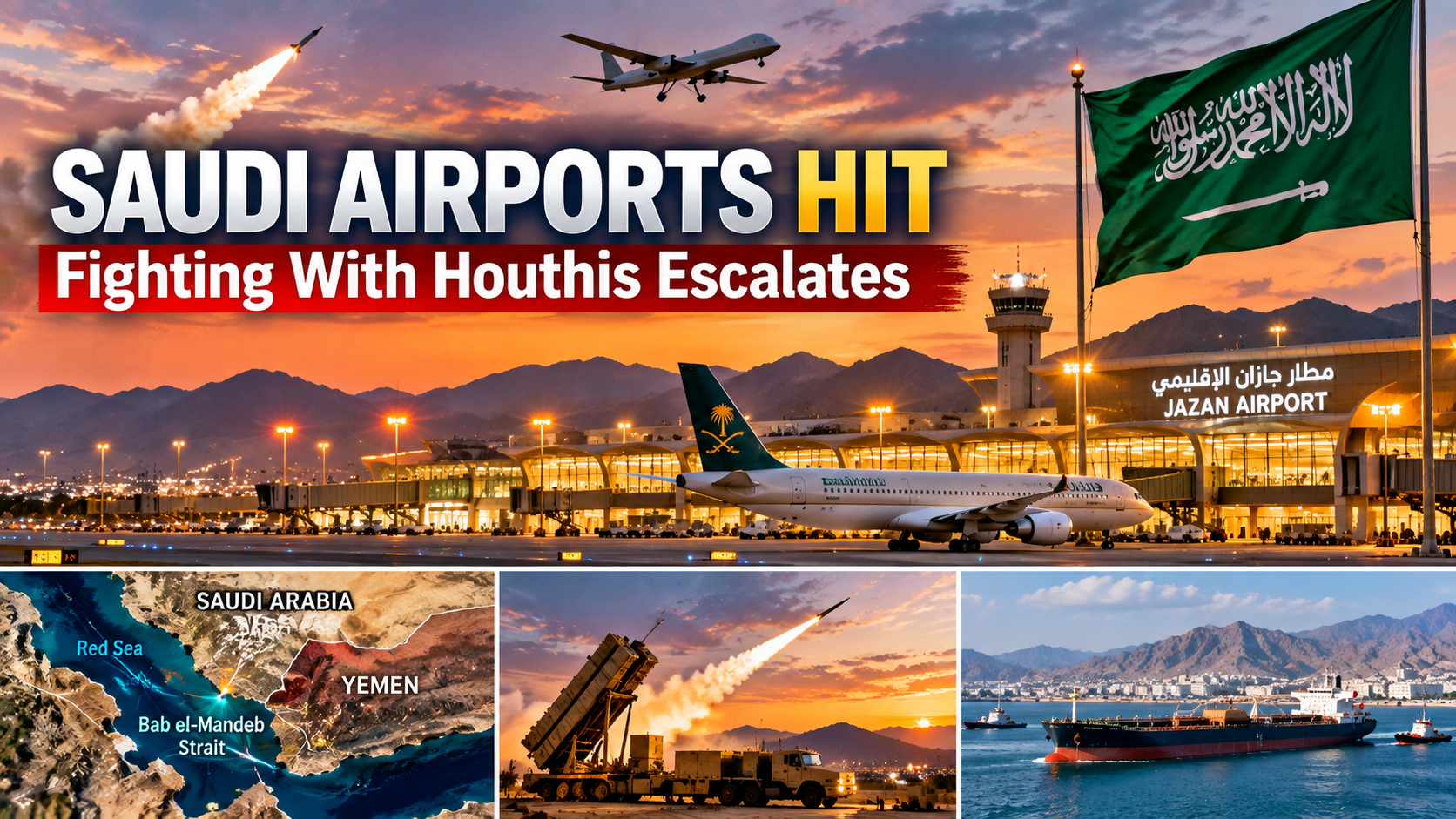
Two airports in southern Saudi Arabia were struck Monday evening as hostilities involving Yemen’s Houthi movement intensified, marking another escalation in a conflict with implications well beyond the Saudi-Yemeni border.
Saudi Arabia’s General Authority of Civil Aviation said King Abdullah bin Abdulaziz International Airport in Jazan and Najran International Airport were targeted.
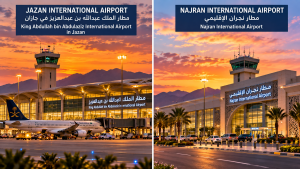
Three people suffered minor injuries, according to Saudi authorities, and the attacks caused limited or material damage at the airports. Emergency teams responded and officials began assessing the facilities and taking measures to protect passengers, employees and civil aviation operations. Reuters
The Saudi aviation authority did not identify the attacker in its initial statement. However, the attacks followed announcements from Yemen’s Iran-backed Houthi movement saying it had launched missile and drone attacks against Saudi targets, including airports, oil infrastructure and military sites. AP News
Houthis Claim Additional Attacks
The Houthis also claimed an attack Tuesday directed toward Abha International Airport in southwestern Saudi Arabia.
As of Tuesday morning, however, the Associated Press said it could not independently confirm that Abha airport had been hit, and Saudi authorities had not immediately commented on that particular claim. AP News
That distinction is important: while the Jazan and Najran attacks have been acknowledged by Saudi authorities, some additional Houthi claims remain unverified.
Why Is the Fighting Escalating Again?
The latest strikes come amid intensified fighting inside Yemen.
Saudi-backed forces supporting Yemen’s internationally recognized government have been pressing an offensive against Houthi-held territory after weeks of Houthi advances. Saudi Arabia has stepped up air support for that campaign, while the Houthis have responded with missile and drone attacks against targets inside the kingdom. Reuters
One strategically important area is Yemen’s western coastline near the Bab el-Mandeb Strait, which connects the Red Sea with the Gulf of Aden.
That narrow waterway is far more than a local geographic feature.
It is an important route for international shipping and energy transportation.
Who Are the Houthis?
The Houthis, formally known as Ansar Allah, emerged from northern Yemen and seized the capital, Sanaa, in 2014.
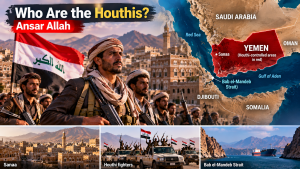
Saudi Arabia entered Yemen’s civil war the following year at the head of a coalition supporting the internationally recognized Yemeni government.
The conflict developed into a prolonged regional struggle, with Saudi Arabia backing the Yemeni government and Iran supporting the Houthis.
Years of warfare created one of the world’s most severe humanitarian crises and left Yemen politically and territorially divided.
The current escalation shows how quickly that conflict can again spill across Yemen’s borders.
Why Saudi Airports Matter
Attacks on civilian airports carry consequences beyond their immediate physical damage.
Airports are transportation hubs used by civilians, businesses and international travelers. Even limited attacks can force security changes, disrupt flights and raise concerns about the safety of regional airspace.
Saudi aviation authorities said they were taking measures to maintain the safety and security of the kingdom’s civil aviation system following the attacks. Saudi Gazette
The proximity of Jazan and Najran to Yemen also places southern Saudi Arabia particularly close to the conflict.
The Red Sea and Global Energy Connection

The escalation matters internationally because Yemen sits beside one of the world’s strategically important maritime corridors.
Saudi-backed Yemeni forces have been attempting to regain territory near the southern entrance to the Red Sea, in part amid concerns about disruptions to oil exports and shipping. AP News
Despite the renewed violence, oil prices actually fell Tuesday as increased Middle Eastern crude exports and a planned release of emergency stockpiles eased immediate supply concerns. Reuters reported that Brent crude was trading below $100 a barrel Tuesday morning.
Still, analysts continue to watch regional security closely because attacks on ports, pipelines, tankers or shipping routes could rapidly alter the energy outlook. Reuters
A Conflict With Wider Regional Consequences
The renewed Saudi-Houthi confrontation comes against a much broader period of instability across the Middle East.
Conflicts and military confrontations in recent years have involved Gaza, Israel, Iran, Lebanon, Syria, Yemen and the Red Sea, creating overlapping security concerns across the region. AP News
For now, Saudi officials say the attacks on Jazan and Najran caused limited damage and three minor injuries.
But the significance of Monday’s attacks lies partly in what could happen next.
Further missile or drone attacks on airports, energy infrastructure or shipping routes could affect not only Saudi Arabia and Yemen, but also international aviation, maritime commerce and energy markets.
That makes the renewed confrontation one the world will be watching closely.
This is a developing story. Details may change as Saudi authorities and other parties release additional information.