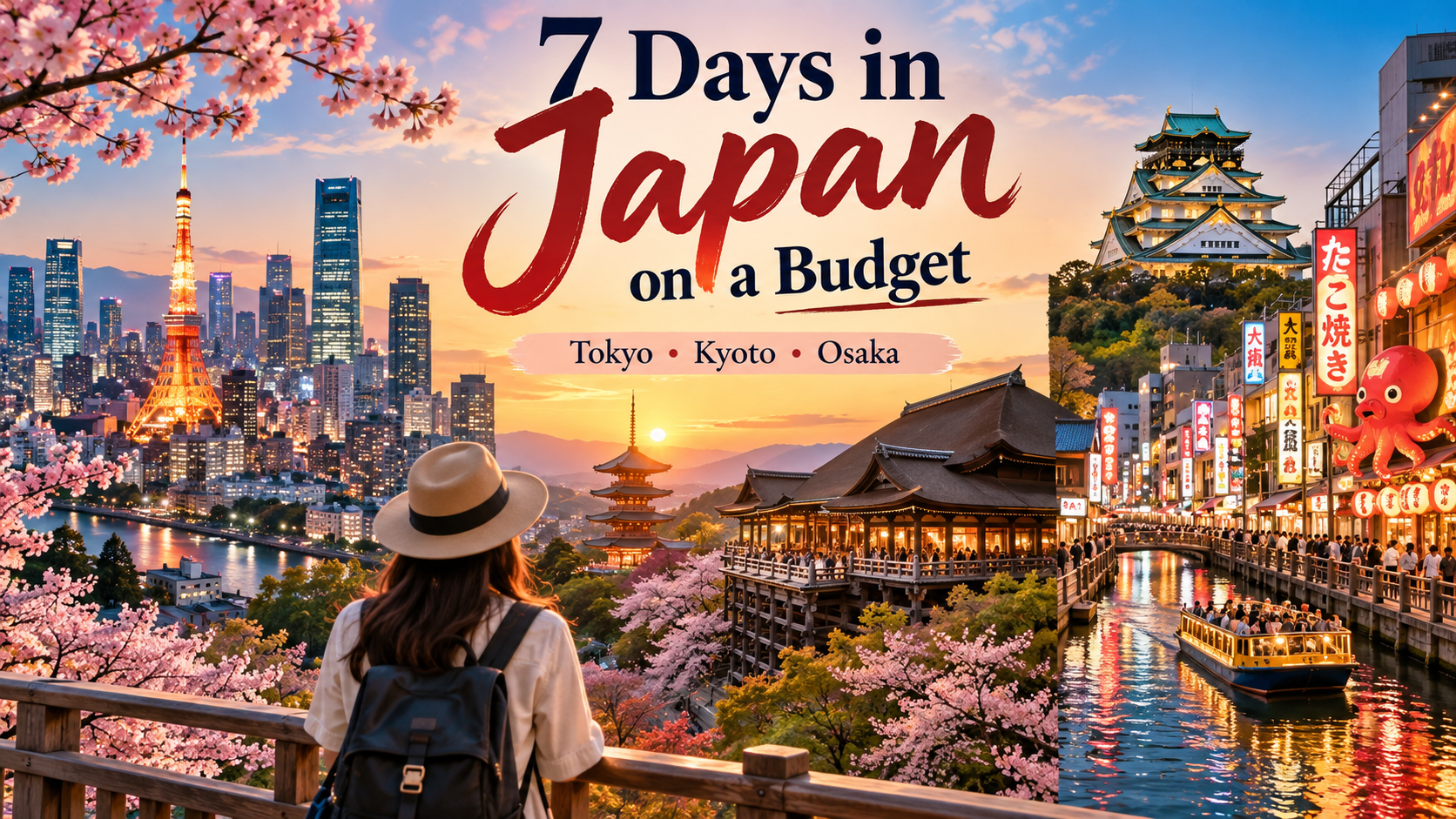
Japan has a reputation for being expensive, but a first trip does not have to be. With smart planning, efficient train travel and modest hotels, travelers can experience Tokyo, Kyoto and Osaka in one week without turning the vacation into a financial marathon.
For travelers visiting in late May or June, timing can also work in your favor. Late May is typically calmer after Golden Week and before the heavier June rains, while June is part of Japan’s rainy season and can bring lower crowds in some places. Japan Travel
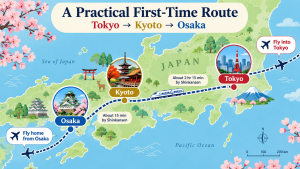
A practical first-time route is:
Tokyo → Kyoto → Osaka
And if airfare allows, consider an open-jaw ticket:
Fly into Tokyo → fly home from Osaka
That can reduce backtracking and save valuable vacation time.
Day 1 — Arrive in Tokyo and Take It Easy
For international arrivals, Tokyo is usually the easiest starting point.
If flights are similar in price, Haneda Airport is closer to central Tokyo than Narita and can make the first day easier.
After checking into your hotel, keep the schedule light.
A relaxed first evening might include:
- Shibuya Crossing
- Shinjuku
- a neighborhood convenience store
- an inexpensive ramen or noodle dinner
- an early night
Jet lag and long-haul travel can make an ambitious first day miserable, so save the major sightseeing for tomorrow.
Budget Tip
Stay near a major train or subway station rather than paying extra to stay beside a famous attraction.
Japan’s official tourism guidance notes that budget hotels, inexpensive restaurants and transportation passes can make the country much more affordable than many travelers expect. Japan Travel
Day 2 — Classic Tokyo
Start the day in Asakusa.
Visit Senso-ji Temple, walk beneath the Kaminarimon Gate, and explore the nearby streets.
Later, choose one or two areas depending on your interests.
Good afternoon options
Ueno
Museums, parks and casual restaurants.
Akihabara
Anime, gaming and electronics.
Ginza
Department stores, architecture and window-shopping.
In the evening, head toward Shibuya and experience the famous crossing after dark.
For a budget dinner, Japan offers plenty of affordable choices, including noodle shops, curry restaurants, conveyor-belt sushi, rice-bowl chains and supermarket meals. JNTO specifically highlights low-cost meals as one way travelers can control expenses. Japan Travel
Day 3 — More Tokyo or a Mt. Fuji Day Trip
This day should stay flexible.
If the weather is clear and Mt. Fuji visibility looks promising, consider a day trip toward Hakone or the Fuji Five Lakes area.
If clouds or rain are expected, stay in Tokyo instead.
Possible Tokyo alternatives include:
- Meiji Shrine
- Harajuku
- Shinjuku
- Tokyo Station
- museums
- observation decks
- cafés and shopping districts
This flexibility matters particularly in June, when Japan receives more rainfall as the rainy season begins. JNTO notes that June does not necessarily mean rain every day, but wet weather is more frequent than usual. Japan Travel
Day 4 — Tokyo to Kyoto by Shinkansen
Today, trade skyscrapers for temples.
Take the Tokaido Shinkansen from Tokyo toward Kyoto.
The Tokyo-to-Kansai journey is fast enough that you can travel in the morning and still have much of the afternoon available for sightseeing.
After arriving in Kyoto, check into your hotel and explore:
- Gion
- Yasaka Shrine
- Pontocho
- Kyoto Station area
Kyoto has a very different atmosphere from Tokyo, so this is a good evening to slow down.
Walk.
Eat.
Look around.
Do not turn Kyoto into a race.
Day 5 — Traditional Kyoto
Start early at Fushimi Inari Taisha, famous for its long pathways of red torii gates.
Arriving early helps avoid the largest crowds.
Then continue to Kiyomizu-dera and the historic streets of Higashiyama.
Depending on your pace, you might also visit:
- Nishiki Market
- Gion
- Yasaka Shrine
- traditional shopping streets
- tea shops and small cafés
Kyoto rewards slow exploration.
Some of the most memorable moments may simply come from walking through quiet streets, seeing small shrines and finding an inexpensive local meal.
Optional Half-Day: Nara
Travelers who want another cultural experience can substitute part of Day 5 or Day 6 with a trip to Nara.
Nara is known for temples, historic sites and the deer that wander through Nara Park.
But remember: this is only a seven-day trip.
If adding Nara makes the schedule feel rushed, skip it.
Japan will still be there next time.
Day 6 — Kyoto to Osaka
Osaka is close enough to Kyoto that the transfer does not need to consume the whole day.
After checking in, explore:
- Osaka Castle
- shopping districts
- local markets
- Dotonbori
Osaka is famous for its food, nightlife and relaxed personality. Japan’s tourism organization describes the city as especially known for food, fun and entertainment. Japan Travel
What to eat
Try:
- takoyaki
- okonomiyaki
- udon
- inexpensive sushi
- casual izakaya dishes
Dotonbori is particularly fun after dark, when the signs and restaurant displays light up.
Day 7 — One Last Morning in Osaka
Do not fill your final morning with a complicated itinerary.
Have breakfast.
Take one last walk.
Buy snacks or small souvenirs.
Then head toward Kansai International Airport for the flight home.
If your airfare was booked as:
Tokyo arrival → Osaka departure
you avoid having to return all the way to Tokyo simply to catch a flight.
For a one-week trip, that is valuable time saved.
Late May or June: Which Is Better?
For many first-time visitors, late May is an excellent choice.
Japan’s tourism office describes the second half of May as calmer after the busy Golden Week period and as a good opportunity to visit before the rainy season becomes established in June. Japan Travel
Late May
Advantages
- generally comfortable weather
- before peak summer heat
- after Golden Week crowds decline
- good conditions for walking
June
Advantages
- potentially fewer tourists
- sometimes better accommodation value
- beautiful hydrangeas
- a quieter atmosphere
Disadvantages
- rainy season
- increasing humidity
- outdoor plans may require flexibility
JNTO identifies June as part of Japan’s off-season because of the rainy season, which can make sightseeing less crowded. Japan Travel
For travelers who do not mind carrying an umbrella, June can still be a very rewarding time to visit.
Do You Need a Japan Rail Pass?
Not automatically.
The nationwide 7-day Japan Rail Pass currently costs ¥50,000 through the official online service, with revised overseas-agency pricing scheduled at ¥53,000 for purchases beginning October 1, 2026. Japan Rail Pass
For a simple itinerary involving:
Tokyo → Kyoto → Osaka
individual train tickets may be more economical than automatically buying the nationwide pass.
The best strategy is to compare the cost of your actual planned journeys before purchasing any rail pass.
Regional passes can also offer better value when most travel is concentrated in one area. JNTO specifically recommends comparing regional passes for travelers who are staying relatively local. Japan Travel
Tokyo — Best Places to Visit
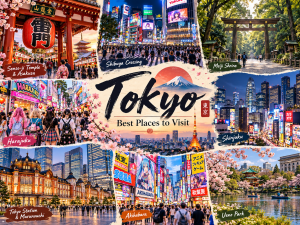
- Senso-ji Temple & Asakusa — classic old Tokyo, traditional streets and the famous Kaminarimon Gate.
- Shibuya Crossing — one of Tokyo’s most recognizable city scenes, especially fun after dark.
- Meiji Shrine — peaceful, green and a nice contrast to the busy city.
- Harajuku — fashion, youth culture and quirky shops.
- Shinjuku — skyscrapers, shopping, nightlife and observation views.
- Tokyo Station & Marunouchi — elegant architecture and easy access to shopping and food.
- Akihabara — electronics, anime and gaming culture.
- Ueno Park — museums, temples and a good place for a slower afternoon.
Kyoto — Best Places to Visit
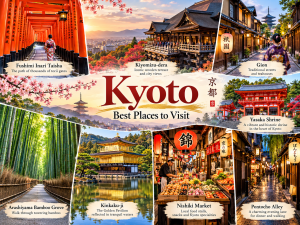
- Fushimi Inari Taisha — the famous path of thousands of red torii gates.
- Kiyomizu-dera — one of Kyoto’s most iconic temples, with beautiful city views.
- Gion — traditional streets, teahouses and a more historic atmosphere.
- Yasaka Shrine — easy to combine with Gion and Higashiyama.
- Arashiyama Bamboo Grove — popular but still worth seeing if you go early.
- Kinkaku-ji, the Golden Pavilion — one of Kyoto’s most photogenic landmarks.
- Nishiki Market — small food stalls, snacks and local specialties.
- Pontocho Alley — a wonderful evening area for dinner and walking.
Osaka — Best Places to Visit
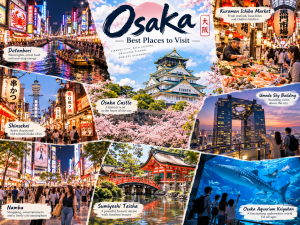
- Osaka Castle — one of the city’s major historic landmarks.
- Dotonbori — bright signs, street food and nightlife; best after sunset.
- Kuromon Ichiba Market — great for seafood, snacks and casual eating.
- Shinsekai — a retro neighborhood with an old-school Osaka atmosphere.
- Umeda Sky Building — excellent city views.
- Namba — shopping, food and entertainment.
- Sumiyoshi Taisha — one of Osaka’s oldest shrines and a quieter stop.
- Osaka Aquarium Kaiyukan — a good option for families or rainy weather.
And I’d add one little note to the article:
Don’t try to visit everything. For a seven-day trip, choose 3–4 highlights in each city and leave room for wandering, eating and unexpected discoveries.
That makes the itinerary feel much more realistic and enjoyable. ❤️
How to Save Money in Japan
Japan can be surprisingly manageable on a moderate budget.
Eat like locals do
Not every meal needs to be a destination restaurant.
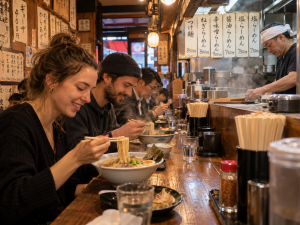
Look for:
- ramen shops
- udon shops
- curry restaurants
- convenience-store breakfasts
- supermarket bento boxes
- conveyor-belt sushi
- neighborhood cafés
Stay near transportation
A simple hotel two minutes from a train station may save more time and money than a more luxurious hotel far from transit.
Travel light
Japan’s train system is efficient, but dragging oversized luggage through stations can make travel harder.
For a seven-day trip, one carry-on-size suitcase per person is often enough.
Use local transit cards
Rechargeable IC cards make trains, buses and many small purchases more convenient.
Compare passes before buying
A rail pass is only a bargain if the journeys you actually take cost more than the pass itself.
A Smart Budget Strategy
Instead of trying to minimize every dollar, spend money where it improves the trip most.
Save on:
- breakfast
- transportation passes
- simple hotels
- casual lunches
- unnecessary taxis
Then leave room in the budget for one or two experiences you truly care about.
That might be:
- a special dinner
- a cultural performance
- a tea experience
- an observation deck
- a day trip
- a memorable souvenir
Smart travel is not necessarily about spending the least.
It is about spending intentionally.
Should You Try to See More?
Probably not.
Japan’s tourism organization actually recommends minimizing hotel changes for trips of one week or less because too much long-distance travel can consume valuable sightseeing time. Japan Travel
Tokyo, Kyoto and Osaka already give first-time visitors three very different experiences:
Tokyo: modern, enormous and energetic
Kyoto: traditional, historic and reflective
Osaka: casual, lively and food-focused
That is plenty for seven days.
The rest of Japan can become the reason to return.