VietEcho | World News / Technology & Science
October 18, 2026
North Korea Announces New Underwater Weapon
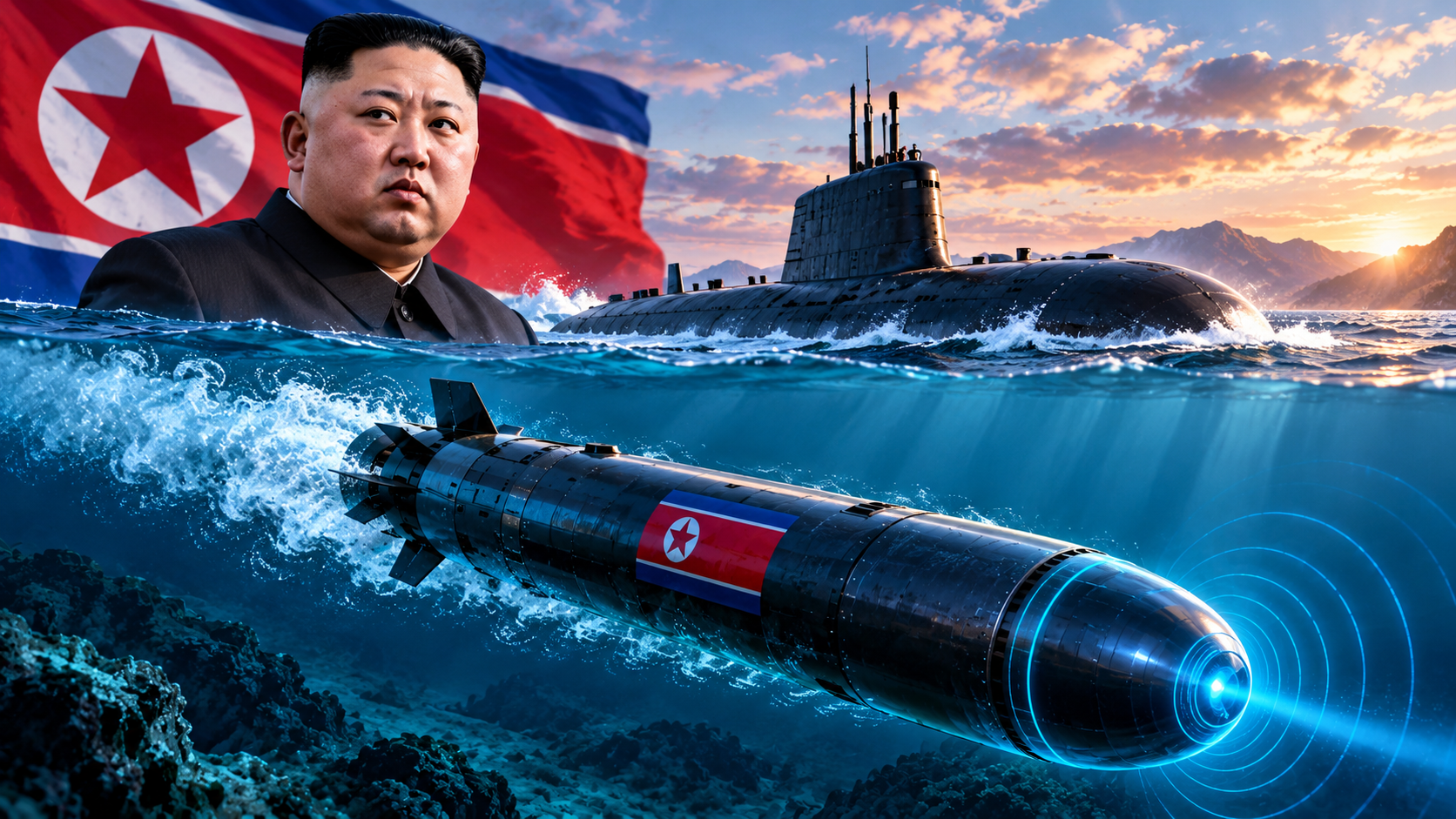
North Korea has announced the successful test of a new torpedo system that reportedly uses artificial intelligence to identify and track underwater targets, signaling another step in Pyongyang’s effort to modernize its military capabilities.
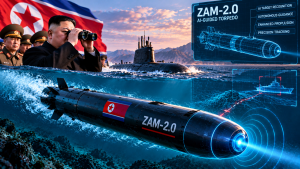
According to the state-run Korean Central News Agency (KCNA), the test took place on Thursday, October 15, and involved a high-speed precision-guided torpedo known as Zam-2.0.
The announcement, released Saturday, October 17, described the weapon as incorporating AI technology for target detection and guidance.
However, North Korea provided few technical details, and independent verification of the system’s claimed capabilities remains unavailable.
What Makes the Zam-2.0 Different?
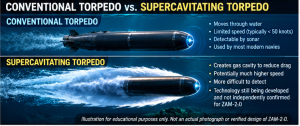
Traditional torpedoes typically rely on acoustic sensors, programmed guidance, and other targeting technologies to locate and pursue underwater targets.
Artificial intelligence could potentially improve a torpedo’s ability to analyze sensor information, distinguish actual targets from decoys, and adjust its guidance in complex underwater environments.
North Korea claims that AI technology has been incorporated into the Zam-2.0’s detection and guidance functions.
Its state media also reported that the weapon’s propulsion technology had undergone more than 180 related tests over the previous five years.
Nevertheless, the announcement did not establish whether the system can independently select targets or how sophisticated its AI software actually is.
That distinction matters because AI-assisted navigation is not necessarily equivalent to fully autonomous weapons operation.
A Growing Focus on Naval Modernization
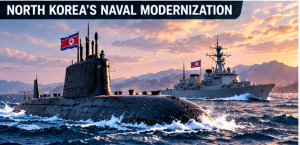
The reported torpedo test comes amid a broader North Korean campaign to strengthen its naval forces.
Earlier in the week, Pyongyang announced tests of underwater-launched cruise missiles, adding to a series of recent weapons demonstrations.
North Korea has also emphasized the development of hypersonic missile systems and advanced guidance technologies.
These developments suggest that the country is attempting to expand its military capabilities beyond its traditional emphasis on land-based ballistic missiles.
A stronger underwater arsenal could complicate naval defense planning for South Korea, Japan, and the United States.
However, the actual operational effectiveness of North Korea’s newest systems remains uncertain.
Can Artificial Intelligence Change Underwater Warfare?
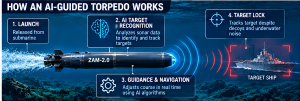
AI-assisted military systems are attracting increasing attention because they may process large amounts of sensor data faster than conventional software.
Underwater environments present particular challenges. Sound travels differently depending on temperature, depth, and other ocean conditions, while decoys and background noise can complicate target identification.
Advanced software might improve the interpretation of these signals, potentially helping underwater weapons maintain contact with intended targets.
Yet developing a dependable system requires extensive testing, reliable sensors, computing hardware, and effective integration with propulsion and guidance mechanisms.
Experts have cautioned against assuming that North Korea’s announced AI capabilities are as advanced as its descriptions suggest.
Regional Security Concerns
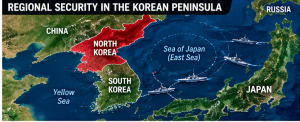
North Korea’s weapons development continues against a backdrop of strained relations with South Korea and a prolonged deadlock in nuclear diplomacy with Washington.
New underwater weapons could increase uncertainty for regional militaries, particularly if future systems become more difficult to detect or intercept.
At the same time, analysts must distinguish between a successful controlled test and a weapon’s demonstrated reliability under operational conditions.
For now, much of what is known about Zam-2.0 comes directly from North Korean state media.
The Bigger Picture
The announcement illustrates a growing international interest in applying artificial intelligence to military systems.
AI may eventually reshape how underwater threats are detected, tracked, and countered. But claims about advanced autonomous weapons require careful technical scrutiny.
North Korea’s Zam-2.0 test is another indication of Pyongyang’s military ambitions—not yet independent proof of a major breakthrough in AI-powered naval warfare.

VietEcho will continue following developments in military technology, artificial intelligence, and security across the Korean Peninsula.
Sources for editorial verification:
- Associated Press, October 17, 2026 — North Korea’s announcement of its AI-assisted torpedo test.
- Yonhap News Agency, October 17, 2026 — KCNA’s description of the Zam-2.0 test and propulsion development.
- AFP reporting, October 17, 2026 — Expert assessments of North Korea’s claimed capabilities.