
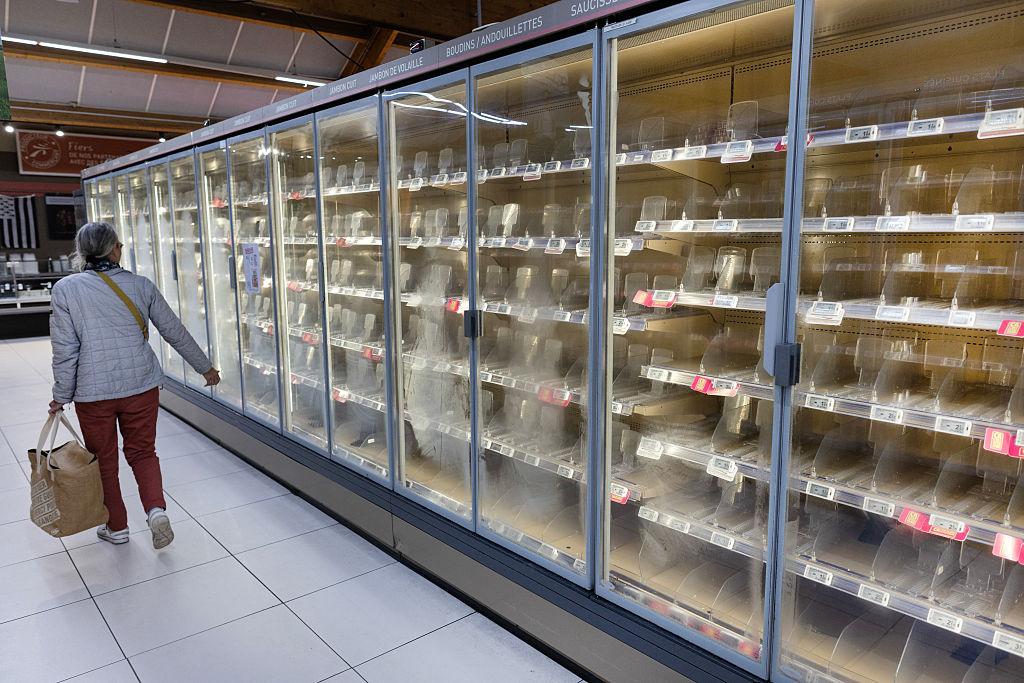
PARIS, France — In one of Europe’s most unusual cyberattacks, hackers seized control of refrigeration systems at hundreds of French supermarkets, turning equipment designed to preserve food into dangerously overheated machines.
During the night of October 11–12, 2026, refrigerators and freezers at major retail chains began heating instead of cooling. Some reached temperatures of 50°C (122°F), while individual stores reported even higher readings.
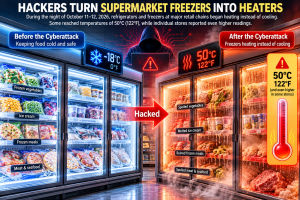
The consequences were immediate: spoiled meat, ruined frozen products, damaged equipment, and fires at some locations.
Unlike conventional cyberattacks that steal passwords or financial information, this incident demonstrated how hackers can manipulate physical machinery through vulnerable digital systems.
Hundreds of Supermarkets Affected
The attack disrupted major French retailers, including Intermarché, Netto, Coopérative U, Carrefour, Monoprix, and E.Leclerc.
On October 13, French Finance Minister Roland Lescure told lawmakers that approximately 700 of the country’s 10,000 supermarkets had been affected.
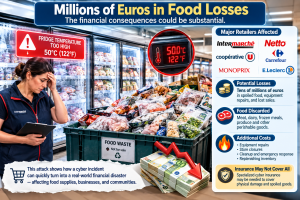
Reported impacts varied by retailer, with some stores suffering major refrigeration failures while others prevented significant damage.
Groupement Mousquetaires, the company behind Intermarché and Netto, reported that approximately 300 of its stores were affected.
Coopérative U reported disruptions at around 80 locations.
Other chains also experienced problems with their refrigerated displays and cold-storage equipment.
Although the disruptions were widespread, French officials said the country’s overall food supply was not at risk.
Nevertheless, the incident raised urgent questions about the security of systems responsible for preserving perishable food.
How Hackers Turned Freezers Into Heaters
Modern supermarkets increasingly rely on connected refrigeration controllers.
These systems monitor temperatures, regulate cooling cycles, manage defrosting, and alert maintenance teams when equipment malfunctions.
Many can be accessed remotely by technicians, allowing problems to be diagnosed without visiting individual stores.
That convenience can also introduce cybersecurity vulnerabilities.
According to French reporting, attackers manipulated refrigeration controls to activate or extend defrost cycles and increase temperatures far beyond normal operating ranges.
At some locations, temperatures reportedly reached 50°C, and one Normandy supermarket reported readings as high as 80°C (176°F).
Some stores experienced equipment damage and sprinkler activation.
The attack illustrates a critical distinction between ordinary data theft and attacks on operational technology.
When digital controls are connected to physical machinery, a cybersecurity failure can cause real-world damage.
Outdated Software Created Dangerous Vulnerabilities
Investigators and cybersecurity specialists identified vulnerabilities involving refrigeration control equipment supplied by Danfoss and systems associated with Copeland and Dixell.
Danfoss acknowledged that many affected systems were older products running outdated firmware or equipment that had reached the end of its supported lifespan.
The company said it had previously advised customers to update supported equipment and replace obsolete systems.
Security researchers had warned about vulnerabilities in some refrigeration management platforms before the attack.
Such weaknesses can become particularly dangerous when control interfaces are accessible directly from the public internet.
A refrigeration controller may appear to be a simple industrial device, but if inadequately protected, it can become an entry point for attackers.
This incident demonstrates why software maintenance and network security are essential even for equipment that does not resemble a traditional computer.
Millions of Euros in Food Losses
The financial consequences could be substantial.

Affected supermarkets were forced to discard large quantities of meat, dairy products, frozen meals, and other temperature-sensitive goods.
Once the required cold-storage temperatures are exceeded, food safety rules may require products to be destroyed rather than sold.
Thierry Cotillard, head of the group operating Intermarché and Netto, indicated that losses could reach tens of millions of euros.
The damage extended beyond the value of spoiled merchandise.
Retailers also faced equipment repairs, store closures, emergency cleanup, lost sales, and the expense of replenishing inventory.
Some businesses may encounter another unexpected problem: insurance coverage.
Insurance specialists have warned that conventional cyber policies may not cover physical damage or spoiled goods unless specific protections are included.
The distinction could leave affected retailers responsible for substantial losses.
Who Was Behind the Attack?
As of October 17, investigators had not publicly identified the attackers.
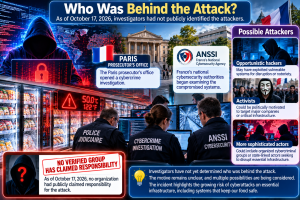
The Paris prosecutor’s office opened a cybercrime investigation, and France’s national cybersecurity authorities began examining the compromised systems.
No verified organization had publicly claimed responsibility.
Security experts have discussed several possibilities, including opportunistic hackers, activists, or more sophisticated actors seeking to disrupt essential infrastructure.
However, there is currently insufficient public evidence to attribute the attack to any particular group or government.
The motive also remains unclear.
The absence of an apparent ransom demand has made the incident especially unusual.
Why This Matters Beyond France
The French supermarket attack highlights a broader cybersecurity problem affecting modern infrastructure.
Hospitals, pharmacies, warehouses, food distributors, laboratories, factories, and supermarkets increasingly depend on network-connected equipment.
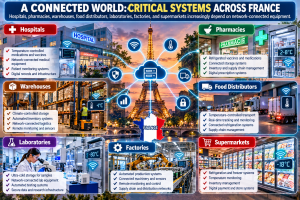
These systems offer efficiency and remote monitoring, but inadequate security can expose essential services to disruption.
Consider a hospital refrigerator storing temperature-sensitive medications or a warehouse preserving vaccines.
If attackers manipulated cooling controls, the resulting damage could affect products, finances, and potentially public safety.
The French incident demonstrates that cybersecurity is no longer exclusively about protecting computers and personal information.
It is also about protecting the physical systems that support daily life.
What Businesses Can Learn
Cybersecurity specialists recommend several measures to reduce the risk of similar attacks.
1. Keep equipment updated. Install security patches and replace unsupported controllers when necessary.
2. Restrict remote access. Avoid exposing industrial control interfaces directly to the public internet.
3. Strengthen authentication. Replace default passwords and use secure remote-access methods.
4. Separate critical systems. Network segmentation can limit an attacker’s ability to reach refrigeration and other operational equipment.
5. Maintain independent monitoring. Temperature alarms and backup monitoring systems can help identify dangerous conditions even if primary controls are compromised.
6. Prepare recovery procedures. Businesses should establish emergency response plans for equipment failures and cyber incidents.
7. Review insurance coverage. Organizations should verify whether their policies cover physical losses resulting from cyberattacks.
These measures are especially important for organizations handling food, medicines, vaccines, or other temperature-sensitive products.
A Warning for the Connected World
The French supermarket cyberattack has revealed a disturbing reality: even ordinary refrigerators can become targets when connected to vulnerable digital infrastructure.
A system designed to protect food was manipulated into destroying it.
And the consequences reached far beyond computer screens, affecting store employees, food supplies, equipment, and business operations.
As industries become increasingly connected, protecting operational technology must become a central part of cybersecurity planning.
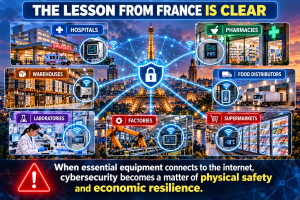
The lesson from France is clear: when essential equipment connects to the internet, cybersecurity becomes a matter of physical safety and economic resilience.
Sources
- Reuters, October 12, 2026 — French supermarket refrigeration cyberattack.
- Associated Press, October 13, 2026 — Cyberattacks disrupt European supermarket chains.
- Reuters, October 13, 2026 — Investigation into compromised refrigeration systems.
- Reuters, October 15, 2026 — Cyber insurance and food losses.
- Le Monde, October 13 and 17, 2026 — Technical vulnerabilities and supermarket damage.
- France’s National Cybersecurity Agency (ANSSI) — Investigation and equipment security concerns.
VietEcho — Independent reporting and analysis based on published news and cybersecurity research.