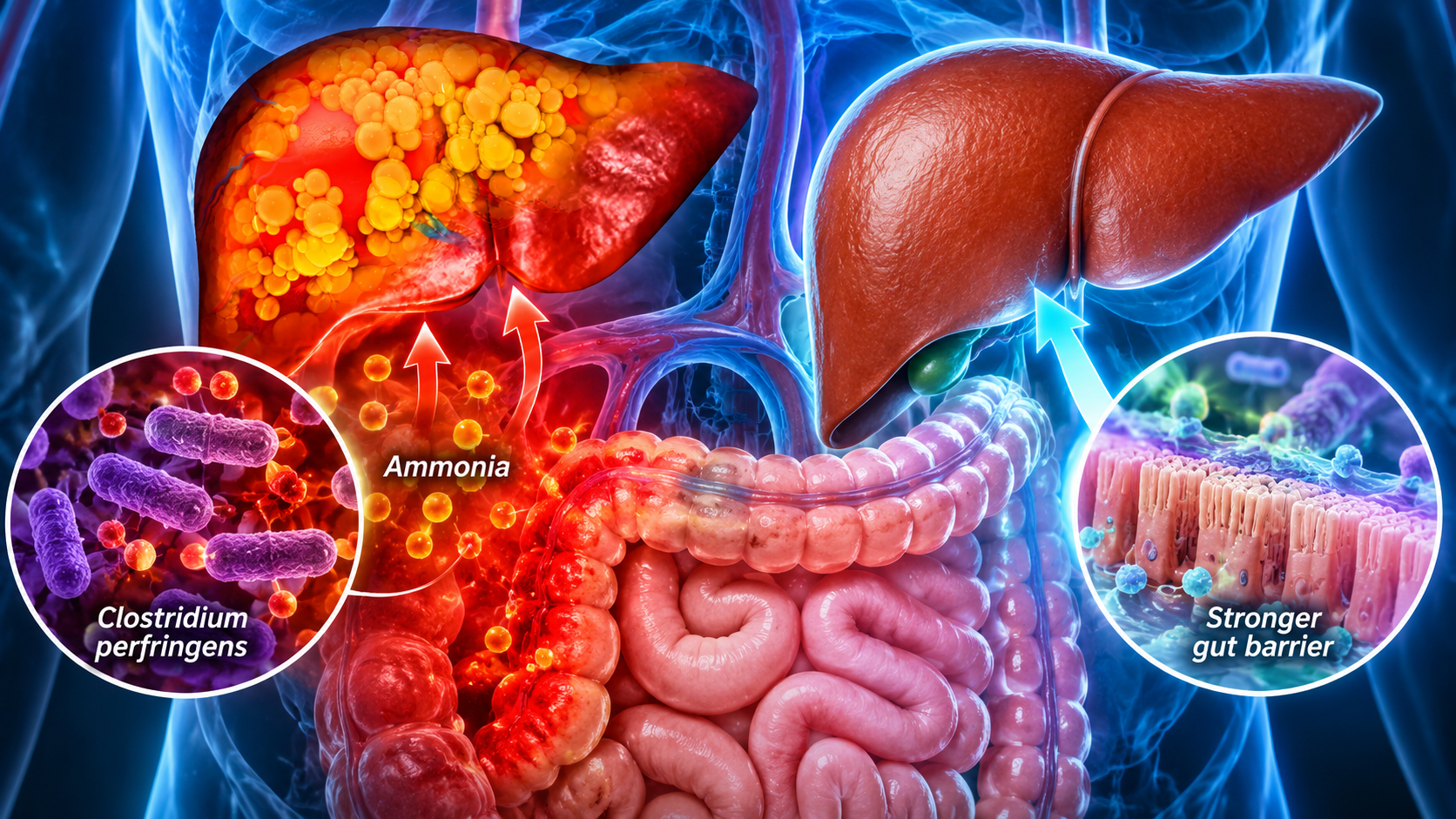
A promising experimental drug is changing how researchers think about treating severe fatty liver disease. Instead of focusing solely on the liver, scientists at the University of Michigan have demonstrated that targeting harmful bacteria and restoring the intestine’s protective barrier can significantly improve liver health in animal models.
The compound, known as DT-109, reversed metabolic dysfunction-associated steatohepatitis (MASH) in experimental animal models, according to research published in The Journal of Clinical Investigation in July 2026.
The findings suggest that the connection between intestinal health and liver inflammation may offer an important new therapeutic target.
However, DT-109 remains investigational. Its effectiveness and safety in humans have not yet been established.
Understanding Fatty Liver Disease and MASH
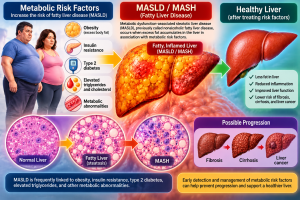
Metabolic dysfunction-associated steatotic liver disease (MASLD), previously called nonalcoholic fatty liver disease, occurs when excess fat accumulates in the liver in association with metabolic risk factors.
The condition is frequently linked to obesity, insulin resistance, type 2 diabetes, elevated triglycerides, and other metabolic abnormalities.
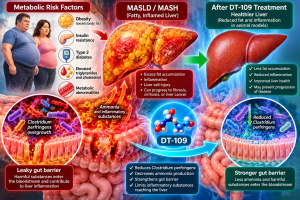
Some individuals develop a more serious form called MASH, characterized by liver inflammation and cellular injury, sometimes accompanied by progressive fibrosis.
Over time, advanced disease can lead to cirrhosis, liver failure, or liver cancer.
An estimated 6% of American adults have MASH, according to the U.S. Food and Drug Administration.
Because the condition may progress without obvious symptoms, early detection and appropriate management are especially important.
The Surprising Role of Gut Bacteria
The University of Michigan researchers investigated a biological process connecting the intestines and liver, commonly called the gut–liver axis.
The liver receives blood containing nutrients and microbial products absorbed from the digestive tract through the portal circulation.
Under normal conditions, the intestinal lining acts as a selective barrier, helping prevent harmful substances from entering the bloodstream.
But when this barrier becomes damaged, bacterial products and inflammatory molecules may reach the liver and contribute to disease.
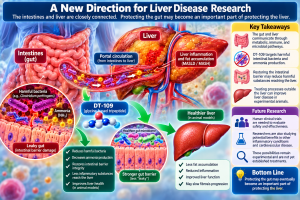
The research team identified Clostridium perfringens, an ammonia-producing intestinal bacterium, as an important contributor to this process in their experimental models.
Excessive ammonia production was associated with damage to the intestinal barrier, allowing microbial substances to cross into the circulation.
These substances could then contribute to liver inflammation, including excessive activation of CD8-positive T lymphocytes, immune cells involved in inflammatory responses.
The findings provide evidence that certain changes in intestinal bacteria may actively contribute to MASH progression rather than simply accompanying the disease.
How DT-109 Works
DT-109 is a glycine-based tripeptide, meaning it is composed of three amino-acid units.
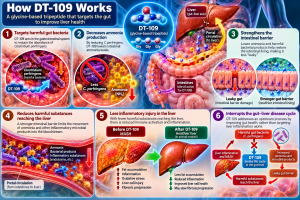
Researchers found that the compound acted primarily within the gastrointestinal system.
In mice and nonhuman primates, DT-109 reduced the abundance of Clostridium perfringens and decreased intestinal ammonia production.
These changes were associated with improved intestinal barrier integrity, reduced movement of harmful microbial substances, and less inflammatory injury in the liver.
Importantly, the compound appeared to interrupt a chain of biological events linking intestinal dysfunction with liver disease.
Rather than targeting liver inflammation alone, DT-109 addressed an upstream process that may help sustain it.
This mechanism could represent a different approach to treating MASH.
Encouraging Results in Nonhuman Primates
One particularly significant aspect of the research involved nonhuman primates.
Although mouse studies provide valuable information, nonhuman primates share several physiological characteristics with humans, making them useful for evaluating potential treatments before clinical trials.
In these animals, DT-109 reduced liver inflammation and improved measures of MASH severity.
Earlier studies involving the compound had also demonstrated improvements in liver fat accumulation and fibrosis-related outcomes in experimental models.
Together, the findings strengthen the scientific rationale for further development of DT-109.
Nevertheless, results from animals cannot reliably establish whether the treatment will produce the same benefits in people.
Human clinical trials are necessary to evaluate dosing, safety, adverse effects, and therapeutic effectiveness.
Could the Drug Also Protect the Heart?
The potential benefits of DT-109 may extend beyond the liver.
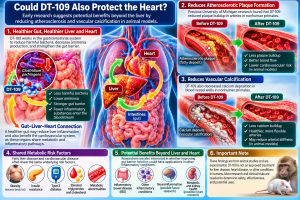
Previous University of Michigan research found that the compound reduced atherosclerotic plaque formation and vascular calcification in nonhuman primates.
Atherosclerosis occurs when fatty deposits accumulate within artery walls, potentially restricting blood flow and increasing cardiovascular risk.
Vascular calcification involves calcium deposition in blood vessel walls, contributing to arterial stiffness.
These observations are particularly relevant because fatty liver disease and cardiovascular disease frequently share underlying metabolic risk factors.
Researchers are also interested in whether improving intestinal barrier function could have applications in other inflammatory conditions.
However, these possibilities remain experimental and should not be interpreted as established treatments.
How Does DT-109 Compare With Existing Treatments?
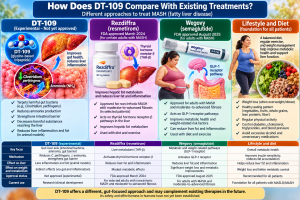
The therapeutic landscape for MASH has changed substantially in recent years.
In March 2024, the FDA approved resmetirom, marketed as Rezdiffra, for certain adults with noncirrhotic MASH and moderate-to-advanced liver fibrosis.
Resmetirom acts through thyroid hormone receptor-beta pathways to improve hepatic fat metabolism.
In August 2025, the FDA also approved semaglutide, marketed as Wegovy, for adults with MASH and moderate-to-advanced fibrosis.
Semaglutide acts through glucagon-like peptide-1 receptor pathways and can improve metabolic health and weight-related risk factors.
Both therapies are used in appropriately selected patients, alongside dietary and lifestyle management.
DT-109 differs because its experimental mechanism emphasizes intestinal bacteria, ammonia production, and gut barrier integrity.
Whether this approach will provide additional benefits, work alongside existing therapies, or prove effective in humans remains unknown.
What Can People Do to Protect Their Liver Today?
Although DT-109 offers an intriguing direction for future research, established preventive and therapeutic measures remain essential.
Maintaining a healthy body weight, engaging in regular physical activity, improving blood glucose control, and managing cholesterol and triglyceride abnormalities can help reduce metabolic risk.
A balanced eating pattern emphasizing vegetables, fruits, legumes, whole grains, and other fiber-rich foods may support overall metabolic health.
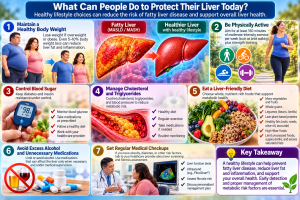
People with diabetes, obesity, or other risk factors should discuss liver disease screening and fibrosis assessment with their healthcare professionals.
It is also important to recognize that the experimental findings do not prove that probiotic supplements, glycine supplements, or attempts to eliminate specific gut bacteria can reproduce the effects of DT-109.
The compound is not an approved treatment, and self-treatment based on these animal results would be inappropriate.
A New Direction for Liver Disease Research
The University of Michigan findings highlight the importance of understanding how organs communicate through metabolic, immune, and microbial pathways.
The intestines and liver are closely connected, and disturbances in one organ can influence the function of the other.
By reducing harmful bacterial activity and restoring the intestinal barrier, DT-109 demonstrated that treating processes outside the liver may improve liver disease in experimental animals.
Future human studies will determine whether these encouraging results can translate into safe, effective therapies.
For now, the research offers a valuable scientific insight: protecting the gut may eventually become an important part of protecting the liver.
Research Sources
- University of Michigan, Michigan Medicine. Drug candidate treats severe fatty liver disease by protecting the gut in animal models. July 7, 2026. https://www.michiganmedicine.org/health-lab/drug-candidate-treats-severe-fatty-liver-disease-protecting-gut-animal-models
- Qu P. et al. Metabolic dysfunction–associated steatohepatitis exacerbated by Clostridium perfringens–derived ammonia is attenuated by tripeptide DT-109. Journal of Clinical Investigation. 2026;136(13). https://doi.org/10.1172/JCI200522
- U.S. Food and Drug Administration. Drug Trials Snapshots: Rezdiffra. https://www.fda.gov/drugs/drug-approvals-and-databases/drug-trials-snapshots-rezdiffra
- U.S. Food and Drug Administration. FDA Approves Treatment for Serious Liver Disease Known as MASH. https://www.fda.gov/drugs/news-events-human-drugs/fda-approves-treatment-serious-liver-disease-known-mash
- Michigan Medicine. Drug candidate successfully treats atherosclerosis, fatty liver disease in large mammals. April 22, 2025. https://www.michiganmedicine.org/health-lab/drug-candidate-successfully-treats-atherosclerosis-fatty-liver-disease-large-mammals
VietEcho Health & Wellbeing — This article is provided for educational and informational purposes and does not replace individualized medical advice.