
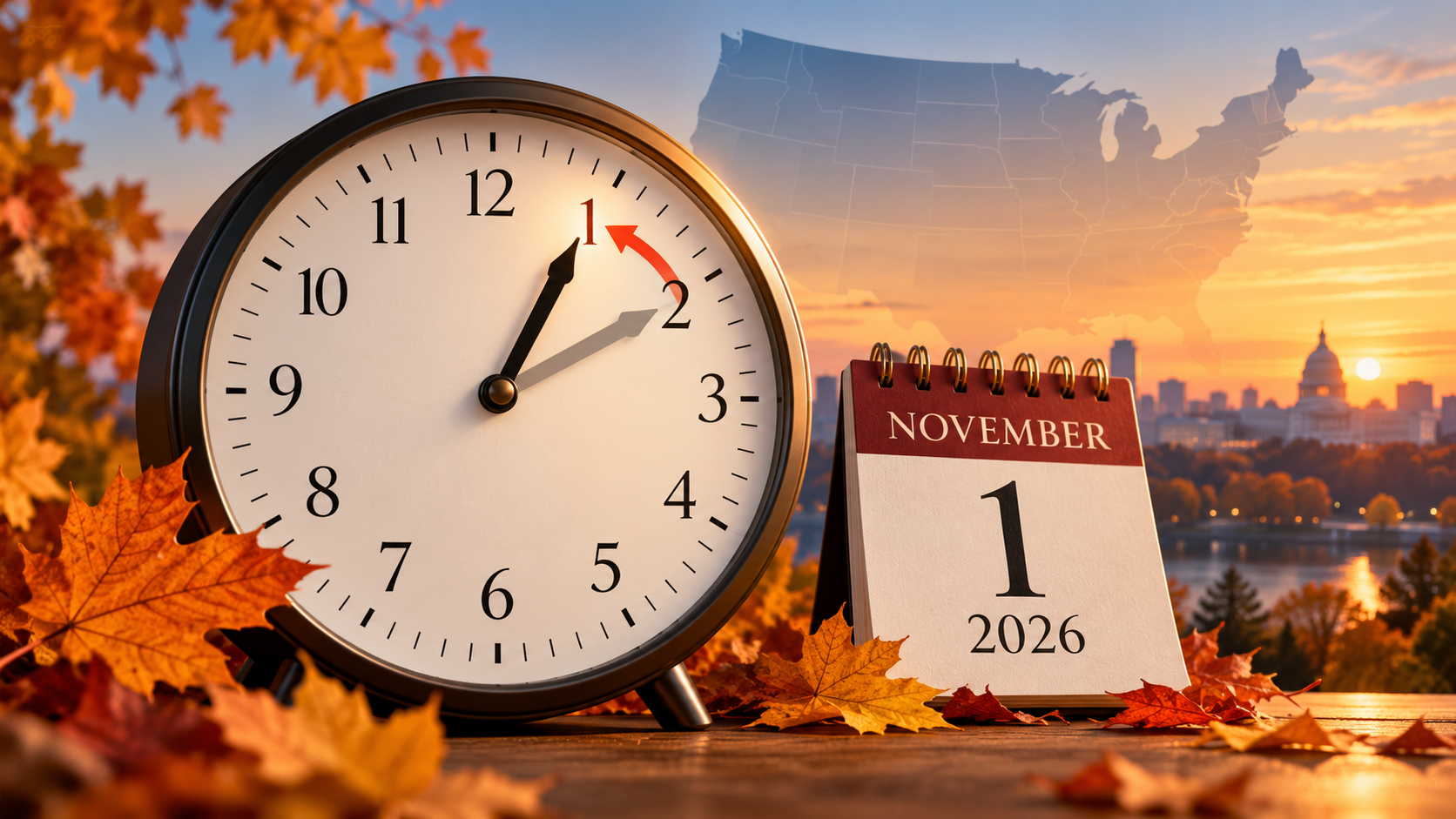
VietEcho News | October 23, 2026 — Americans in most states will turn their clocks back one hour on Sunday, November 1, 2026, as daylight saving time ends and standard time returns. The change happens at 2:00 a.m. local daylight time, when clocks return to 1:00 a.m.
When exactly do clocks change?
At 2:00 a.m. on November 1, clocks in participating regions move back to 1:00 a.m., repeating that hour. Many phones, computers, and connected devices update automatically, but analog clocks, appliance clocks, and some car displays may need to be changed manually. The fall change brings an extra hour on the clock overnight, along with earlier sunset times.
Which states and territories do not change their clocks?
Hawaii and most of Arizona stay on standard time year-round. The Navajo Nation in northeastern Arizona is an exception and does observe daylight saving time. Puerto Rico, Guam, American Samoa, the Northern Mariana Islands, and the U.S. Virgin Islands also do not observe the seasonal clock change. Residents and travelers should check local rules when crossing time-zone boundaries.
What can the change mean for sleep and daily routines?
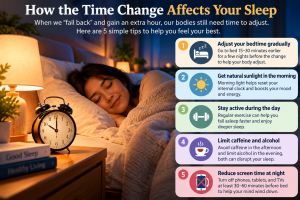
Although the fall switch provides an extra hour on the clock, the change in light exposure and daily schedule may still affect sleep and alertness. The body’s circadian rhythm responds to light and darkness. Some people find themselves waking earlier than usual or becoming sleepy earlier in the evening.
The Centers for Disease Control and Prevention’s National Institute for Occupational Safety and Health recommends maintaining a consistent sleep schedule and making use of daylight to support alertness and the body’s internal clock. It is also wise to avoid driving while drowsy, whether or not a clock change is involved.
Five simple ways to prepare
- Check your alarms: Confirm that phones and devices will use the correct local time after the switch.
- Protect your sleep: Keep a steady bedtime and wake-up time, especially during the first few days.
- Use morning daylight: Spending time outside after waking can help reinforce a regular sleep-wake schedule.
- Plan for earlier darkness: Be prepared for darker evening commutes and walks.
- Double-check appointments: Verify departure times and time zones for travel, remote meetings, and work shifts around November 1.
When does daylight saving time begin again?
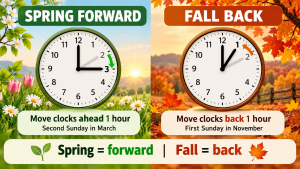
Under current federal rules, daylight saving time begins on the second Sunday in March and ends on the first Sunday in November in participating areas. The U.S. Department of Transportation oversees uniform observance, while federal law establishes the dates.
Bottom line: In most of the United States, set manual clocks back one hour before bed on Saturday, October 31. Standard time begins Sunday, November 1, 2026.