
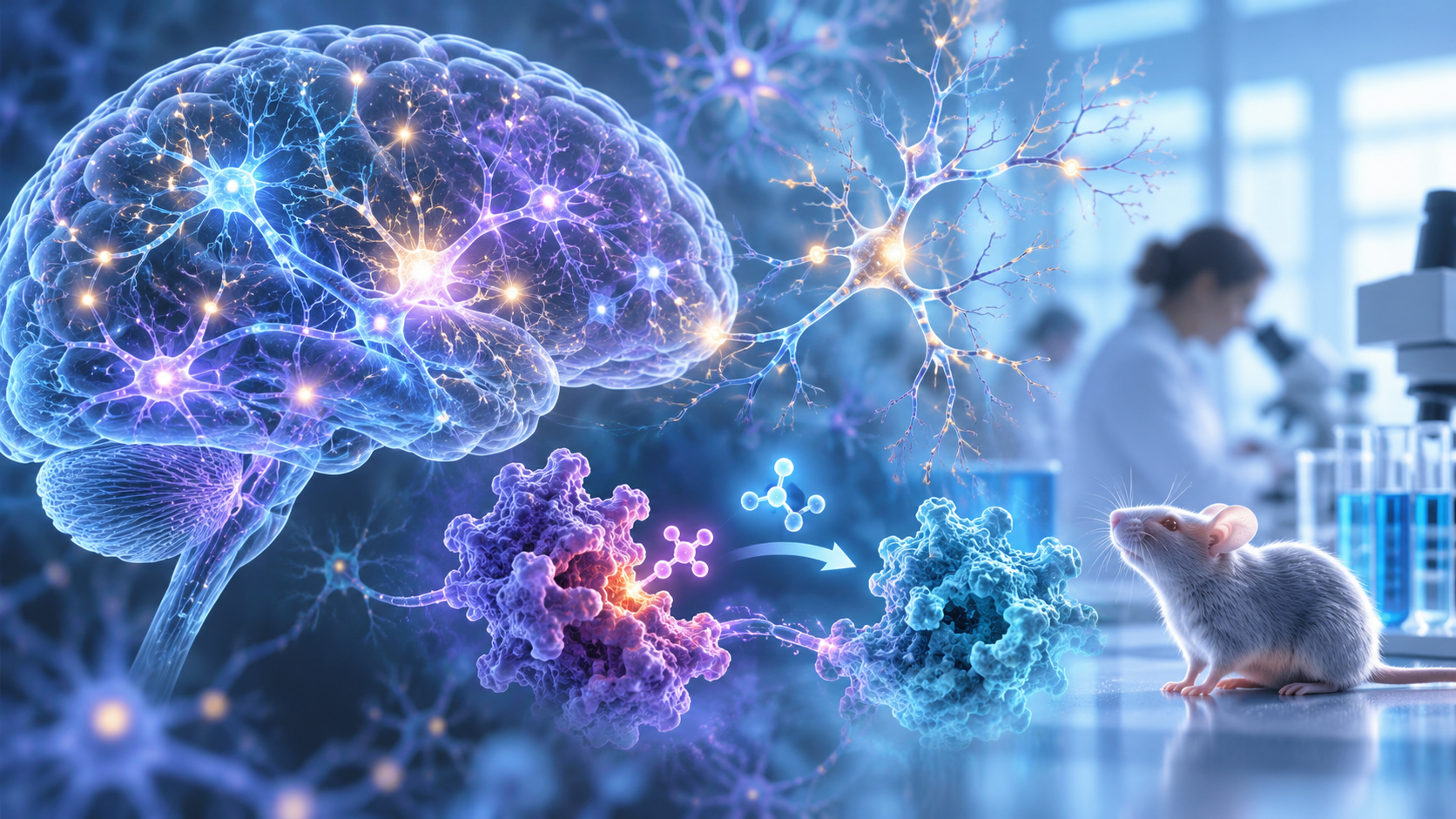
Scientists have identified a previously unrecognized molecular pathway that may explain why brain development is disrupted in Angelman syndrome, a rare genetic condition. In experiments involving mice, blocking a buildup of a common enzyme restored normal brain growth, offering a promising research direction—but not yet a treatment for people.
What researchers discovered
In a study published October 21, 2026, in Nature, scientists led by Jason Yi, PhD, at Washington University School of Medicine in St. Louis investigated what happens in nerve cells when the UBE3A gene is not functioning normally.

Jason Yi, PhD, a neuroscience researcher at Washington University School of Medicine in St. Louis, studies the molecular mechanisms underlying Angelman syndrome.
Photo: Washington University Department of Neuroscience
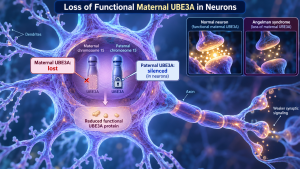
Angelman syndrome typically results from the loss of functional maternal UBE3A in neurons. The condition can cause significant developmental delays, movement and balance difficulties, limited speech, and seizures. The team sought to understand the biological steps connecting that genetic disruption to altered brain development.
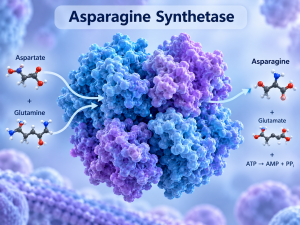
They identified increased amounts of asparagine synthetase, an enzyme involved in amino-acid production, as an important part of the process. Although the enzyme normally supports cellular functions, unusually high levels in the studied neurons appeared to activate an internal stress response.
How a cellular stress signal affects brain growth
Cells use stress responses to conserve resources when conditions become unfavorable. But activating this protective program at the wrong time can have harmful consequences in a developing brain.
According to the research team, elevated asparagine synthetase triggered stress signaling that suppressed protein production and neuronal growth. The result was impaired brain development in the mouse model of Angelman syndrome.
When researchers reduced production of the enzyme, they observed restoration of normal brain growth in the animals. The findings point toward a possible target for future therapies focused on the downstream effects of UBE3A dysfunction.
Why Angelman syndrome is challenging to treat

Angelman syndrome is estimated to affect approximately one in 20,000 births. Although scientists have long identified the underlying genetic problem, the mechanisms responsible for the condition’s broad neurological effects have remained difficult to untangle.
UBE3A helps cells regulate proteins by marking certain proteins for breakdown. Researchers investigated proteins that accumulated when UBE3A was disabled and identified asparagine synthetase as a notable candidate for further study.
What this means for families—and what remains unknown
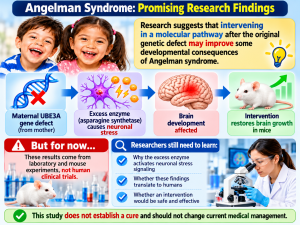
The results are encouraging because they suggest that some developmental consequences of the condition might be influenced by intervening in a molecular pathway after the original genetic defect. However, these results come from laboratory and mouse experiments, not human clinical trials.
Researchers still need to determine precisely why the excess enzyme activates neuronal stress signaling, whether the findings translate to humans, and whether an intervention could be both safe and effective. The study does not establish a cure, and it should not change current medical management.
For families affected by Angelman syndrome, the significance is a new biological clue—and a potential path for investigation, rather than an available therapy.
Sources and further reading
Washington University School of Medicine — Research announcement (October 21, 2026)