




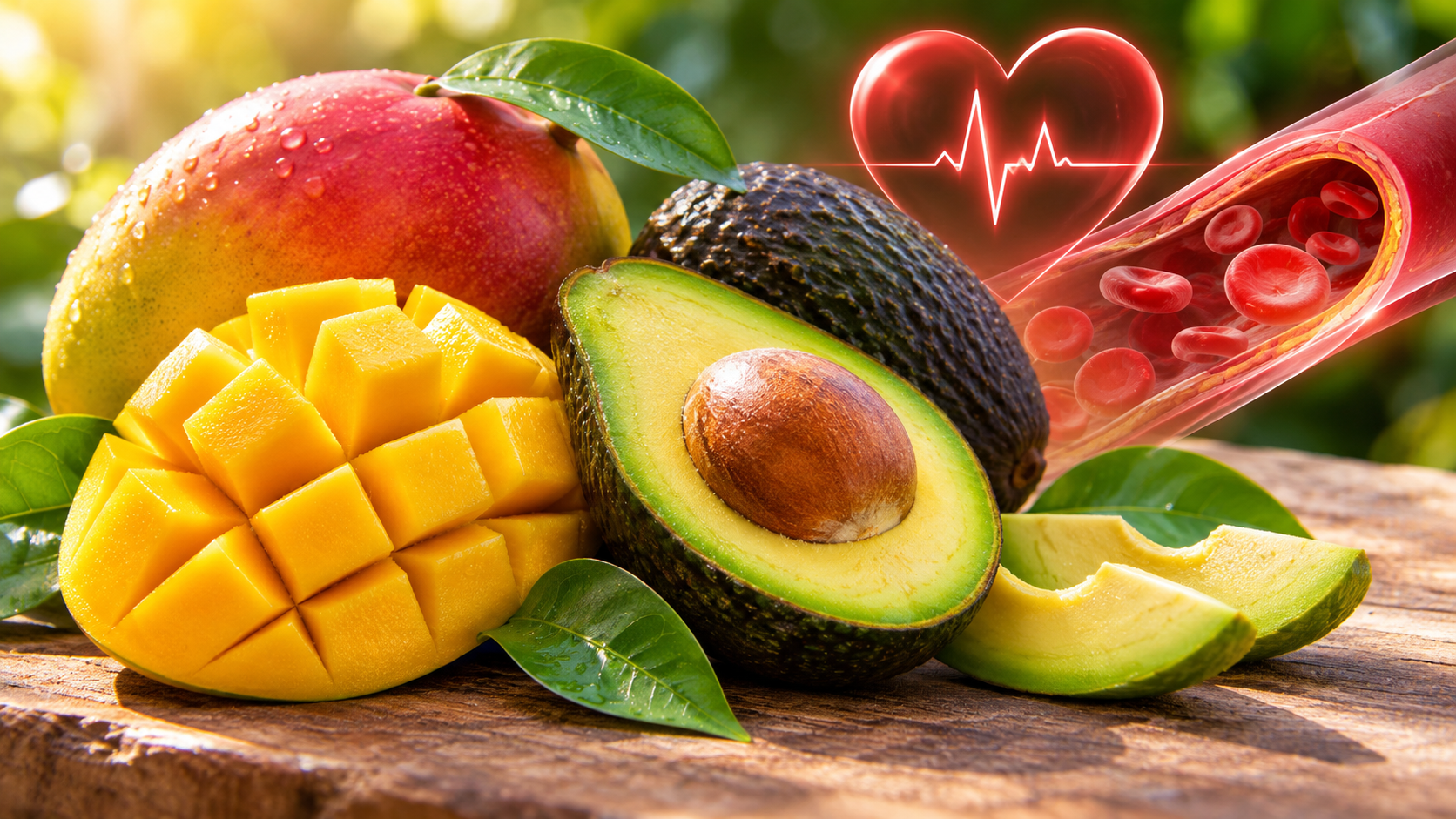
New Research Finds Eating Mango and Avocado Every Day May Improve Heart Health
An eight-week clinical trial suggests that two familiar fruits may help blood vessels function better, particularly in adults with prediabetes. Additional research offers encouraging evidence—but also important reasons for caution.
VietEcho Health | November 3, 2026
Most people enjoy mangoes for their delicious sweetness and avocados for their rich, creamy texture. But could eating these two fruits every day also benefit the heart?
A clinical study published in the Journal of the American Heart Association suggests that the answer may be yes.
Researchers from the Illinois Institute of Technology found that adults with prediabetes who ate one avocado and one cup of mango daily for eight weeks experienced improvements in blood vessel function compared with participants consuming a different diet containing approximately the same number of calories.

Even more interesting, these changes occurred without significant weight gain.
Although the findings do not prove that mangoes and avocados prevent heart attacks, they add to growing scientific evidence that choosing nutrient-rich whole foods may help protect cardiovascular health.
1. What Did the Researchers Discover?
The study involved 82 adults with prediabetes, a condition in which blood sugar levels are higher than normal but have not yet reached the threshold for type 2 diabetes.
Participants were assigned to one of two dietary groups.
The first group consumed one medium Hass avocado and one cup of fresh mango each day for eight weeks.
The second group followed a calorie-matched diet in which those fruits were replaced with foods containing less fat and fiber.
Researchers examined several cardiovascular and metabolic measurements, including blood vessel function, blood pressure, cholesterol, blood glucose, and inflammation.
The most significant finding involved the ability of blood vessels to widen.
At the end of eight weeks:
- The avocado-and-mango group had an average blood vessel dilation measurement of 6.7%.
- The comparison group had an average measurement of 4.6%.
Importantly, the avocado-and-mango group’s measurement increased from approximately 5.9% at the beginning of the study, while the comparison group’s measurement declined from approximately 5.6%.
The difference in changes between the groups was statistically significant.
The researchers also found favorable differences in some blood pressure measurements, particularly among male participants.
However, improvements in blood glucose, cholesterol, and inflammatory markers were not consistently observed.
The findings suggest that eating nutrient-rich fruits may influence cardiovascular health even when body weight remains relatively unchanged.
2. Why Is Blood Vessel Function So Important?
To understand the results, it helps to know how healthy blood vessels work.
Blood vessels are not simply rigid tubes that transport blood throughout the body. Their walls constantly adjust to changing demands.
For example, when someone walks, exercises, or climbs stairs, working muscles need more oxygen. Healthy blood vessels respond by widening, allowing more blood to reach those tissues.
A thin layer of specialized cells called the endothelium lines the inside of blood vessels and helps regulate this process.
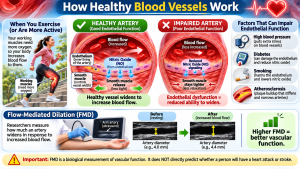
One important substance produced by endothelial cells is nitric oxide.
Nitric oxide signals nearby smooth muscle cells to relax, allowing arteries to expand and blood to flow more easily.
When endothelial function becomes impaired, blood vessels may lose some of their ability to widen appropriately.
Endothelial dysfunction is associated with cardiovascular risk factors such as high blood pressure, diabetes, smoking, and atherosclerosis.
In the new study, researchers used a test called flow-mediated dilation, or FMD, to measure how effectively an artery widened in response to increased blood flow.
An improvement in FMD is considered a favorable sign of vascular function.
However, it is important to understand that FMD is a biological measurement, not a direct measurement of whether someone will experience a heart attack or stroke.
3. Why Might Mangoes Benefit Cardiovascular Health?
Mangoes are sometimes avoided by people concerned about blood sugar because of their naturally sweet flavor.
However, fresh mangoes also provide valuable nutrients.
They contain vitamin C, dietary fiber, and naturally occurring plant compounds known as polyphenols.
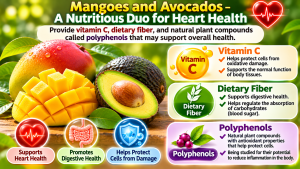
Vitamin C helps protect cells against oxidative damage and contributes to normal tissue function.
Dietary fiber supports digestive health and can help regulate the absorption of carbohydrates.
Polyphenols are plant compounds being investigated for their possible antioxidant and anti-inflammatory effects.
These characteristics make whole mangoes nutritionally different from candies, sweetened beverages, and other foods containing added sugars.
Another study found promising results for blood sugar
A separate randomized clinical trial published in Foods in 2025 examined daily mango consumption in adults with prediabetes.
The researchers compared approximately 300 grams of fresh mango each day with a calorie-matched granola bar over 24 weeks.
Among the 23 participants who completed the study, the mango group demonstrated better fasting glucose and insulin sensitivity measurements than the comparison group.
Hemoglobin A1c remained relatively stable in the mango group but increased in the control group.
These findings challenge the assumption that sweet-tasting fruit necessarily worsens blood sugar regulation.
Nevertheless, the trial was small, and its findings should not be interpreted as evidence that unlimited mango consumption is appropriate for everyone with diabetes.
Portion size and the overall carbohydrate content of meals remain important.
4. What Makes Avocados Different From Other Fruits?
Unlike most fruits, which contain very little fat, avocados are particularly rich in unsaturated fats.
These fats, especially monounsaturated fats, can support cardiovascular health when they replace foods high in saturated fat.
Avocados also contain dietary fiber, potassium, folate, and several other nutrients.
Potassium plays an important role in regulating blood pressure, while fiber contributes to digestive health and may help improve cholesterol levels.
One reason avocados receive so much attention in cardiovascular research is their potential role as a healthier replacement for foods such as butter, bacon, or other sources of saturated fat.
A major study followed more than 110,000 adults
In 2022, researchers published a large observational study in the Journal of the American Heart Association involving more than 110,000 participants.
The investigators followed dietary patterns and cardiovascular outcomes over approximately three decades.
They found that individuals who consumed at least two servings of avocado per week had a lower risk of cardiovascular disease than those who rarely ate avocados.
Replacing certain animal-based fat sources with avocado was also associated with favorable cardiovascular outcomes.
However, this was an observational study.
It identified an association, not proof that avocados themselves prevented cardiovascular disease.
People who frequently eat avocados may also have other healthy habits that influence their overall risk.
5. Do Mangoes and Avocados Work Better Together?
This is one of the most interesting unanswered questions.
Mangoes and avocados have different nutritional profiles.
Mangoes provide vitamin C and various plant compounds, while avocados are especially rich in unsaturated fats and fiber.
Together, they offer a variety of nutrients associated with cardiovascular health.
But does combining these two fruits create an additional benefit that would not occur if they were eaten separately?
Scientists do not yet know.
The recent study compared a diet containing both fruits with a lower-fat, lower-fiber comparison diet.
It did not include separate groups eating only mangoes or only avocados.
Therefore, researchers cannot determine whether the improvements resulted primarily from mangoes, avocados, their combination, or broader differences in dietary quality.
More research will be needed to answer that question.
6. Not Every Study Has Found the Same Benefits
Scientific research rarely produces identical results across every population.
For example, a randomized trial published in 2024 examined whether eating one avocado daily for six months improved vascular function in adults with abdominal obesity.
The study included 134 participants at one research center.
Unlike the more recent mango-and-avocado trial, this study did not find statistically significant improvements in flow-mediated dilation or arterial stiffness.
This does not necessarily mean one study is correct and the other is wrong.
The participants, dietary comparisons, duration, and overall nutritional patterns differed.
The results remind us that the cardiovascular effects of individual foods can vary depending on the population and the rest of the diet.
For this reason, no single fruit should be considered a treatment for heart disease.
7. Could These Fruits Help People With Prediabetes?
Prediabetes is an important cardiovascular health concern because it is often associated with insulin resistance, excess abdominal fat, elevated blood pressure, and abnormal cholesterol levels.
Over time, these conditions can increase the risk of type 2 diabetes and cardiovascular disease.

Healthy eating patterns are a central part of managing these risks.
The new study suggests that including mangoes and avocados in a balanced diet may improve certain aspects of vascular function in adults with prediabetes.
However, the eight-week trial did not demonstrate a significant overall improvement in blood sugar compared with the control group.
Therefore, eating these fruits should not be viewed as a substitute for proven strategies such as regular physical activity, appropriate weight management, adequate sleep, and medical care when necessary.
Instead, they may be valuable components of a broader healthy eating plan.
8. Will Eating an Avocado Every Day Cause Weight Gain?
Avocados contain more calories than most fruits because of their fat content.
A medium avocado can contribute a substantial amount of energy to a meal.
However, the new study found no significant weight gain in participants following the avocado-and-mango diet.
This finding is important, but it should be interpreted in context.
Participants followed calorie-controlled meal plans, meaning the fruits were incorporated into an overall dietary pattern rather than simply added on top of unlimited food consumption.
For someone trying to maintain or lose weight, replacing less nutritious foods with avocado may be more helpful than adding an entire avocado to an already calorie-rich diet.
The overall amount of food consumed still matters.
9. Simple Ways to Include Mangoes and Avocados in Everyday Meals
Fortunately, enjoying these fruits does not require complicated recipes.
A few practical ideas include:
- Mango and avocado salad: Combine fresh mango cubes, avocado, cucumber, cilantro, and lime juice.
- Whole-grain avocado toast: Spread mashed avocado on whole-grain bread and serve with a small portion of fresh mango.
- Vegetarian grain bowl: Add mango and avocado to quinoa, brown rice, leafy greens, and beans.
- Fresh fruit snack: Enjoy a measured serving of mango with a few avocado slices.
- Vietnamese-inspired salad: Combine mango, avocado, shredded vegetables, herbs, lime, and a light dressing.
For people managing blood sugar, whole fruit is generally preferable to sweetened mango juice or smoothies containing added sugar.
Eating fruit as part of a balanced meal can also make carbohydrate intake easier to manage.
There is no need for everyone to consume exactly one avocado and one cup of mango every day. Those were the amounts used in the clinical trial, not an established medical recommendation.
10. Important Limitations of the New Research
Although the findings are encouraging, several questions remain.
First, the study lasted only eight weeks. It is unknown whether the vascular improvements would continue with longer consumption.
Second, only 82 adults were enrolled, and 68 completed the protocol-specified procedures.
Third, the participants had prediabetes and were generally overweight or obese. The results may not apply equally to healthy adults, children, or people with established cardiovascular disease.
Fourth, the comparison foods were lower in fat and fiber. This makes it difficult to determine whether the benefits came from the particular fruits or from improved overall dietary composition.
Fifth, the research measured cardiovascular risk indicators rather than actual heart attacks, strokes, or cardiovascular deaths.
Finally, the study received funding from the National Mango Board and Hass Avocado Board. According to the published report, the organizations did not control the study design or findings. Nevertheless, funding sources are important to disclose when evaluating nutrition research.
Larger, independent studies will help establish how reliably these findings apply to different populations.
11. The Bigger Lesson: Healthy Eating Is About Patterns, Not Miracle Foods
One of the most valuable messages from this research is that improving cardiovascular health does not necessarily require exotic supplements or expensive treatments.
Ordinary foods can contribute important nutrients to a balanced diet.
Mangoes provide fiber, vitamins, and beneficial plant compounds.
Avocados supply unsaturated fats, fiber, and potassium.
Both can be incorporated into meals containing vegetables, whole grains, legumes, nuts, and other nutrient-rich foods.
However, no single food can compensate for an otherwise unhealthy lifestyle.
Long-term cardiovascular health depends on a combination of factors, including diet, physical activity, blood pressure management, blood glucose regulation, sleep, and avoidance of tobacco.
Final Thoughts
The new research offers an encouraging possibility: replacing some less nutritious foods with mangoes and avocados may help blood vessels function better, even without changes in body weight.
Additional studies suggest that mangoes may benefit certain measures of glucose regulation and that avocado consumption may be associated with better cardiovascular outcomes.
Still, the scientific evidence is not strong enough to conclude that eating both fruits every day will prevent heart attacks, reverse diabetes, or treat high blood pressure.
The most practical message is simple:
Enjoy whole fruits, choose a variety of nutrient-rich foods, and focus on the quality of your overall diet.
Sometimes, meaningful changes in health begin with everyday food choices.
Scientific References
- Preiss C, et al. (2026). Effects of Increasing Total Fruit Intake With Avocado and Mango on Endothelial Function and Cardiometabolic Risk Factors in Adults With Prediabetes. Journal of the American Heart Association.
https://pubmed.ncbi.nlm.nih.gov/41698896/ - Basiri R, et al. (2025). Daily Mango Intake Improves Glycemic and Body Composition Outcomes in Adults with Prediabetes: A Randomized Controlled Study. Foods.
https://pubmed.ncbi.nlm.nih.gov/40941087/ - Pacheco LS, et al. (2022). Avocado Consumption and Risk of Cardiovascular Disease in US Adults. Journal of the American Heart Association.
https://pubmed.ncbi.nlm.nih.gov/35352568/ - Effect of Incorporating 1 Avocado per Day Versus Habitual Diet on Vascular Function in Adults With Abdominal Obesity: An Ancillary Study of HAT, a Randomized Controlled Trial. (2024).
https://pubmed.ncbi.nlm.nih.gov/38726886/ - ScienceDaily (November 3, 2026). Scientists Discover Surprising Heart Benefits of Eating Avocado and Mango Every Day.
https://www.sciencedaily.com/releases/2026/10/261031221215.htm
Medical disclaimer: This article is for educational purposes and does not replace individualized medical advice. People with diabetes, kidney disease, or medically restricted diets should discuss significant dietary changes with their healthcare professional.