



Medical Research & Cancer Prevention | VietEcho | November 11, 2026
Could something as ordinary as chewing gum someday help protect people against viruses and bacteria associated with cancer?
Researchers at the University of Pennsylvania have developed an experimental chewing gum containing plant-derived proteins designed to target harmful microorganisms in the mouth.
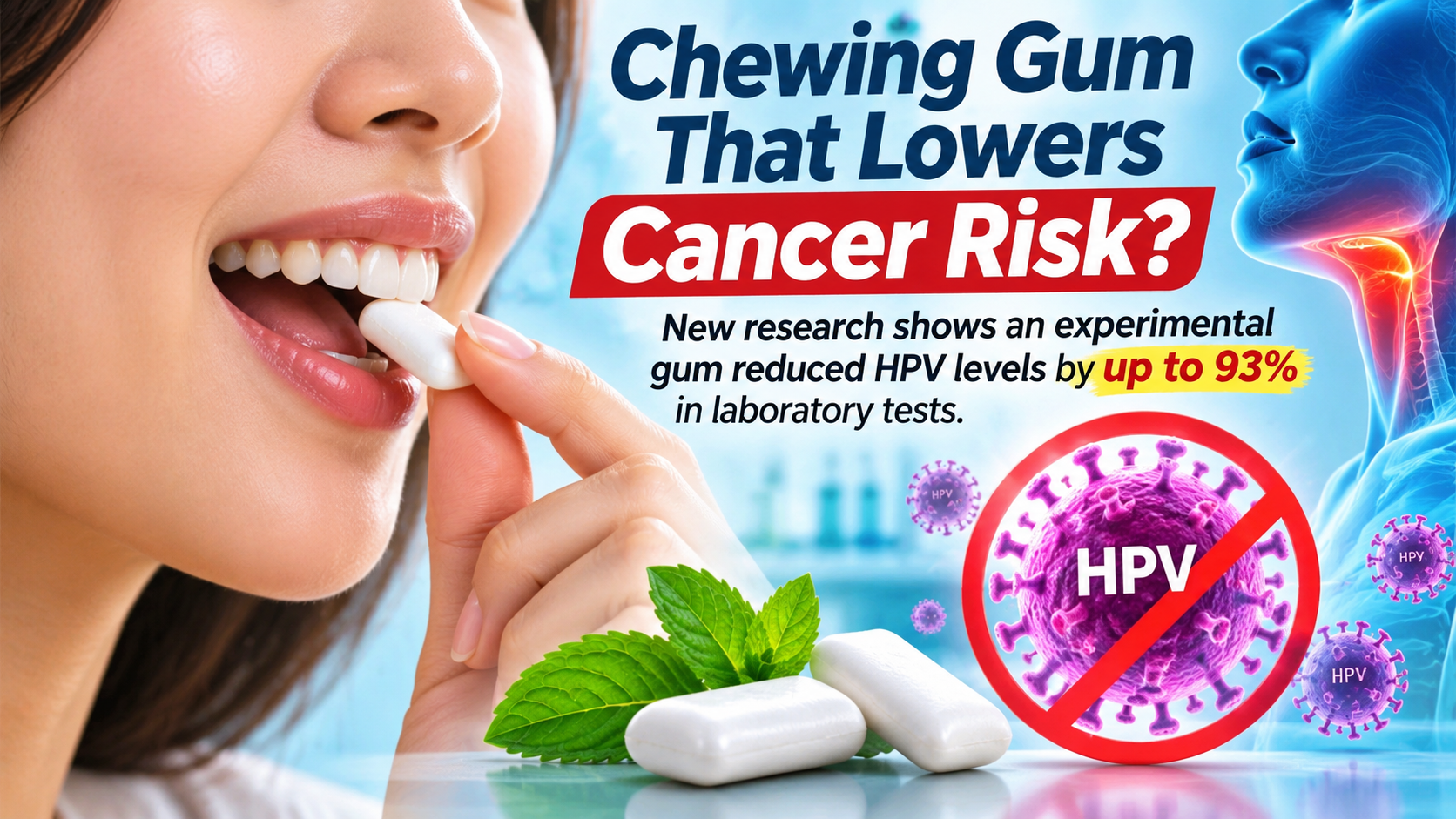
In laboratory tests involving oral samples collected from patients with head and neck cancer, extracts from the specially engineered gum reduced levels of human papillomavirus (HPV) by as much as 93%.
An enhanced formulation also sharply reduced two bacterial species associated with oral disease and unfavorable cancer outcomes.
The discovery is promising, but scientists emphasize an important distinction: The gum has not yet been proven to prevent or treat cancer in humans.
1. Why Is HPV Important in Head and Neck Cancer?
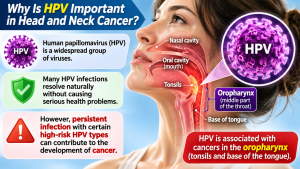
Human papillomavirus, commonly called HPV, is a widespread group of viruses.
Many HPV infections resolve naturally without causing serious health problems.
However, persistent infection with certain high-risk HPV types can contribute to the development of cancer.
HPV is associated with several cancers, including cervical, anal, penile, and oropharyngeal cancers.
Oropharyngeal cancer develops in the middle portion of the throat, including the tonsils and base of the tongue.
HPV-related oropharyngeal cancer has become an important public-health concern.
Scientists are therefore investigating new ways to reduce viral exposure, limit persistent infections, and potentially prevent HPV-associated disease.
2. How Does the Experimental Chewing Gum Work?
The research team, led by Henry Daniell of the University of Pennsylvania School of Dental Medicine, has been studying ways to use plants to produce medically useful proteins.
One formulation uses a protein called FRIL, obtained from lablab beans.
FRIL has demonstrated antiviral properties in laboratory research.
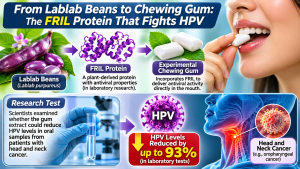
Scientists incorporated this plant-derived protein into an experimental chewing gum designed to deliver antiviral activity directly inside the mouth.
The researchers then examined whether extracts from the gum could reduce HPV levels in samples obtained from patients with head and neck cancer.
Rather than relying on an ordinary chemical disinfectant, the approach uses biologically active proteins to interact with targeted microorganisms.
3. HPV Levels Fell by Up to 93%
The laboratory findings were striking.
When researchers applied the experimental gum extract to patient-derived samples, they observed substantial reductions in detectable HPV.
The reported reductions included:
- 93% reduction in HPV levels in saliva samples.
- 80% reduction in HPV levels in oral rinse samples.
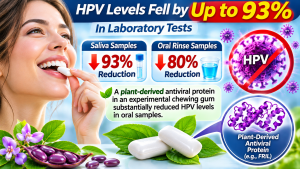
These results suggest that plant-derived antiviral proteins might eventually be delivered through chewing gum to reduce viral material in the oral cavity.
However, the experiments were conducted outside the human body.
Participants were not simply given chewing gum and followed to determine whether their HPV infections disappeared.
Therefore, the findings do not establish that chewing the gum clears HPV infections, prevents transmission, or reduces cancer risk.
4. The Gum Also Targets Two Harmful Bacteria
HPV was not the only target.
The researchers also investigated two bacterial species:
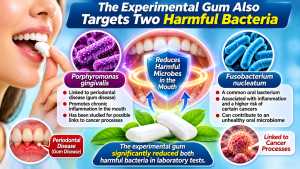
Porphyromonas gingivalis
This bacterium is strongly associated with periodontal disease, a chronic inflammatory condition affecting the gums and tissues supporting the teeth.
It has also been studied for possible associations with cancer-related processes.
Fusobacterium nucleatum
This bacterium is commonly found in the oral cavity and has been investigated for its associations with several diseases, including certain cancers.
The researchers developed an enhanced gum formulation containing protegrin, an antimicrobial peptide.
When tested in laboratory samples, the formulation reduced the two targeted bacterial populations to nearly undetectable levels.
The findings suggest that the technology may eventually help control multiple harmful microorganisms through a single delivery method.
5. What Makes This Different From Ordinary Antibacterial Products?
One of the challenges in treating infections is avoiding unnecessary damage to beneficial microorganisms.
The mouth contains a complex community of bacteria, fungi, viruses, and other microscopic organisms known as the oral microbiome.
Many of these organisms are harmless or contribute to normal oral health.
Some antimicrobial products can disrupt this balance by affecting both harmful and beneficial bacteria.
In the new experiments, the gum extract substantially reduced the targeted harmful bacteria while sparing the beneficial bacterial populations examined.
This selective activity is particularly interesting for patients receiving cancer treatment, whose oral microbiomes may already be disrupted.
However, additional studies will be necessary to determine whether the same selectivity occurs during prolonged use in humans.
6. Could This Help Patients With Head and Neck Cancer?
Researchers hope that the technology might eventually be developed for two possible purposes.
The first is prevention.
If future studies demonstrate that the gum safely reduces infectious HPV in the mouth, scientists could investigate whether it helps limit transmission or persistent infection.
The second possibility involves supportive treatment.
Some patients with head and neck cancer have oral microbial imbalances that may complicate their condition or treatment.
A targeted antimicrobial product could potentially help manage certain harmful organisms alongside established medical care.
But these possibilities remain hypothetical.
No clinical evidence currently establishes that this gum improves cancer survival, shrinks tumors, or replaces surgery, radiation, chemotherapy, or immunotherapy.
7. Why Use Chewing Gum as a Delivery Method?
Chewing gum has several practical advantages as a potential delivery system.
It is familiar, portable, relatively inexpensive, and capable of releasing ingredients directly into saliva.
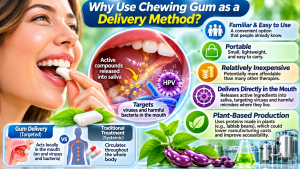
Unlike treatments that must circulate throughout the entire body, a gum-based product may deliver active compounds close to microorganisms living in the mouth.
Plant-based production methods could also make some therapeutic proteins less expensive to manufacture.
However, scientists must still determine the appropriate dosage, stability, safety, and effectiveness of the experimental formulation.
The amount of active protein released during normal chewing may differ from the concentrations used in laboratory experiments.
8. What Happens Next?
The next major step is human clinical testing.
Researchers will need to investigate whether the gum is safe, whether its active proteins remain effective during chewing, and how long any antiviral or antibacterial effects last.
Clinical trials would also need to establish whether reducing detectable viral material translates into meaningful health benefits.
For HPV, that could include determining whether the product affects infectious virus, persistent infection, or transmission.
For cancer patients, investigators would need to evaluate clinical outcomes rather than relying only on laboratory measurements of microorganisms.
These questions cannot be answered by the current study alone.
9. What Can People Do to Reduce HPV-Related Cancer Risk Today?
While the experimental chewing gum is being investigated, several established preventive measures remain important.
HPV vaccination is one of the most effective ways to prevent infections with HPV types responsible for many HPV-associated cancers.
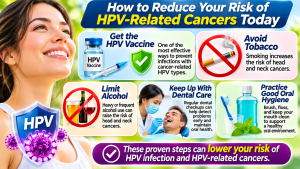
Avoiding tobacco and limiting alcohol exposure can also help reduce the risk of certain head and neck cancers.
Regular dental care and good oral hygiene support overall oral health.
People with persistent throat symptoms, unexplained neck masses, difficulty swallowing, or other concerning changes should seek medical evaluation.
Ordinary chewing gum, including products marketed as natural or antibacterial, should not be assumed to provide the effects observed in this experimental formulation.
The Bottom Line
Scientists have developed a plant-protein-based chewing gum that substantially reduced HPV and certain harmful bacteria in laboratory tests using samples from patients with head and neck cancer.
The most dramatic reported result was a 93% reduction in detectable HPV in saliva samples.
Although these findings are encouraging, they do not demonstrate that the gum prevents or treats cancer.
If future human trials confirm its safety and effectiveness, chewing gum could someday become an unusual but practical tool for delivering antiviral and antibacterial therapies directly inside the mouth.
For now, it remains a promising scientific experiment—not an approved cancer treatment.
Scientific reference
Daniell H, et al. Ex vivo HNSCC clinical studies using saliva and antiviral or antibacterial chewing gums reveal reduction in carcinogenic microbes. Scientific Reports. 2026;16.
DOI: https://doi.org/10.1038/s41598-026-39062-w
Medical disclaimer: This article provides educational information about experimental research and should not be interpreted as medical advice or evidence of an approved treatment.