Antioxidants are naturally occurring compounds that help protect cells from damage associated with unstable molecules known as free radicals. Fruits, vegetables, nuts, seeds, whole grains and beverages such as tea contain a wide variety of these compounds, including vitamins C and E, carotenoids and polyphenols.
While antioxidant-rich diets are consistently associated with better health outcomes, the science is more nuanced than the idea that antioxidants simply “fight free radicals.” Research increasingly suggests that the greatest benefits come from eating a diverse range of nutrient-rich whole foods rather than relying on high-dose antioxidant supplements.
Understanding Oxidative Stress
Free radicals and other reactive molecules are produced naturally during metabolism and can also arise in response to environmental factors such as air pollution, tobacco smoke and ultraviolet radiation.
The body normally controls these molecules through an elaborate antioxidant defense system. Problems can occur when the production of reactive molecules exceeds the body’s ability to regulate them, creating a condition known as oxidative stress.
Persistent oxidative stress can damage lipids, proteins and DNA and has been investigated for its potential role in aging and numerous chronic diseases. However, free radicals are not universally harmful—they also participate in normal immune responses and cellular signaling.
The goal, therefore, is not to eliminate oxidation but to support the body’s ability to maintain an appropriate balance.
Different Antioxidants Work in Different Ways
“Antioxidant” describes a function rather than a single nutrient.
Vitamin C is water-soluble and participates in antioxidant reactions in body fluids and cells. Citrus fruits, berries, peppers, broccoli and other fruits and vegetables are important dietary sources.
Vitamin E is fat-soluble and helps protect cell membranes from oxidative damage. Nuts, seeds and vegetable oils are among its major food sources.
Carotenoids, including beta-carotene, lycopene and lutein, are plant pigments found in colorful fruits and vegetables.
Polyphenols constitute another large family of plant compounds. Berries, tea, cocoa, herbs, vegetables and many fruits contain different types of polyphenols.
The body also produces its own antioxidant defenses, including enzymes and compounds such as glutathione.
These systems interact with one another rather than functioning independently, which is one reason scientists increasingly focus on overall dietary patterns instead of individual antioxidant compounds.
Foods Naturally Rich in Antioxidant Compounds
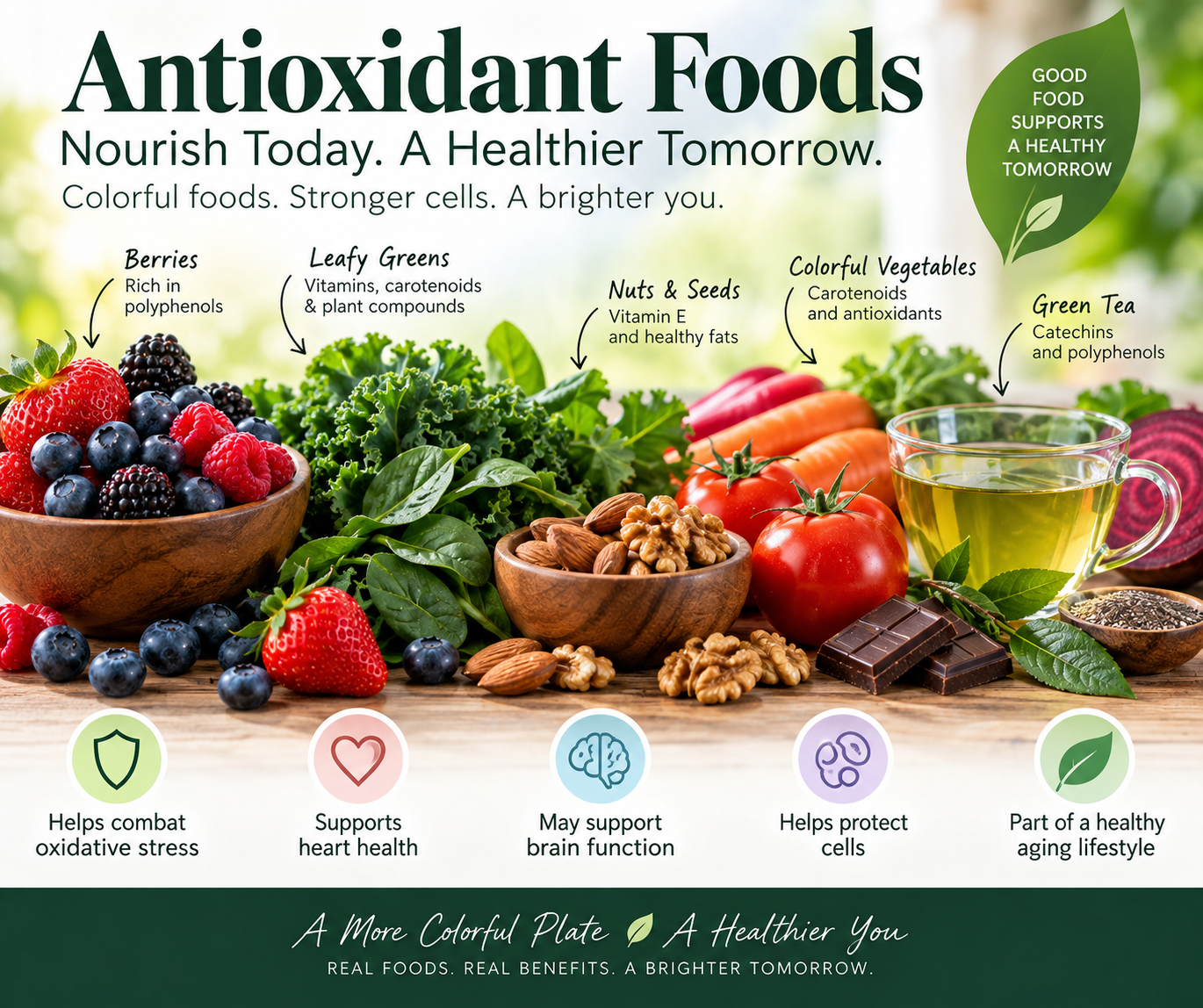
A colorful diet is one of the simplest ways to consume a broad range of potentially beneficial plant compounds.
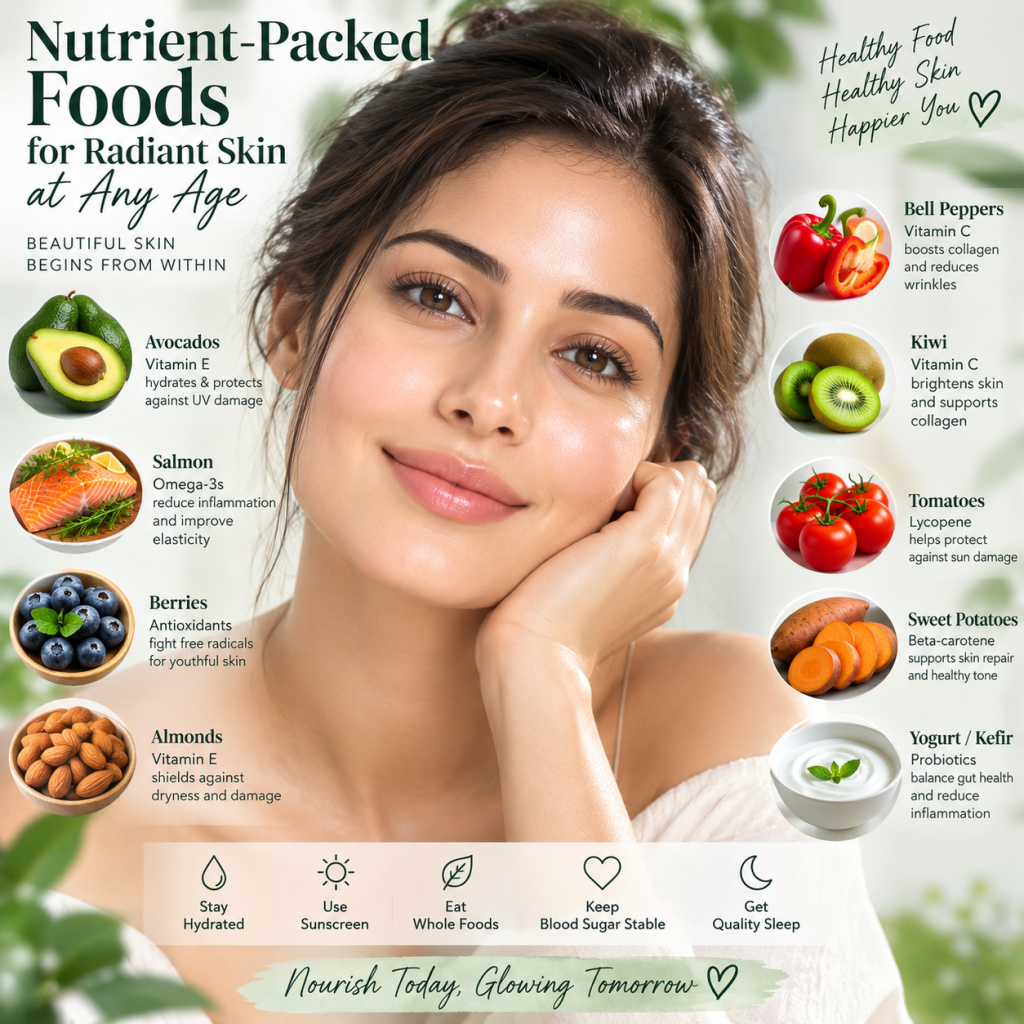
Berries provide anthocyanins and other polyphenols, while tomatoes contain lycopene. Carrots and sweet potatoes provide carotenoids, and leafy greens contain several antioxidant-associated nutrients and phytochemicals.
Nuts and seeds contribute vitamin E and other beneficial compounds. Beans, herbs, spices and whole grains also provide numerous phytochemicals.
Green tea is another extensively studied source of polyphenols, particularly catechins. Although these compounds demonstrate antioxidant activity in laboratory experiments, their effects inside the human body are considerably more complex.
No single “superfood” is necessary. Dietary variety is more important.
Whole Foods Versus Antioxidant Supplements
One of the most important lessons from antioxidant research is that antioxidant-rich foods and antioxidant supplements should not be treated as equivalent.
Observational research consistently finds that people who consume diets rich in fruits, vegetables and other plant foods tend to experience lower rates of several chronic diseases.
However, randomized clinical trials testing isolated antioxidant supplements have often failed to reproduce the same protective effects.
In certain circumstances, high doses can even be harmful. For example, high-dose beta-carotene supplementation has been associated with increased lung cancer risk in smokers and people with substantial asbestos exposure.
This apparent contradiction may occur because whole foods contain complex combinations of fiber, vitamins, minerals and thousands of bioactive compounds that interact in ways an isolated supplement cannot reproduce.
Do Antioxidants Slow Aging?
Oxidative stress has long been associated with biological aging, leading to claims that consuming more antioxidants can slow or reverse the aging process.
The reality is considerably more complicated.
Cellular aging involves numerous interacting processes, including DNA damage, mitochondrial changes, inflammation, altered protein regulation and changes in cellular signaling.
Antioxidant-rich foods can form part of a healthy dietary pattern associated with healthier aging, but there is insufficient evidence to conclude that consuming large quantities of antioxidants—or taking antioxidant supplements—directly slows human aging.
A healthier overall lifestyle remains much more strongly supported.
Antioxidants and Chronic Disease
Diets emphasizing fruits, vegetables, legumes, nuts and whole grains are consistently associated with cardiovascular and metabolic benefits and lower risks of several diseases.
Antioxidants may contribute to those effects, but they are unlikely to be the only explanation.
Fiber can influence cholesterol, blood glucose and the intestinal microbiome. Potassium contributes to healthy blood-pressure regulation. Unsaturated fats from nuts and seeds can improve dietary fat quality, while thousands of plant phytochemicals may affect inflammation and cellular signaling.
This makes it difficult to isolate an “antioxidant effect” from the overall benefits of nutritious foods.
A Food-First Approach
For most healthy adults, obtaining antioxidant compounds through food offers advantages over trying to maximize intake through supplements.
A practical approach is to regularly consume a variety of differently colored plant foods—berries, citrus fruits, leafy greens, tomatoes, peppers, carrots, beans, nuts and seeds, for example.
Rather than measuring the theoretical antioxidant capacity of individual foods, concentrating on dietary diversity and overall nutritional quality is likely to be more useful.
Supplements may still be appropriate for specific nutritional deficiencies or medical circumstances, but they should not automatically be assumed to prevent chronic disease simply because they contain antioxidants.
The Bottom Line
Antioxidant-rich foods can be an important part of a healthy diet by providing vitamins, minerals, fiber and a diverse collection of plant compounds that support normal cellular function.
The strongest evidence favors whole dietary patterns rich in fruits, vegetables, legumes, nuts, seeds and whole grains, rather than high-dose antioxidant supplementation.
Antioxidants are therefore best understood not as miracle compounds capable of stopping aging or preventing disease on their own, but as one component of the complex nutritional benefits provided by a varied, plant-rich diet.