Healthy-looking skin is influenced by more than creams and serums. Nutrition provides the proteins, healthy fats, vitamins, minerals and plant compounds the body needs to maintain the skin barrier, produce collagen and protect cells from oxidative stress.
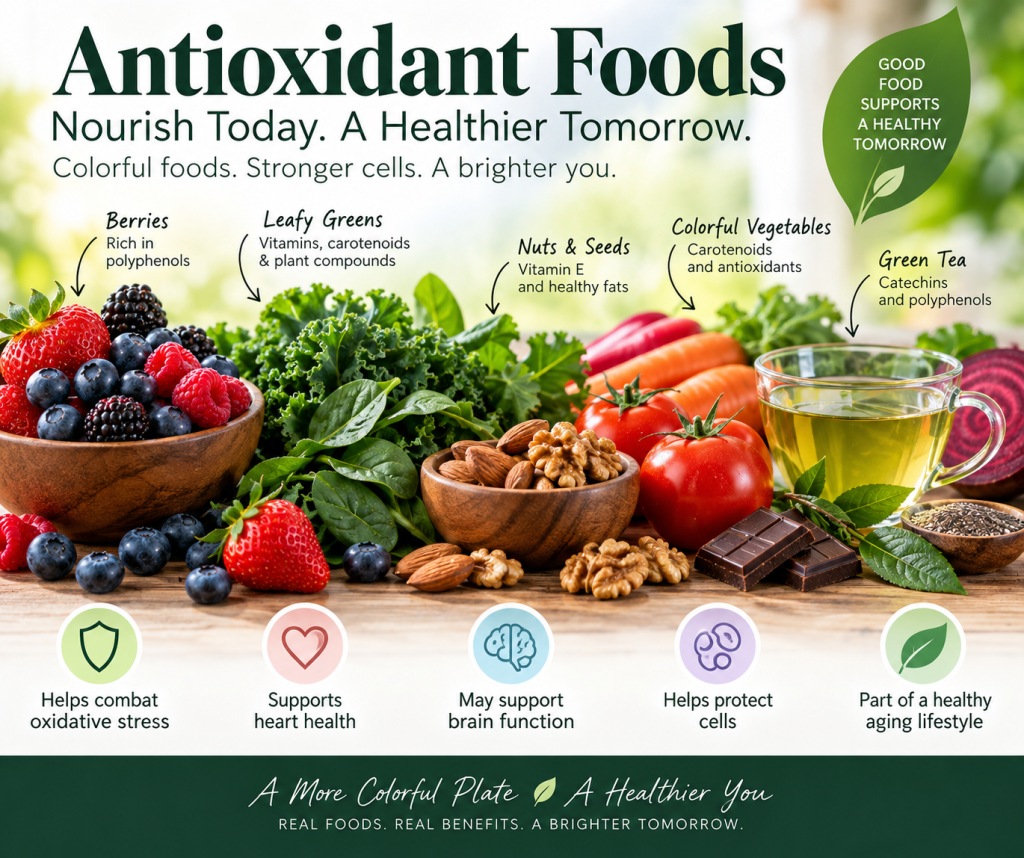
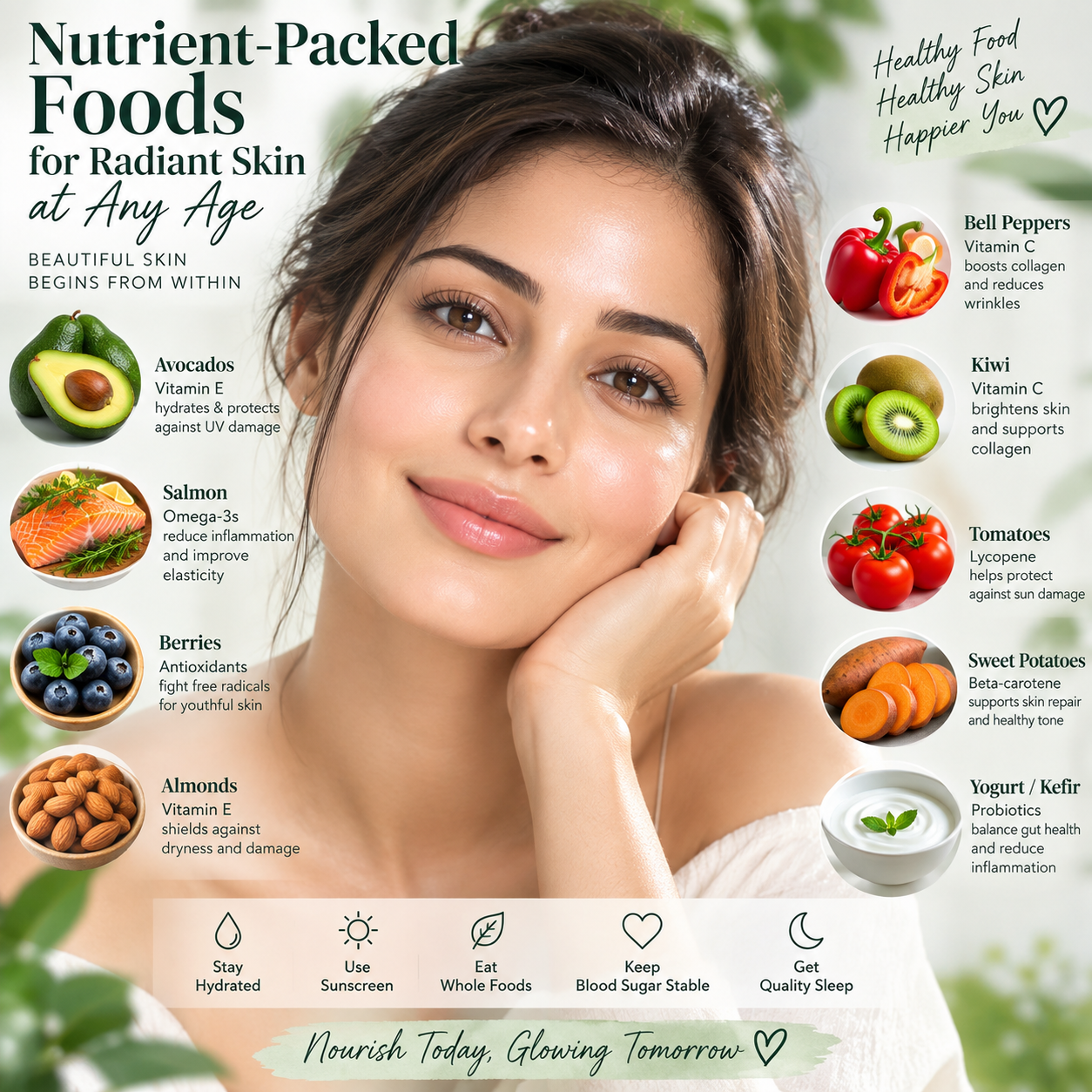
Foods rich in vitamins A, C and E, omega-3 fatty acids, carotenoids and polyphenols can contribute to skin health. Salmon, avocados, berries, bell peppers, kiwi, tomatoes, sweet potatoes, nuts, seeds and fermented foods are among the nutrient-dense choices worth incorporating into a balanced diet.
Vitamin C Supports Collagen Production
Vitamin C plays an essential role in the production of collagen, one of the structural proteins that helps maintain skin strength and firmness. It also functions as an antioxidant, helping protect cells against oxidative damage.
Bell peppers, kiwi, strawberries, citrus fruits and broccoli are excellent dietary sources.
Rather than relying on a single vitamin C-rich food, regularly eating a variety of fruits and vegetables provides vitamin C alongside numerous other nutrients and phytochemicals.
Healthy Fats Help Support the Skin Barrier
Dietary fats are important components of healthy skin.
Fatty fish such as salmon, sardines and mackerel provide the long-chain omega-3 fatty acids EPA and DHA. Omega-3s participate in inflammatory regulation and may contribute to normal skin-barrier function.
Walnuts provide the plant-based omega-3 alpha-linolenic acid (ALA), while avocados contain monounsaturated fats and vitamin E.
Vitamin E is a fat-soluble antioxidant found in foods such as almonds, sunflower seeds and avocados. It contributes to the body’s antioxidant defenses, although eating vitamin E-rich foods should not be considered a substitute for sunscreen.
Colorful Produce Provides Protective Plant Compounds
The colors found in fruits and vegetables often reflect naturally occurring plant compounds.
Tomatoes are particularly rich in lycopene, while sweet potatoes and carrots provide beta-carotene, which the body can convert into vitamin A.
Vitamin A is essential for normal skin-cell development and maintenance.
Berries, grapes and other deeply colored fruits also provide polyphenols and flavonoids that have been studied for their antioxidant and anti-inflammatory properties.
These compounds may contribute to the benefits associated with diets rich in fruits and vegetables, but they should not be viewed as an internal sunscreen.
Broad-spectrum sunscreen, protective clothing and limiting excessive UV exposure remain essential for preventing sun damage.
The Gut-Skin Connection
Researchers are increasingly investigating the relationship between the intestinal microbiome and skin, sometimes called the gut-skin axis.
Fermented foods such as yogurt and kefir can contain beneficial microorganisms, while fiber-rich fruits, vegetables, legumes and whole grains provide substrates that support the intestinal microbiome.
Early research suggests connections between gut health, immune function and certain inflammatory skin conditions. However, claims that probiotics alone can eliminate acne, eczema or skin redness are stronger than current evidence supports.
A diverse, fiber-rich diet is likely more valuable than relying on any single probiotic food.
Hydration Matters, Too
Adequate hydration supports normal physiological functions, including those involved in maintaining the skin.
Water should provide most daily hydration, while foods such as cucumber, watermelon, oranges, berries and leafy vegetables can contribute additional fluids.
Drinking excessive amounts of water, however, has not been shown to erase wrinkles or dramatically transform otherwise adequately hydrated skin.
Hydration is one component of skin health—not a cosmetic cure.
Limit Highly Processed Foods
Overall dietary patterns may matter as much as individual nutrients.
Some research suggests that high-glycemic diets may worsen acne in susceptible individuals, potentially through effects on insulin and related hormonal pathways.
Replacing heavily refined carbohydrates and highly processed foods with vegetables, fruits, whole grains, legumes, nuts, seeds and quality protein sources can improve overall nutritional quality.
That does not mean sugar or processed food must be completely eliminated for healthy skin. Consistency and overall dietary balance matter more than perfection.
A Skin-Supportive Plate
A simple approach is to build meals around a variety of whole foods:
- Salmon and other fatty fish: omega-3 fatty acids
- Bell peppers and kiwi: vitamin C
- Avocados, almonds and sunflower seeds: vitamin E and healthy fats
- Tomatoes: lycopene
- Sweet potatoes and carrots: beta-carotene
- Berries and grapes: polyphenols
- Leafy greens: carotenoids, vitamins and minerals
- Yogurt and kefir: fermented foods that may support the gut microbiome
Eating these foods together as part of a varied diet is more sensible than searching for one “anti-aging” superfood.
The Bottom Line
Radiant skin begins with the same fundamentals that support overall health: a nutrient-rich diet, adequate hydration, sufficient sleep, regular physical activity and protection from excessive sun exposure.
Vitamin C supports collagen formation, healthy fats contribute to the skin barrier, and colorful plant foods provide antioxidant compounds that help protect cells from oxidative stress.
No single food can prevent wrinkles, cure acne or reverse aging. But consistently eating a diverse diet rich in vegetables, fruits, fatty fish, nuts, seeds and other minimally processed foods can provide the nutritional foundation the skin needs to function at its best.
Healthy skin isn’t built by one superfood—it’s supported by what you eat consistently over time.