
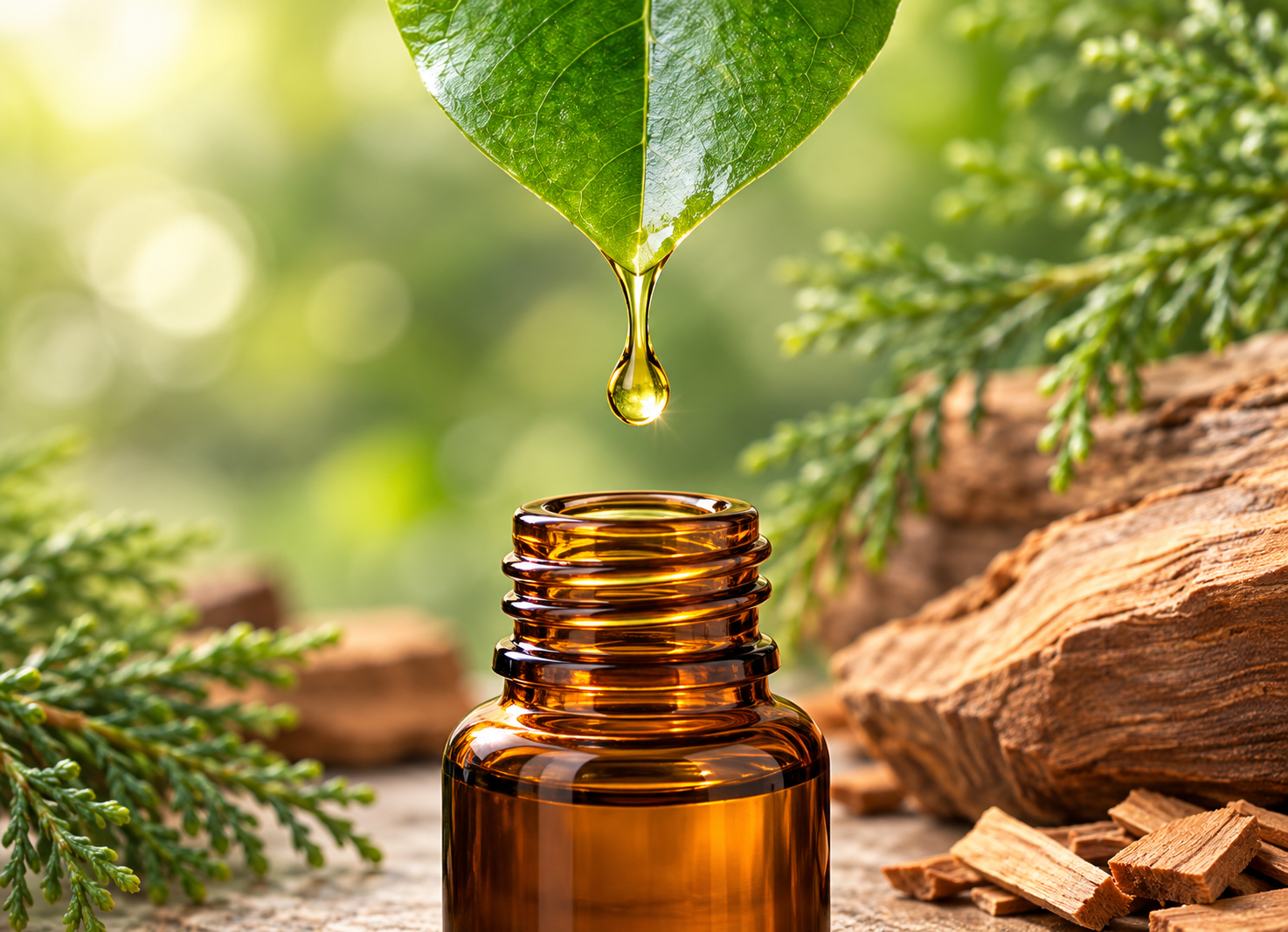
With its warm, woody and grounding aroma, cedarwood essential oil has been valued for centuries in traditional practices, perfumery and personal care. Today, it remains a popular choice in aromatherapy, massage oils, skin and hair products, and relaxation routines.
Cedarwood essential oil can come from several tree species. One commonly used variety is derived from Atlas cedar (Cedrus atlantica), an evergreen native to the Atlas Mountains of North Africa. The aromatic oil is generally obtained through steam distillation of the wood.
While laboratory research has identified potentially interesting biological properties in cedarwood compounds, many of its commonly promoted health benefits have not yet been confirmed by strong human clinical evidence. It is therefore best viewed as a complementary wellness product rather than a treatment for disease.
An Aromatic Tradition With Ancient Roots
Cedar and cedar-like aromatic woods have a long history of use across ancient cultures.
They were valued for fragrance, preservation and ceremonial purposes. Ancient Egyptians, for example, incorporated aromatic plant materials and oils into cosmetics, religious practices and embalming preparations.
Modern cedarwood essential oil is produced by distilling plant material to capture its volatile aromatic compounds.
The resulting oil typically has a deep, dry and slightly sweet woody fragrance, making it a common ingredient in perfumes, soaps, candles and aromatherapy blends.
What Makes Cedarwood Oil Interesting?
Essential oils contain concentrated mixtures of naturally occurring plant chemicals. Their composition varies according to the tree species, growing environment and extraction process.
Research into cedarwood oils and their individual components has explored several areas, including antimicrobial activity, inflammation and effects on the nervous system.
However, an important distinction should be made between laboratory findings and proven medical benefits in humans.
A substance demonstrating antibacterial activity in a laboratory dish, for example, does not automatically mean that applying the essential oil will safely or effectively treat a bacterial infection.
Relaxation and Stress Management
One of cedarwood oil’s most popular uses is aromatherapy.
Its earthy, woody scent is often incorporated into evening routines, meditation, massage and relaxation practices. Some people find the aroma calming and associate it with reduced feelings of tension.
A few drops can be placed in an essential-oil diffuser according to the manufacturer’s directions.
Cedarwood can also be blended with other aromatic oils such as lavender, bergamot or frankincense to create different fragrance profiles.
Although aromatherapy may promote subjective relaxation for some people, cedarwood oil should not be presented as a treatment for anxiety, depression or insomnia.
Skin and Hair Care
Cedarwood essential oil is also found in some shampoos, scalp treatments and cosmetic formulations.
Laboratory studies have generated interest in the antimicrobial and anti-inflammatory properties of certain essential-oil components, leading to their incorporation into products designed for skin and scalp care.
However, concentrated essential oils can also irritate the skin.
Cedarwood oil should generally be diluted in an appropriate carrier oil before being applied directly to the body. Examples of carrier oils include jojoba, coconut and sweet almond oil.
Anyone using it for the first time should consider testing a small diluted amount on a limited area of skin before wider application.
Persistent acne, eczema, psoriasis, scalp disorders or unexplained hair loss should be evaluated by an appropriate healthcare professional rather than treated solely with essential oils.
What About Respiratory Health?
The aroma of cedarwood is sometimes incorporated into steam, diffuser or massage blends marketed for seasonal respiratory comfort.
However, claims that cedarwood essential oil can treat asthma, sinusitis, respiratory infections or other lung conditions go beyond the available evidence.
Essential oils can also irritate the respiratory tract in some individuals.
People with asthma, chronic respiratory disease or sensitivity to fragrances should therefore be particularly cautious about inhaling concentrated essential oils and should seek medical guidance when appropriate.
How Cedarwood Essential Oil Is Commonly Used
Cedarwood oil is most commonly incorporated into wellness routines through aromatherapy or diluted topical application.
For a diffuser, follow the specific instructions supplied with the device rather than assuming that one concentration is appropriate for every diffuser or room size.
For topical use, dilute the essential oil appropriately in a carrier oil before applying it to the skin.
It may also be incorporated into massage oils, bath products or hair-care formulations when properly diluted.
Because essential oils are highly concentrated, using more does not necessarily produce greater benefits and can increase the likelihood of irritation.
Safety Comes First
Natural products are not automatically risk-free.
Cedarwood essential oil should generally not be swallowed unless specifically directed by a qualified healthcare professional using a product intended for that purpose.
Essential oils should also be kept away from the eyes and other sensitive areas.
Before topical use, dilute the oil appropriately and consider performing a patch test. Stop using the product if redness, burning, swelling or other signs of irritation develop.
Pregnant or breastfeeding individuals, children, people with significant medical conditions and those taking medications should seek professional advice before using essential oils therapeutically.
Pets may also respond differently to essential oils, so diffusers should be used carefully in homes with animals.
Choosing a Cedarwood Essential Oil
Because products sold under the name “cedarwood” can originate from different botanical species, checking the label is important.
Consumers looking specifically for Atlas cedarwood should look for the botanical name Cedrus atlantica.
A quality product should clearly identify the botanical species and ideally provide information about the plant part used, extraction method and manufacturer.
Products making sweeping promises to cure infections, chronic diseases or other medical conditions deserve particular caution.
The Bottom Line
Cedarwood essential oil combines an ancient aromatic tradition with continued popularity in modern wellness practices.
Its distinctive woody fragrance makes it particularly appealing for aromatherapy, relaxation, massage and personal-care routines, while laboratory research continues to investigate the biological activity of its naturally occurring compounds.
However, preliminary antimicrobial or anti-inflammatory findings should not be confused with proof that cedarwood oil can treat infections, arthritis, asthma, eczema or other medical conditions.
Used appropriately—especially through inhalation or properly diluted topical application—cedarwood can be an enjoyable addition to a wellness routine.
Its greatest value may be the simplest one: a rich, grounding aroma that encourages people to create moments of calm, relaxation and intentional self-care.