
VietEcho News | Investigative Report
The Fugitive Who Vanished
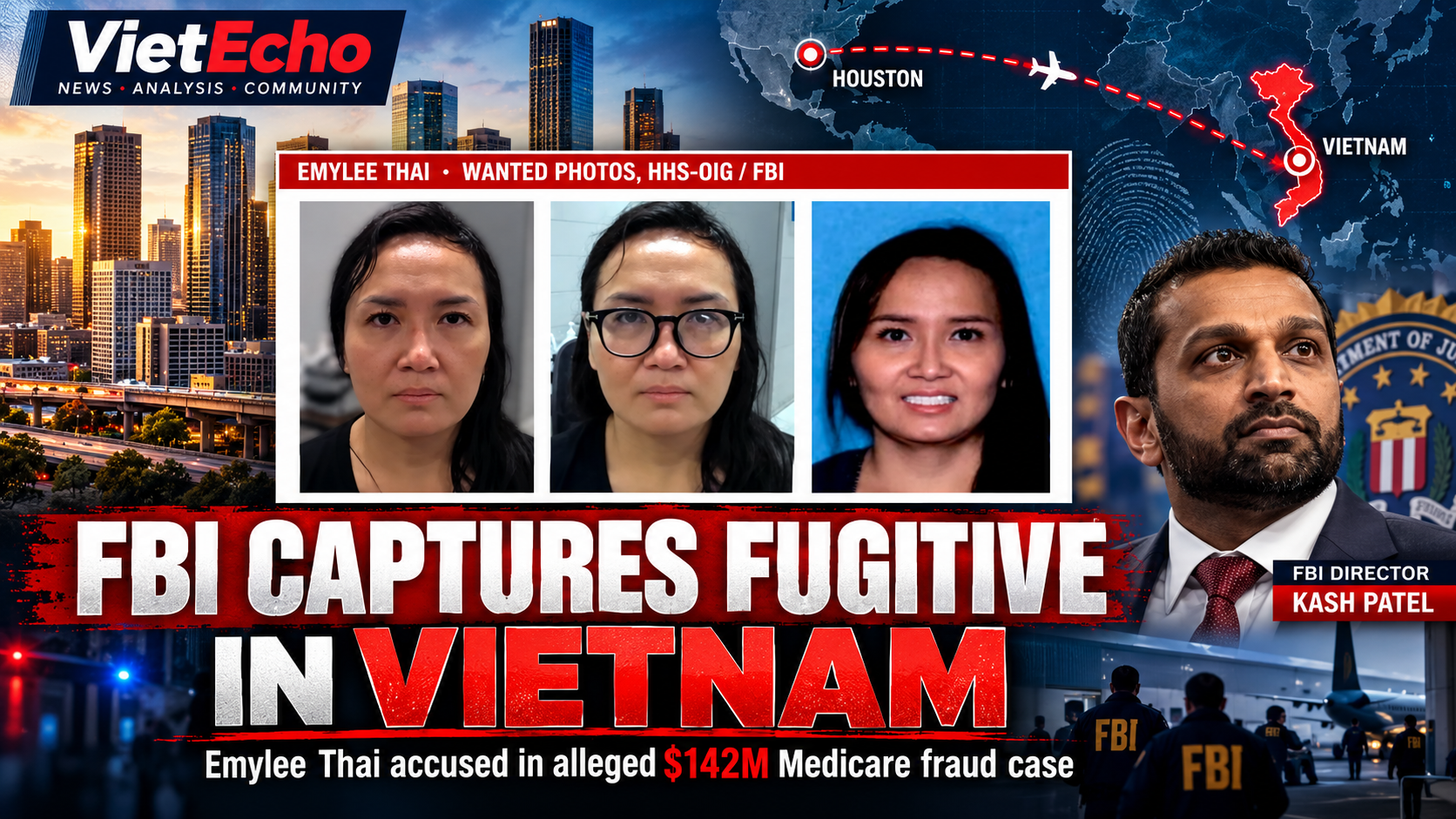
A Houston laboratory owner accused in a massive Medicare fraud scheme disappeared from the United States after authorities say she removed her electronic ankle monitor, traveled under a false identity, and escaped aboard a private aircraft.
For nearly four years, she remained beyond the reach of American authorities.
Then, in September 2026, the FBI announced a dramatic breakthrough.
The fugitive, identified as Emylee Thai, had been captured in Vietnam with assistance from international law enforcement partners.
Her arrest marked another major development in a federal campaign targeting alleged financial fraud involving American taxpayer funds.
But how did a laboratory owner become the subject of an international manhunt?
And how could genetic testing generate tens of millions of dollars in allegedly improper Medicare payments?
The answers begin in Houston, Texas.
The Laboratory and the Millions
According to federal prosecutors, Thai owned ApolloMDx, a clinical laboratory in the Houston area that was later renamed Artemis DNA TX.

The laboratory performed genetic testing, a legitimate medical service that can help physicians evaluate certain inherited diseases, cancer risks, and other medical conditions.
But investigators allege that the laboratory participated in a very different operation.
Between December 2019 and May 2022, prosecutors say the business submitted approximately $142 million in claims to Medicare, the federal health insurance program primarily serving Americans aged 65 and older and certain younger people with qualifying conditions.
Of those claims, approximately $95 million was paid.
The government alleges that many of the genetic tests were not medically necessary and that their results were often not used to guide patient treatment.
Federal authorities say the laboratory relied on a network of marketers who obtained Medicare beneficiaries’ DNA samples and signed doctors’ orders.
In exchange, those marketers allegedly received kickbacks based on Medicare reimbursements.
Prosecutors further allege that some medical paperwork contained inaccurate diagnoses or service dates intended to support reimbursement claims.
A simple DNA sample could potentially generate thousands of dollars in Medicare billing.
And, according to investigators, the arrangement expanded well beyond Houston.
How the Alleged Scheme Worked
To understand the significance of this case, consider how legitimate genetic testing should work.
A physician evaluates a patient and determines whether a specific genetic test is medically appropriate. A laboratory performs the ordered test, and the findings may help guide diagnosis, treatment, or medical decision-making.
Medicare covers qualifying tests when applicable medical necessity and coverage requirements are satisfied.
But investigators allege that the operation involving ApolloMDx placed financial incentives ahead of genuine medical needs.
Marketers recruited referrals, laboratory orders were submitted, and Medicare was billed.
According to prosecutors, some referrals contained false information designed to make the tests appear eligible for reimbursement.
The case also demonstrates why kickback arrangements are such a serious concern in American healthcare.
When a person is financially rewarded for generating medical orders, the incentive to recommend testing can become disconnected from what patients actually need.
The damage can extend beyond government spending.
Medically unnecessary testing can expose patients to unwanted procedures, misuse sensitive information, and undermine confidence in healthcare services.
The allegations involving Thai and other defendants became part of a broader federal effort to investigate healthcare billing fraud.
An Ankle Monitor, a Private Plane, and a Disappearance
On July 12, 2022, federal prosecutors filed an indictment against Thai in Houston.
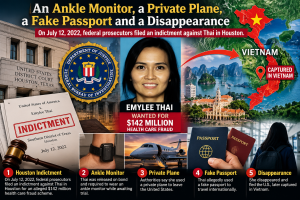
The charges included conspiracy to commit healthcare fraud and allegations involving illegal healthcare kickbacks.
Following her arrest, Thai was granted pretrial release under court-ordered conditions.
One of those conditions required electronic location monitoring.
But on December 8, 2022, the situation took a dramatic turn.
According to the Department of Health and Human Services Office of Inspector General, her location monitor was removed.
Her last known location was Harry Reid International Airport in Las Vegas, Nevada.
Investigators were unable to contact or locate her.
The following day, a federal arrest warrant was issued.
Authorities subsequently determined that Thai had left the country on a private airplane while using a false identity.
Investigators identified Vietnam as her destination.
In 2023, an additional federal indictment accused her of destruction and alteration of records connected to a federal investigation.
What had begun as a healthcare fraud prosecution had become an international fugitive case.
On the FBI’s Most Wanted Fraudsters List
In June 2026, the FBI launched a new Most Wanted Fraudsters initiative targeting fugitives accused of major financial crimes.
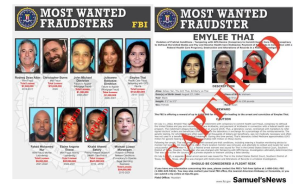
Thai was among the individuals featured in the initiative.
The FBI publicized the case and offered a reward of up to $150,000 under the terms of its fugitive reward program.
Meanwhile, American authorities were intensifying efforts to combat healthcare fraud nationwide.
The Justice Department announced a major enforcement operation in June 2026, involving hundreds of defendants and billions of dollars in alleged fraudulent claims.
The message from federal investigators was that large-scale financial crime would remain a law enforcement priority, including cases involving suspects who had fled overseas.
For Thai, the publicity surrounding her fugitive status would not last much longer.
Captured in Vietnam
On September 14, 2026, FBI Director Kash Patel publicly announced that Emylee Thai had been captured in Vietnam.

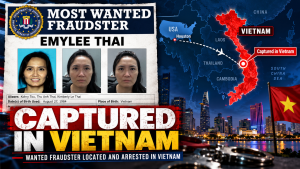
The bureau credited international law enforcement cooperation for the arrest.
The announcement marked the sixth capture associated with the FBI’s new Most Wanted Fraudsters initiative in approximately three months.
Thai had been a fugitive since December 2022.
After years of unanswered questions, American investigators had confirmed that she was in custody abroad.
However, several details remained undisclosed.
The FBI did not publicly explain precisely how Thai was located, whether an informant provided information, or what investigative techniques led to her capture.
The initial announcement also did not establish that she had been returned to the United States.
Her arrest in Vietnam and any subsequent transfer to American custody are legally distinct steps.
And her pending criminal case remains subject to the judicial process.
What Happens Next?
Although federal investigators have described a major alleged Medicare fraud operation, the criminal charges against Thai are allegations.
She is presumed innocent unless and until proven guilty in a court of law.

The amount billed to Medicare, the payments received by her laboratory, and the amount allegedly attributable to any individual defendant are not necessarily the same.
As of the official information reviewed for this report, authorities had confirmed her capture in Vietnam but had not publicly established a date for her return to a Houston courtroom.
The case raises broader questions about how healthcare programs can identify suspicious billing, prevent improper financial incentives, and protect patients from medically unnecessary testing.
It also illustrates the growing international reach of financial-crime investigations.
For years, a woman facing federal prosecution in Houston remained outside the United States.
Then an international law enforcement effort brought her fugitive status to an end.
But the central legal question remains unresolved:
Will prosecutors ultimately prove their allegations in court?
For VietEcho News, we will continue following the case and reporting verified developments.
If you value independent, fact-based reporting on stories affecting American and Vietnamese communities, subscribe to VietEcho and share your thoughts in the comments.
VietEcho News — News That Matters.