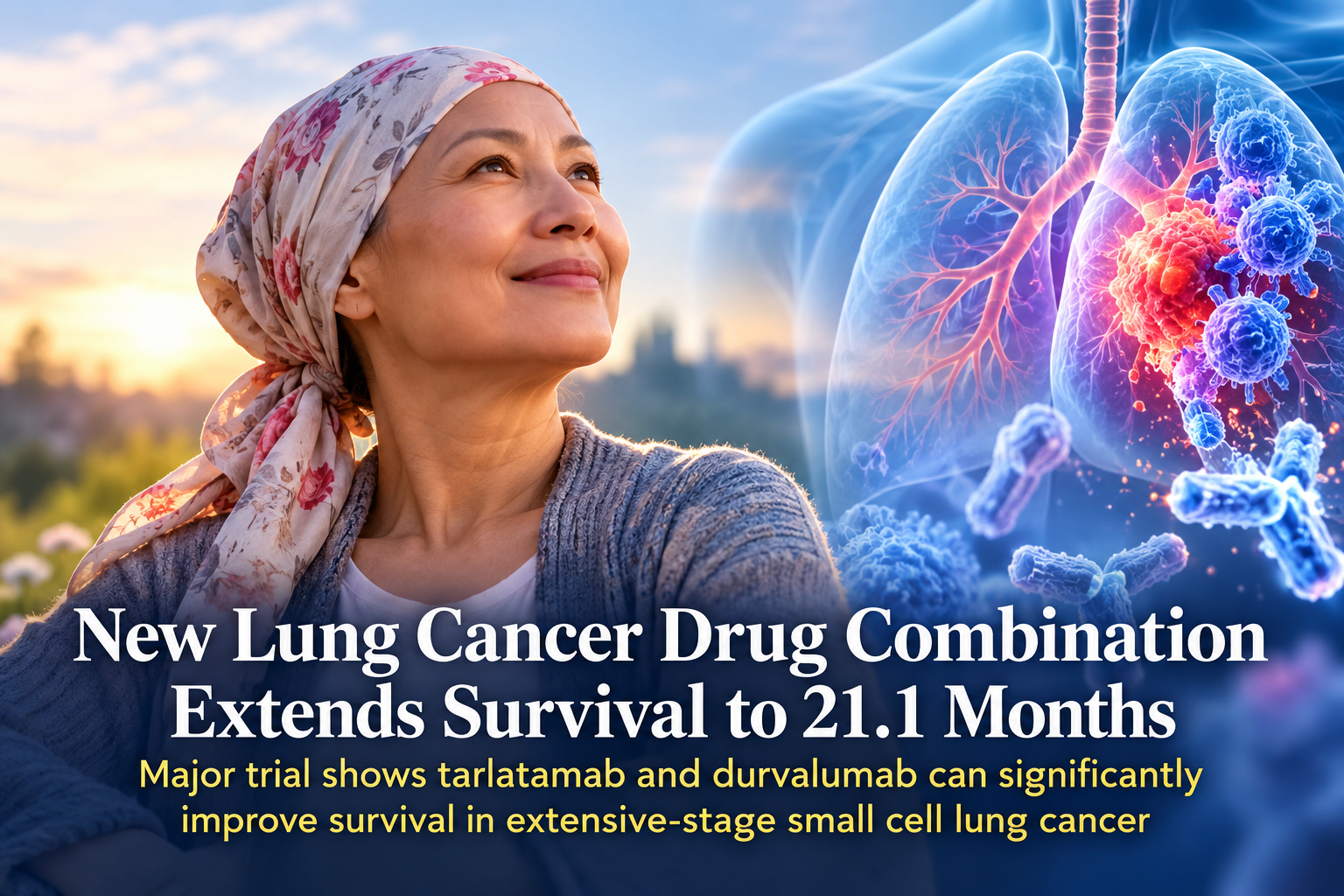
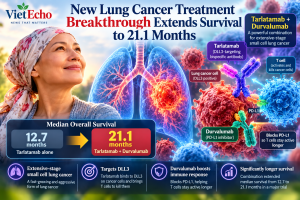
A major clinical trial offers new hope for people with extensive-stage small cell lung cancer, one of the fastest-growing forms of the disease. In the Phase 3 DeLLphi-305 study, adding tarlatamab to durvalumab maintenance treatment extended median overall survival to 21.1 months, compared with 12.7 months for durvalumab alone.
What the researchers tested
The study enrolled 563 patients whose cancer had not progressed after initial durvalumab, platinum-based chemotherapy and etoposide. Researchers randomly assigned participants to receive maintenance durvalumab alone or durvalumab with tarlatamab. At the interim analysis, the combination was associated with a 58% lower relative hazard of death (hazard ratio 0.42). This statistic describes relative risk over the study period, not an absolute 58-percentage-point survival increase.
Why this approach is different
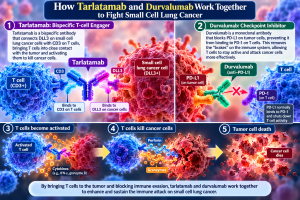
Tarlatamab is a bispecific T-cell engager. It connects DLL3, a protein commonly expressed on small cell lung cancer cells, with CD3 on T cells, helping the immune system recognize and attack tumor cells. Durvalumab is a checkpoint inhibitor that blocks PD-L1, another way tumors can evade immune attack.
Benefits and risks
At one year, estimated overall survival was 79% with the combination and 53% with durvalumab alone. Median progression-free survival was 7.4 months versus 1.9 months. Serious treatment-related adverse events also occurred more often: grade 3–4 events affected 20.9% in the combination group versus 10.8% in the comparison group. Patients should discuss eligibility and potential toxicities with their oncology team.
What happens next?
The results were presented at the European Society for Medical Oncology Congress on October 24, 2026, and simultaneously published in the New England Journal of Medicine. They could influence future first-line maintenance treatment, subject to clinical and regulatory evaluation. The findings do not mean every patient will live 21 months or that the disease is cured.
Sources: Dana-Farber Cancer Institute; Trial results and safety data.