
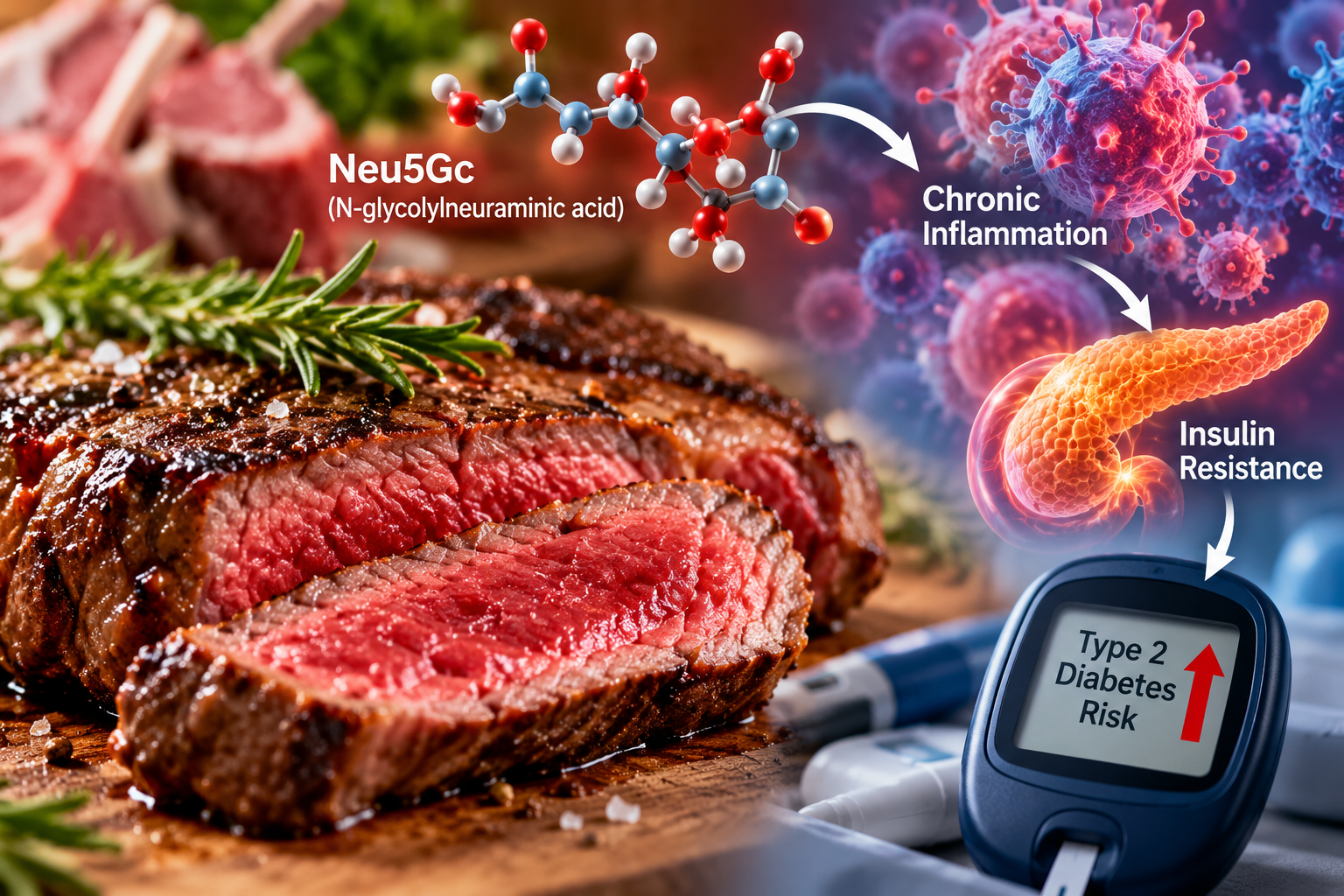
Hidden Sugar in Red Meat Linked to 63% Higher Type 2 Diabetes Risk, Study Finds
New research involving nearly 90,000 adults raises questions about whether a little-known molecule in red meat could contribute to chronic inflammation and diabetes.
A naturally occurring sugar found in red meat may offer scientists a new clue to understanding why people who consume more beef, lamb, and other red meats tend to face a greater risk of developing type 2 diabetes.
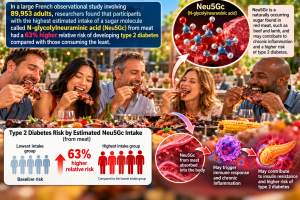
In a large French observational study involving 89,953 adults, researchers found that participants with the highest estimated intake of a sugar molecule called N-glycolylneuraminic acid (Neu5Gc) from meat had a 63% higher relative risk of developing type 2 diabetes compared with those consuming the least.
The findings, presented at the 2026 annual meeting of the European Association for the Study of Diabetes (EASD), suggest that immune responses and chronic inflammation could play a role in the relationship between red meat consumption and metabolic disease.
However, researchers emphasize that the findings are preliminary and do not prove that Neu5Gc directly causes diabetes.
What Is Neu5Gc, and Why Does It Matter?
Neu5Gc is a type of sialic acid found naturally in most mammals. It is particularly abundant in red meats such as beef and lamb, with smaller quantities present in dairy products.
Humans are unusual because an evolutionary change in the CMAH gene eliminated our ability to produce Neu5Gc naturally.
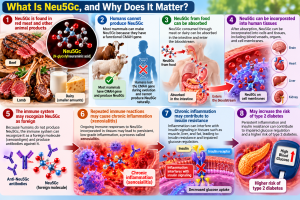
Despite this, Neu5Gc consumed through food can be absorbed and incorporated into human tissues.
Because the human immune system may recognize the molecule as foreign, the body can produce antibodies against it. Scientists believe that repeated immune reactions involving Neu5Gc could contribute to persistent, low-grade inflammation.
This proposed inflammatory process is known as xenosialitis.
Chronic inflammation has long been investigated as a potential contributor to insulin resistance, impaired glucose regulation, and the development of type 2 diabetes.
Nearly 90,000 Adults Followed for More Than Seven Years
Researchers examined dietary and health information from participants in France’s NutriNet-Santé study, a long-running project investigating relationships between nutrition and chronic disease.
Participants were approximately 42 years old on average, and 79% were women. None had type 2 diabetes or cancer when they entered the study.
Researchers estimated Neu5Gc exposure using dietary records and information about the molecule’s concentration in different foods.
During a median follow-up of 7.2 years, 966 participants developed type 2 diabetes.
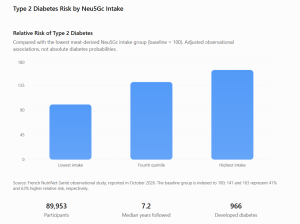
The researchers divided participants into five groups according to their estimated intake of meat-derived Neu5Gc.
Compared with those in the lowest intake group:
- Participants in the fourth group had a 41% higher relative risk of developing type 2 diabetes.
- Participants in the highest group had a 63% higher relative risk.
- The association remained statistically significant after adjustment for several established risk factors, including body mass index.
These findings suggest that higher dietary exposure may be associated with greater diabetes risk, particularly at the upper end of consumption.
The 63% figure represents a relative increase in risk, not a 63% probability of developing diabetes.
Could Chronic Inflammation Be the Missing Connection?
For decades, researchers have examined whether saturated fat, excess calorie intake, obesity, and other dietary factors explain the association between red meat and type 2 diabetes.
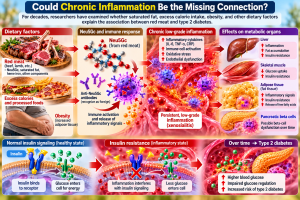
The new findings introduce another possibility: a molecule that humans recognize as foreign could stimulate immune activity that affects metabolic health.
One hypothesis is that persistent inflammation may interfere with insulin signaling in tissues such as the liver, skeletal muscle, and adipose tissue.
Inflammatory processes may also affect pancreatic beta cells, which produce insulin.
If these mechanisms are confirmed, Neu5Gc could become an important subject in research on the biological effects of animal-derived foods.
Nevertheless, the current study did not directly demonstrate that Neu5Gc-induced inflammation caused insulin resistance or diabetes.
An Important Finding: The Association Weakened After Accounting for Red Meat
One of the study’s most important limitations concerns the relationship between Neu5Gc and red meat itself.
When researchers additionally adjusted their analysis for the total amount of red meat participants consumed, the association between Neu5Gc and diabetes weakened and was no longer statistically significant.
This makes it difficult to determine whether Neu5Gc independently contributes to diabetes risk or simply serves as a marker of higher red meat consumption.
Other meat components, dietary patterns, and lifestyle characteristics could also explain part of the observed relationship.
Researchers also reported that Neu5Gc from dairy products was not associated with increased diabetes risk in their analysis.
The distinction suggests that food source, exposure level, and other nutritional factors deserve further investigation.
What Does This Mean for Everyday Eating?
The findings add to a growing body of research examining how dietary patterns influence metabolic health.
They do not establish a safe or harmful threshold for Neu5Gc intake, nor do they prove that eliminating red meat will prevent diabetes.
However, people interested in reducing red meat consumption have several nutritious alternatives, including beans, lentils, tofu, tempeh, nuts, and seeds.
A balanced eating pattern that emphasizes fiber-rich vegetables, whole grains, legumes, and minimally processed foods can support metabolic health.
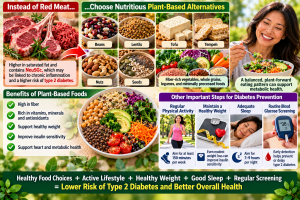
Regular physical activity, maintaining a healthy body weight, adequate sleep, and routine blood glucose screening remain important elements of diabetes prevention.
People with prediabetes or other risk factors should discuss individualized prevention strategies with a qualified healthcare professional.
More Research Is Needed
Scientists hope future studies will examine whether blood levels of anti-Neu5Gc antibodies correlate with inflammation, insulin resistance, and the development of type 2 diabetes.
Research that directly measures immune responses could help determine whether Neu5Gc plays a causal role or is primarily an indicator of other dietary exposures.
For now, the findings provide an intriguing new direction for nutritional science.
The central question is no longer simply how much red meat people eat, but whether particular molecules within those foods influence human health through previously underappreciated biological pathways.
Sources
- European Association for the Study of Diabetes. Sugar molecule in red meat linked with a 63% higher risk of developing type 2 diabetes in those with highest consumption. September 2026. https://www.eurekalert.org/news-releases/1145371
- ScienceDaily. Scientists link a strange sugar in red meat to a 63% higher diabetes risk. October 18, 2026. https://www.sciencedaily.com/releases/2026/10/261017230031.htm
- European Journal of Clinical Nutrition. Red meat consumption and risk factors for type 2 diabetes: a systematic review and meta-analysis of randomized controlled trials. https://www.nature.com/articles/s41430-022-01150-1
VietEcho Health & Wellbeing | This article is for informational purposes and does not replace individualized medical advice.