




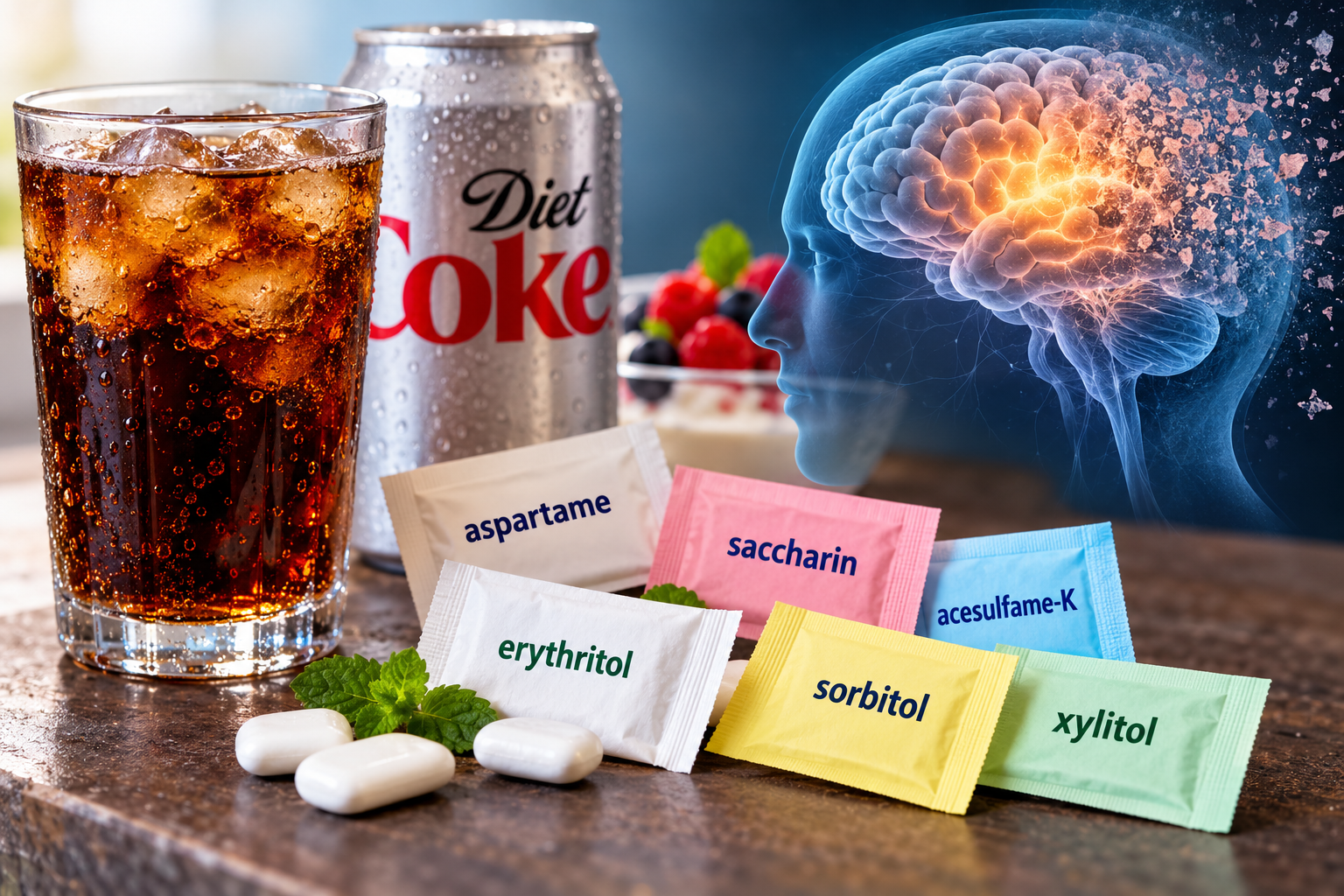
Researchers warn that several sweeteners commonly found in diet sodas, sugar-free foods, and low-calorie products may be associated with faster declines in memory and thinking abilities.
VietEcho Health | October 29, 2026
Millions of people reach for diet soda, sugar-free yogurt, or low-calorie snacks every day, believing they are making a healthier choice by avoiding sugar.
But what if some of these sugar substitutes have unexpected effects on the brain?
A large study involving nearly 13,000 adults has raised important questions about the long-term relationship between artificial sweeteners and cognitive health.
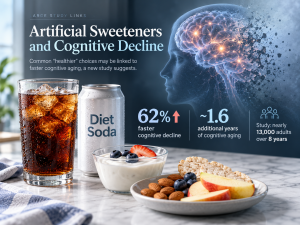
Researchers found that people who consumed the highest amounts of certain low- and no-calorie sweeteners experienced a 62% faster rate of cognitive decline compared with those who consumed the least.
The difference was equivalent to approximately 1.6 additional years of cognitive aging over the eight-year study period.
The findings, published in the medical journal Neurology in September 2025 and highlighted by the American Academy of Neurology on October 29, 2026, suggest that some widely consumed sugar substitutes deserve closer investigation.
However, researchers emphasize that the study found an association, not proof that these sweeteners directly cause memory loss, dementia, or brain damage.
What Did the Researchers Discover?
Scientists examined the dietary habits and cognitive performance of 12,772 adults in Brazil, whose average age was 52 at the beginning of the study.
Participants were followed for approximately eight years.
At the start, researchers collected information about their food and beverage consumption, including how frequently they used different sugar substitutes.
Participants also underwent cognitive testing at several points during the study.
These tests evaluated important mental abilities, including:
- Memory: The ability to learn, retain, and recall information.
- Verbal fluency: How quickly a person can find and produce words.
- Working memory: The ability to temporarily hold and manipulate information.
- Processing speed: How quickly the brain processes and responds to information.
- Overall cognitive performance: A combined measure of thinking and memory abilities.
Researchers then compared cognitive changes among people consuming different amounts of sweeteners.
The Results: 62% Faster Cognitive Decline
Participants were divided into three groups based on their estimated daily sweetener intake.
Those consuming the least averaged approximately 20 milligrams per day, while those consuming the most averaged 191 milligrams daily.
After adjusting for several factors associated with brain health, researchers reported the following findings:
| Sweetener Consumption | Cognitive Decline Compared With Lowest Group |
|---|---|
| Lowest consumption | Reference group |
| Moderate consumption | 35% faster decline |
| Highest consumption | 62% faster decline |
The researchers estimated that the difference in the highest-consumption group corresponded to about 1.6 additional years of cognitive aging over the study period.
What does this actually mean?
It does not mean that drinking diet soda makes a person’s brain age 62% faster in a biological sense.
It also does not mean that someone has a 62% higher chance of developing Alzheimer’s disease.
Instead, the number describes the relative rate of decline in cognitive test performance observed between groups.
That distinction is especially important when interpreting health research.
Which Six Sugar Substitutes Were Linked to Faster Cognitive Decline?
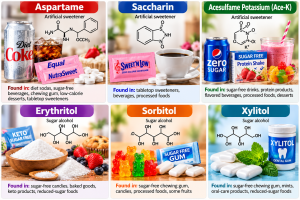
Researchers examined seven commonly used sweeteners. Six were associated with faster declines in overall cognitive performance in their analyses.
1. Aspartame
Aspartame is commonly found in diet sodas, sugar-free beverages, chewing gum, and low-calorie desserts.
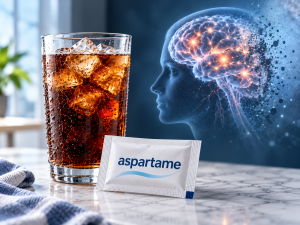
It provides sweetness with very little calorie contribution at typical consumption levels.
Because it is widely used in diet drinks, many consumers may encounter aspartame regularly without thinking about how frequently they consume it.
2. Saccharin
Saccharin is one of the oldest artificial sweeteners.
It is used in some tabletop sweeteners, beverages, and processed foods.
Although it has been available for decades, scientists continue investigating its possible long-term health effects.
3. Acesulfame Potassium (Ace-K)
Acesulfame potassium is frequently combined with other sweeteners in sugar-free drinks, protein products, flavored beverages, and desserts.

Manufacturers often combine sweeteners to achieve a flavor closer to traditional sugar.
4. Erythritol
Erythritol is a sugar alcohol commonly used in reduced-sugar and keto-friendly products.
It appears in some sugar-free candies, baked goods, and sweetener blends.
Unlike some artificial sweeteners, erythritol is a sugar alcohol, but it was included in this study because it is widely used as a sugar substitute.
5. Sorbitol
Sorbitol is another sugar alcohol found in sugar-free chewing gum, candies, and certain processed foods.
It can also occur naturally in some fruits.
Consuming large quantities of sorbitol may cause digestive discomfort or diarrhea, although those effects are separate from the cognitive outcomes investigated in this study.
6. Xylitol
Xylitol is frequently used in sugar-free chewing gum, mints, oral-care products, and some reduced-sugar foods.
It is also known for its dental benefits, particularly its role in reducing tooth-decay risk when used in appropriate products.
The new findings do not negate those dental benefits, but they raise questions that warrant further research into long-term dietary exposure.
What About the Seventh Sweetener?
The seventh sweetener examined was tagatose.
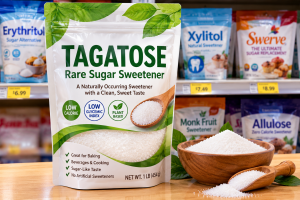
Unlike the other six, tagatose was not associated with faster cognitive decline in this particular study.
However, this does not prove that tagatose protects memory or that it is the healthiest sweetener.
Additional research is needed before drawing such conclusions.
People Under 60 May Be Particularly Relevant
One interesting finding was that the association appeared more clearly among adults younger than 60.
In these participants, higher consumption was associated with faster declines in verbal fluency and overall cognitive performance.
Researchers did not identify the same association among participants older than 60.
The reasons for this difference remain uncertain.
It is possible that age-related dietary patterns, underlying health conditions, or other factors influence the relationship.
The findings should not be interpreted to mean that sweeteners are harmless for older adults.
A Stronger Association Among People With Diabetes
Another significant observation involved participants with diabetes.
Researchers reported that the association between higher sweetener consumption and faster cognitive decline was stronger among people with diabetes than among those without the condition.
This finding is particularly relevant because individuals with diabetes often use sugar substitutes to reduce added sugar intake or help manage blood glucose levels.
However, people with diabetes should not automatically replace sugar-free products with regular sugary beverages or foods based on this study.
High added-sugar consumption can make blood glucose management more difficult.
Instead, the findings support a more thoughtful approach to selecting beverages and foods while maintaining appropriate diabetes management.
Does This Mean Artificial Sweeteners Cause Alzheimer’s Disease?
No. The research does not establish that artificial sweeteners cause Alzheimer’s disease or any other form of dementia.
The study was observational, meaning researchers examined patterns in people’s diets and cognitive performance rather than randomly assigning participants to consume specific sweeteners.
Although researchers adjusted for several factors, other influences may have contributed to the results.
For example, people who frequently consume diet products may differ in metabolic health, dietary patterns, medication use, or other characteristics that affect cognitive aging.
Dietary information also depended on participants remembering and reporting what they consumed.
These limitations make it impossible to establish direct causation from this study alone.
Controlled clinical studies and additional long-term research are needed to determine whether particular sweeteners directly influence brain function.
How Can Consumers Make Healthier Choices?
For people concerned about memory and long-term brain health, the study offers a reason to examine everyday eating and drinking habits without becoming unnecessarily alarmed.
Several practical strategies may help:
1. Read food labels carefully.
Check ingredient lists for aspartame, saccharin, acesulfame potassium, erythritol, sorbitol, and xylitol.
A product labeled “sugar-free” or “zero sugar” may contain one or several sweeteners.
2. Choose unsweetened beverages more often.
Plain water, sparkling water without added sweeteners, and unsweetened tea can help reduce reliance on both added sugar and sugar substitutes.
3. Reduce the preference for intensely sweet foods.
Gradually choosing less-sweet foods and drinks may make it easier to enjoy natural flavors without relying heavily on sugar or sugar substitutes.
4. Focus on overall dietary quality.
A balanced diet containing vegetables, fruits, whole grains, legumes, nuts, and other minimally processed foods provides nutrients that support overall health.
5. Avoid replacing artificial sweeteners with excessive sugar.
Honey, maple syrup, coconut sugar, and regular table sugar are not automatically healthier alternatives simply because they are natural or familiar.
They can still contribute substantial amounts of sugar and calories.
6. Consider individual health needs.
People with diabetes or other metabolic conditions should discuss significant dietary changes with their healthcare professionals, particularly when changes could affect blood glucose control.
The Bigger Question: Are Sugar-Free Products Always Healthier?
For years, consumers have been encouraged to reduce sugar consumption to lower calorie intake and improve metabolic health.
Artificial sweeteners have become a major part of that strategy.
However, the growing body of research on sugar substitutes suggests that their long-term effects may be more complicated than simply eliminating calories.
Different sweeteners have different chemical structures and may behave differently in the body.
It is therefore important not to assume that findings involving one sweetener automatically apply to every sugar substitute.
Researchers are still investigating possible relationships involving metabolism, the gut microbiome, cardiovascular health, and brain function.
These questions are important, but evidence remains incomplete.
The Bottom Line
The study involving nearly 13,000 adults adds to scientific concerns about the potential long-term effects of certain low- and no-calorie sweeteners.
People consuming the highest amounts experienced a 62% faster decline in cognitive test performance than those consuming the least, a difference researchers estimated as equivalent to approximately 1.6 additional years of cognitive aging.
Six sweeteners were associated with faster cognitive decline, while tagatose was not.
Nevertheless, the findings do not prove that these ingredients directly damage the brain or cause dementia.
For consumers, the most reasonable message is not to panic or abandon every sugar-free product.
Instead, consider reducing the need for intensely sweet foods and drinks, prioritize overall dietary quality, and make informed choices based on individual health needs.
A product containing less sugar may have certain nutritional advantages, but that does not automatically make it the best choice for every aspect of long-term health.
Sources and References
Primary research: Gonçalves NG, et al. Association Between Consumption of Low- and No-Calorie Artificial Sweeteners and Cognitive Decline. Neurology. 2025;105(7).
DOI: https://doi.org/10.1212/WNL.0000000000214023
Research coverage: American Academy of Neurology, via ScienceDaily, October 29, 2026.
https://www.sciencedaily.com/releases/2026/10/261028234238.htm
VietEcho Health Disclaimer: This article is intended for general educational purposes and does not replace individualized medical advice.