For people who regularly experience headaches or migraines, what they eat and drink may be one piece of a much larger prevention strategy. While medications remain important for many headache disorders, growing attention is being paid to nutrition, hydration and dietary patterns that may influence headache frequency or severity.
Rather than focusing exclusively on foods to avoid, a more useful approach considers whether the body is receiving adequate nutrients, maintaining stable hydration and blood sugar, and following an eating pattern that supports overall neurological health.
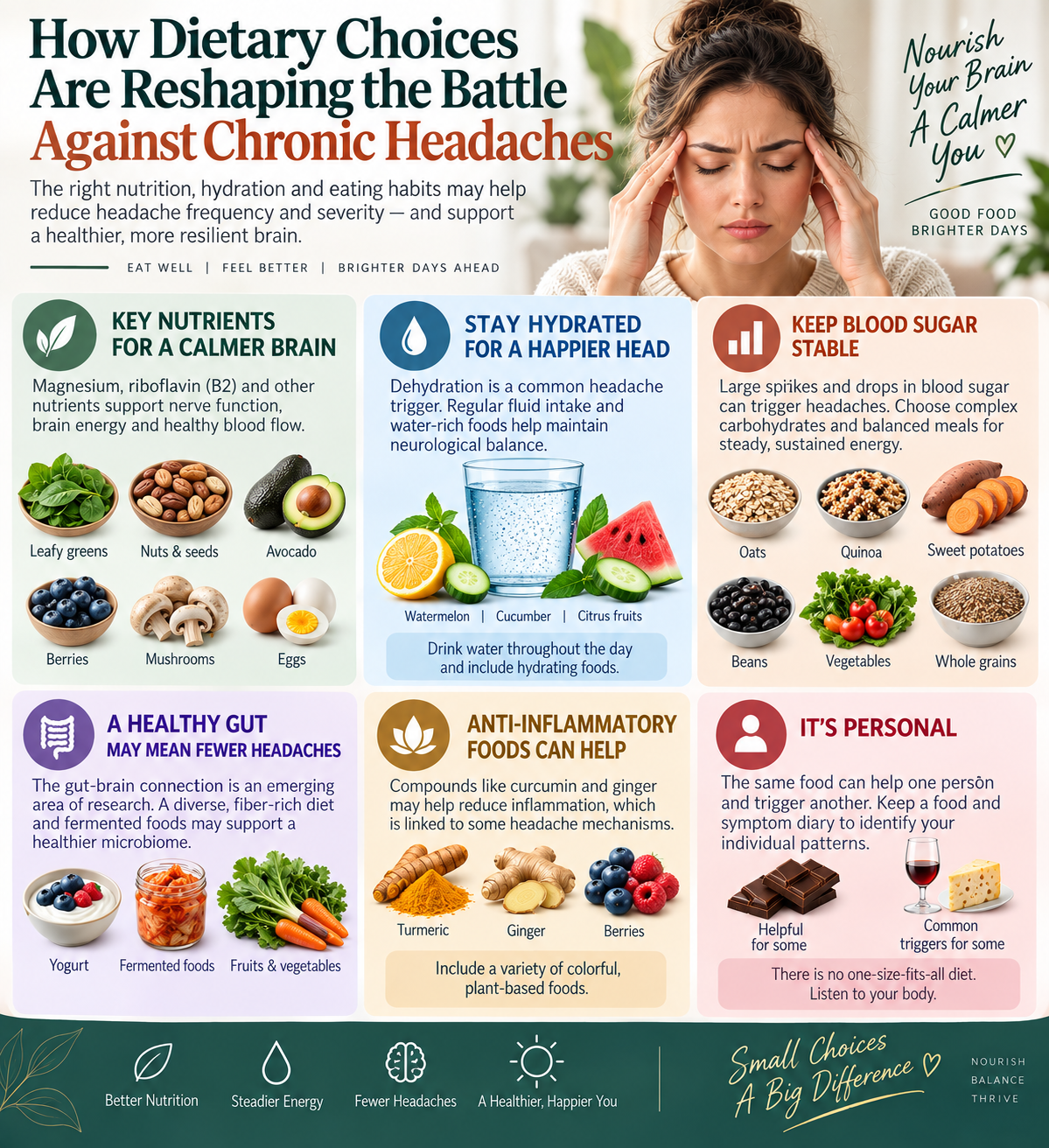
Among the nutrients receiving particular attention are magnesium and riboflavin (vitamin B2). Hydration, regular meals and anti-inflammatory dietary patterns may also be relevant, although individual responses can vary considerably.
Magnesium and Riboflavin Take Center Stage
Magnesium plays numerous roles in normal nerve and muscle function. It is also involved in processes affecting blood vessels and neurological signaling.
Because magnesium status has been investigated in relation to migraine, foods naturally rich in the mineral can be useful components of a balanced diet. These include leafy green vegetables, nuts, seeds, legumes, whole grains and avocados.
Riboflavin, or vitamin B2, has also attracted interest in migraine prevention. Riboflavin contributes to cellular energy production, including within brain cells.
Foods containing vitamin B2 include eggs, dairy products, mushrooms, almonds and certain fortified foods.
Although dietary sources can contribute to overall nutritional adequacy, therapeutic doses of magnesium or riboflavin used in migraine research may be considerably higher than amounts obtained from food alone. Anyone considering high-dose supplementation should discuss it with a healthcare professional, particularly if they take medications or have other medical conditions.
Hydration May Be an Overlooked Headache Factor
For some people, inadequate fluid intake can contribute to headaches.
Maintaining consistent hydration throughout the day may therefore be one of the simplest dietary habits worth addressing.
Water remains the primary source of hydration, but foods can contribute as well. Watermelon, cucumber, citrus fruits, berries, soups and many vegetables contain substantial amounts of water.
Rather than waiting until intense thirst develops, drinking fluids regularly throughout the day may help people who notice that dehydration tends to precede their headaches.
Hydration needs vary according to body size, climate, activity levels, pregnancy, medications and medical conditions, so there is no single ideal amount appropriate for everyone.
Regular Meals May Help Maintain Stability
Long gaps between meals may trigger headaches in some individuals.
Blood glucose changes, hunger and accompanying stress responses are among the possible explanations. Eating regularly and choosing foods that provide sustained energy may therefore be helpful for susceptible people.
Whole grains, oats, beans, lentils, vegetables and other fiber-rich carbohydrate sources generally produce a more gradual rise in blood glucose than highly refined carbohydrates consumed on their own.
Combining carbohydrates with protein, healthy fats and fiber may further support steadier energy levels.
For someone whose headaches frequently appear after skipping breakfast or going many hours without eating, meal timing may be just as important to investigate as individual foods.
The Gut-Brain Connection Is an Emerging Area of Research
Scientists are increasingly studying communication between the digestive system and the brain, commonly described as the gut-brain axis.
The intestinal microbiome interacts with immune, metabolic and neurological processes, raising questions about whether changes in gut health could influence neurological disorders, including migraine.
However, this area remains under active investigation. It is premature to assume that changing the microbiome will prevent migraines in everyone.
A generally diverse diet containing vegetables, fruits, legumes, whole grains and fermented foods can support overall dietary quality and microbial diversity.
Yogurt and other fermented foods may also provide beneficial microorganisms, although their effects vary according to the product and the individual.
Anti-Inflammatory Foods May Offer Additional Benefits
Inflammatory processes have been investigated as one component of migraine biology, creating interest in foods containing naturally occurring anti-inflammatory and antioxidant compounds.
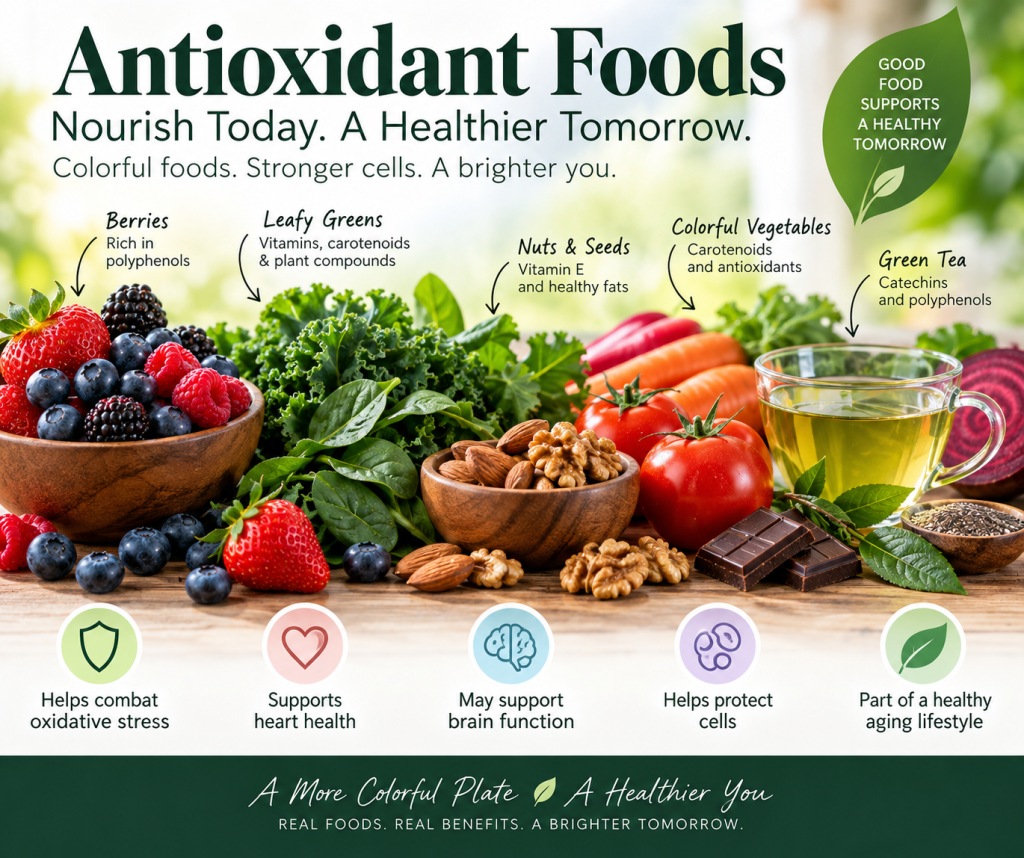
Berries, leafy vegetables, nuts, seeds, olive oil and fatty fish can form part of an overall anti-inflammatory eating pattern.
Ginger has also been studied for its potential effects on migraine symptoms, including nausea and pain.
Turmeric contains curcumin, a compound widely investigated for its anti-inflammatory properties. However, evidence supporting turmeric or curcumin specifically as a reliable migraine treatment remains limited.
The larger dietary pattern is therefore likely more meaningful than relying on any single so-called “superfood.”
One Person’s Helpful Food May Be Another Person’s Trigger
Perhaps the most important principle in headache nutrition is that responses are highly individual.
Dark chocolate illustrates the problem particularly well. It contains magnesium and other potentially beneficial compounds, yet some people report chocolate around the time of migraine attacks.
Similarly, caffeine can sometimes enhance headache relief but can also contribute to headaches when consumed excessively or withdrawn abruptly after regular use.
Alcohol, processed meats, aged cheeses and certain additives are frequently discussed as migraine triggers, but not every person reacts to them.
Unnecessarily eliminating numerous foods can make a diet restrictive without providing meaningful improvement.
A food-and-headache diary can offer a more systematic approach. Recording meals, hydration, sleep, stress, menstrual cycle changes, caffeine intake and headache symptoms may help identify recurring patterns over time.
Headache Type Matters
Not every headache has the same underlying mechanism.
Migraine commonly involves moderate to severe pain and may be accompanied by nausea, sensitivity to light or sound, and sometimes neurological symptoms such as aura.
Tension-type headaches generally have different characteristics, while cluster headaches represent another distinct neurological disorder.
Nutrition may influence these conditions differently.
This is why persistent or recurring headaches should not automatically be attributed to diet. Correctly identifying the headache type can help determine the most appropriate combination of medical treatment and lifestyle strategies.
Food Should Complement, Not Replace, Appropriate Treatment
Nutrition offers an appealing approach because everyday dietary habits are modifiable. But describing food as a replacement for medication oversimplifies a complex neurological problem.
For many people, the most effective strategy may combine appropriate medical care with adequate sleep, regular physical activity, stress management, hydration, consistent meals and individualized nutritional choices.
Preventive and acute medications may remain essential, particularly for frequent or disabling migraine.
People experiencing new, unusually severe, rapidly worsening or otherwise concerning headaches should seek medical evaluation rather than attempting to manage the problem solely through dietary changes.
The Bottom Line
The relationship between nutrition and headaches is moving beyond simple lists of foods to avoid.
A broader strategy emphasizes nutritional adequacy, hydration, regular meals and individualized trigger identification. Magnesium and riboflavin are among the nutrients most frequently studied in connection with migraine prevention, while emerging research continues to explore inflammation and the gut-brain relationship.
No single food can eliminate chronic headaches, and what helps one person may have little effect—or even act as a trigger—for another.
The most useful nutritional strategy is therefore not a rigid “migraine diet,” but an individualized approach that identifies patterns while maintaining a balanced, nutrient-rich diet.
For people living with recurrent headaches, the plate may become an important part of prevention—but it works best as one component of a comprehensive headache-management plan.