
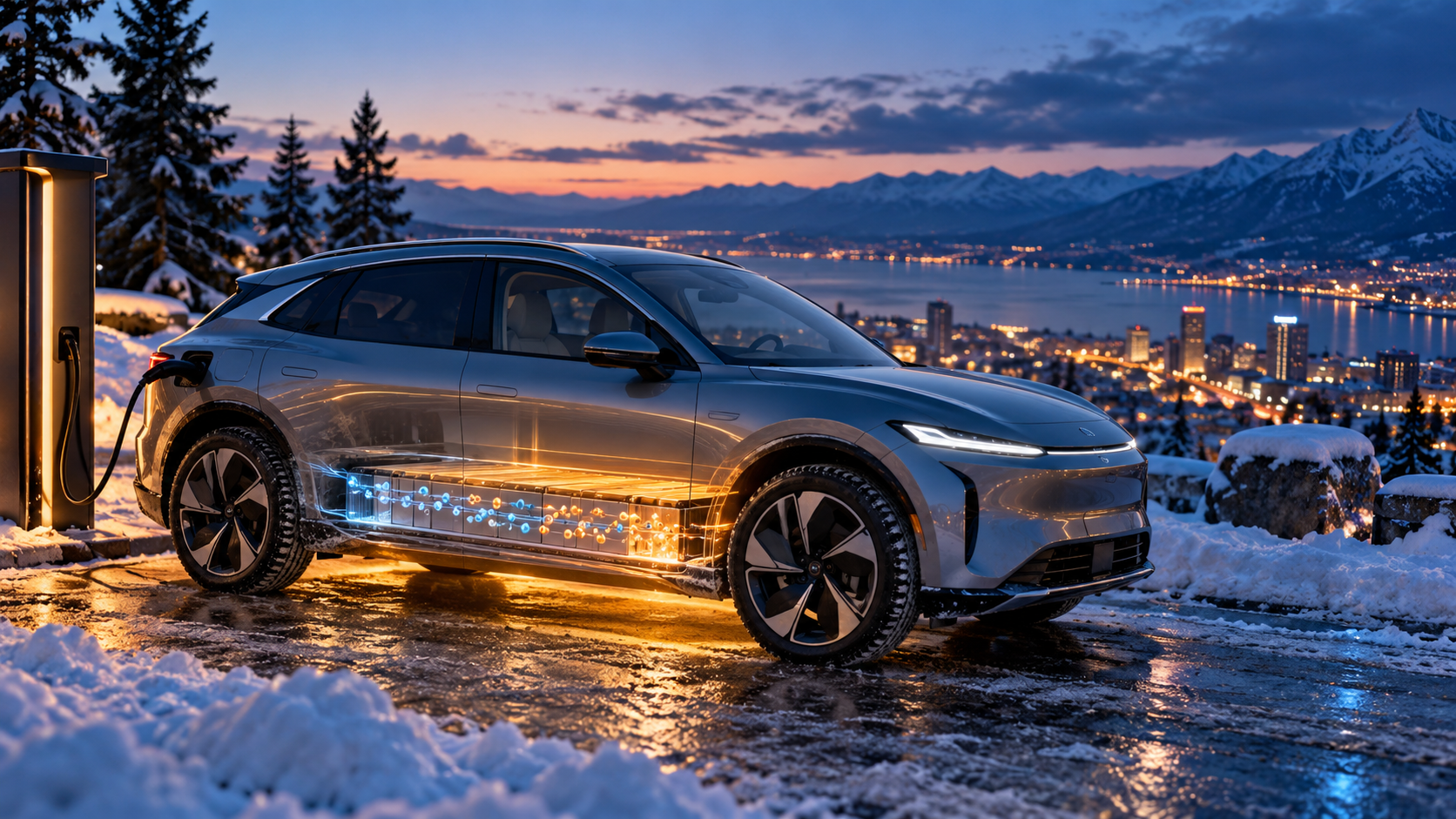
A familiar element could give electric vehicles another battery option, especially in cold climates. But its biggest impact may reach beyond cars.
Most conversations about electric vehicles eventually turn to lithium. Now another element is getting a chance in the spotlight: sodium.
In February 2026, Chinese automaker Changan and battery manufacturer CATL unveiled a passenger vehicle equipped with CATL’s sodium-ion battery. CATL said the model was intended to reach the market in 2026. Separately, the company has announced a sodium-ion system for storing electricity at large facilities. Together, those moves suggest the technology is beginning to leave the laboratory and enter commercial use.
What is a sodium-ion battery?
A rechargeable battery works by moving charged particles, called ions, between its electrodes. A sodium-ion battery uses sodium ions where a lithium-ion battery uses lithium ions. The idea is straightforward; making a battery that is durable, practical, and competitive at industrial scale has taken years of engineering.
Sodium is widely available, which could give manufacturers another way to source battery materials. That does not mean sodium-ion batteries will automatically be cheaper for drivers: manufacturing costs, vehicle design, and production scale also matter. CATL describes sodium and lithium as complementary technologies rather than one replacing the other everywhere.
Why cold-weather drivers should pay attention
Anyone who has watched an electric car’s range fall during a freezing winter knows that temperature matters. CATL says its Naxtra sodium-ion battery retains more than 90% of its capacity at −40°C and delivers substantially more discharge power than a comparable lithium iron phosphate battery at −30°C. These are manufacturer-reported test results, not a promise that every future sodium-powered car will achieve the same range in winter.

CATL reports an energy density of up to 175 watt-hours per kilogram for Naxtra. It says the Changan vehicle’s battery system is designed for a driving range of more than 400 kilometers, or roughly 249 miles, under the measure used in its announcement. Real-world range will depend on the vehicle, driving conditions, temperature, and testing standard.
The less visible opportunity: storing electricity
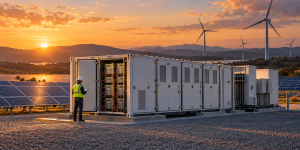
A battery does not have to travel inside a car to be valuable. Large battery installations can store power for use later, including electricity produced when solar panels or wind turbines are generating more than people need at that moment.
In June, CATL introduced a sodium-ion energy storage system called TENER Sodium. The company said it planned deliveries in China beginning in September 2026, with international deliveries scheduled for June 2027. Those dates describe its announced plans; the pace and scale of actual deployment remain to be seen.
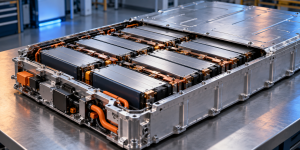
Grid storage may prove especially important for sodium-ion batteries because a stationary installation can tolerate a heavier or larger battery more easily than a vehicle can.
Is lithium’s era ending?
No. Battery makers use different chemistries because each solves a different problem. A long-range vehicle, a cold-weather commuter car, and a stationary storage facility do not need identical batteries. CATL itself is planning systems that use sodium-ion and lithium-ion technology side by side.
The question now is whether sodium-ion batteries can be produced reliably, sold at competitive prices, and proven over years of everyday use. If they can, the future of batteries may be more varied than the familiar story of lithium alone.